Journalism of Courage
 5 min read



The army must go back to the barracks and let the will of the people prevail,8221; said an opposition MP talking to a TV reporter. 8220;This is a referendum against Musharraf,8221; declared barrister Aitzaz Ahsan, attorney to the chief justice of Pakistan. The massive welcome the suspended chief justice, Iftikhar Mohammad Chaudhry, got on his way to the capital of Punjab, Lahore, from Islamabad on Saturday last has left behind many encoded messages, many of which await descrambling.
It is rare for Pakistan8217;s most influential and traditionally compliant province, Punjab, to rise in support of an underdog 8212; the besieged chief justice has become one since his suspension from office by General Musharraf. The last time anything of the sort happened was in 1968, when Field Marshal Ayub Khan was forced to step down after calls for the military dictator8217;s ouster originating from Dhaka and Karachi resonated in the streets of Lahore.
It took the motorcade of the CJ, comprising an estimated 2,000 vehicles, 26 hours to cover a distance of 280 km on the Grand Trunk Road 8212; now a six-lane highway built along the historical route taken by medieval invaders from the north-west, and whom Lahore almost always welcomed. What happened once the CJ entered Lahore on Sunday morning was yet another story: it took him four hours to reach the high court building located barely 5 km away from the Ravi river bridge on GT Road. The government8217;s knee-jerk reaction was to pressure the cable operators in most of Sindh and parts of Punjab to suspend the transmission of independent news channels giving live coverage of the CJ8217;s yatra.
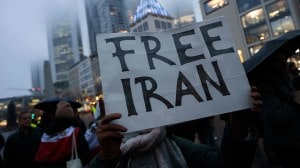
8216;Go, Musharraf go8217;, chanted the man on the street. Lawyers, women, children and the elderly had braved a 12-hour wait in sultry weather, averaging 36 degree celsius. Two months ago few believed the CJ8217;s abrupt suspension by Musharraf and his illegal confinement in his home would snowball into something this big.
The next day, the whole country, PM Shaukat Aziz included, was mulling the imposition of emergency rule, which put the Karachi Stock Exchange on a panic selling rollercoaster ride, losing 432 points and wiping out crores. Also on Monday, the Supreme Court took up opposing petitions filed by the government and the CJ, putting the Supreme Judicial Council tasked by Musharraf to conduct the CJ8217;s trial behind closed doors, into abeyance. Formulation of a full bench and the holding of an open trial have instead been ordered by the apex court. Sharifuddin Pirzada, Pakistan8217;s Ram Jethmalani, pleading the president8217;s case against the CJ cut a sorry figure.
The public mood in Lahore, once again, is proving to be a major deciding factor in the way this country will be governed. This, at a time when political parties have all but become irrelevant to the process of democratic governance. Benazir Bhutto8217;s party is blemished by reports that it has struck a deal with Musharraf; Nawaz Sharif does not have the street power to go it alone against the general; the same holds true for the mullas, despite the regime8217;s grossly exaggerated estimates to the contrary, which many believe are aimed only at scaring Musharraf8217;s western allies.
If the CJ8217;s Punjab trip is any guide, it seems for now real power is back in the hands of the people. Past takeovers by the military and its interference in the political process, even when it has not ruled directly, are up for a public bashing, in the street, on the media, like never before.
The next destination on the CJ8217;s countrywide yatra is Karachi. The most potent political force in Pakistan8217;s commercial capital is the Muttahida Qaumi Movement led by its exiled leader, Altaf Hussain. The MQM is a coalition partner in Musharraf8217;s tailor-made dispensation, and it was under its directions that the Karachi-based electronic media was forced to suspend its transmission of the CJ8217;s rally8217;s live coverage in Sindh.
The party has announced plans to hold a 8216;massive8217; rally in Karachi to protest against what it calls the politicisation of the CJ8217;s case before the Supreme Court on May 12. The ruling Muslim League, the other coalition partner, is holding a rally in support of Musharraf in Islamabad the same day. The MQM has launched a campaign against the CJ in Karachi8217;s vernacular press.
The MQM8217;s coming out on the wrong side of the issue will be seen by many in Karachi, but especially in Punjab, where the party seeks to make inroads in the next election, as betraying what has become a national cause: upholding the judiciary as a lever against dictatorial rule. The military government8217;s rallying cry, that the legal community should not indulge in politics, has been rejected by the people everywhere, as has been evident from the massive show of support for the CJ across the country. The ruling Muslim League and the MQM stand alone with the military when they say that lawyers and the judiciary should not do politics.
Former chief justice Sajjad Ali Shah, forced to step down by Nawaz Sharif under similar circumstances ten years ago, summed up the situation: 8220;look who8217;s talking8221;. The constitution forbids the military and not the legal fraternity from participating in politics.
The writer is a Karachi-based editor with 8216;Dawn8217;