Journalism of Courage
 5 min read



Recently, an important development which did not get as much attention as it should have, was that of the human resource development ministry opposing the creation of the equal opportunity commission EOC, as proposed by an expert group set up by the ministry of minority affairs and led by N.R. Madhava Menon. The EOC, incidentally, is a direct fallout of the prime minister8217;s high-level committee set up to examine the social, economic and educational state of Indian Muslims in 2005 and is intended as a body that documents the evidence on opportunities available to Indian citizens of all kinds, of all possible social descriptions.nbsp;
The Indian Constitution, in terms of public employment and opportunities in state educational institutions, guarantees equality and special provisions for socially deprived sections in Articles 15 and 16. In the areas of nutrition and health, it makes a case for access to all kinds of groups through the Directive Principles. It is this spirit that the EOC hopes to be about. nbsp;
With a number of commissions like the Scheduled Castes8217;, Scheduled Tribes8217;, Backward Classes8217;, Women and Minorities8217; Commissions already working under different ministries, opposition from them is understandable to an extent. The EOC, by its very definition would subsume the working of all previous commissions and provide one window.nbsp;
But, behind the opposition by different groups to working on betterment or improvement of any particular socially, economically and educationally deprived group are basicnbsp;differences in philosophies over affirmative action. It8217;s an issue that should have been widely and loudly debated, but that was not to be, given the political tumult in the country for one reason or the other in recent months.nbsp;
As was most recently and assertively argued by Gurjjar leaders, there are several leaders and academics who feel reservation is the way out of backwardness; whether it is Kerala now trying to make a case for poor Forwards, as Mayawati had done for poor upper-castes. Even Muslim leaders have and continue to try to enable better representations for their respective groups. The drive to 8220;reserve8221; seats as the best way to do things for 8220;deprived sections8221; found a strong political voice after the Mandal report was made operational in the early 8217;90s;and the OBC leadership succeeded in making it appear like a winning formula, a method that worked for their constituencies, which were looking for a quick-fix.nbsp;
Close cousins of the 8220;reservationists8221; if you like, are those who have, especially in the recent past, been arguing for a 8220;sub-plan8221; for Muslims. This essentially means apportioning a certain part of plan funds for a particular group, ostensibly to enable better targeting. Sub-plans have historically been in existence for scheduled castes and tribes. Their efficacy has never been established. However, the argument for a sub-plan was also made by the HRD ministry8217;s sub-committee set up under M.A.A. Fatmi8217;s chairmanship to examine higher education and minorities. The impetus for the HRD ministry rejecting concepts like the EOC may have stemmed from a desire to be seen making visible concessions for a social group.nbsp;
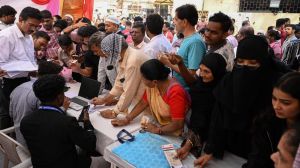
However, the EOC, which is inspired by the Canadian, US, UK and South African models with similar aims, steers clear of the 8220;R8221; word. It is not a punitive body and aims to establish good practices after collecting information and a body of data so that it can influence and persuade the public 8212; even the growing private sector 8212; to employ and empower people widely. Sources at the ministry for minority affairs instead cite the success of the scholarship schemes for minorities they have been able to institute in all the states. Sources say that while applications for the scholarships last year were in the range of 3 to 4 lakh, this year the applications have been nearly 50 lakh! This school of thought says it is important to provide an ability to deprived groups to make a place for themselves. As the secretary for minority affairs, M.N. Prasad, puts it, a scholarship for a bright but poor Muslim girl at an IIT not only gives her the ticket to a better life but also ensures that she manages to pull out and influence her whole family 8212; and also her neighbours and others who know about it, aspire for a better life and develop a stake in the system. For some, such a trigger scores over the 8220;reservation8221; temptation by miles.nbsp;
seema.chishtiexpressindia.com