Journalism of Courage



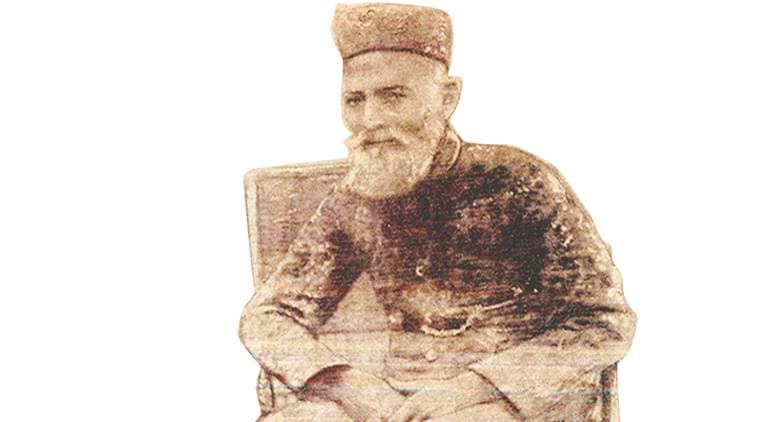 Mir Baqar Ali
In his final days, Mir Baqar Ali, one the last of the traditional Dastangos, was in dire straits as patronage had dried up. He made do by selling betel nuts and writing amusing and edifying pamphlets and even political satire which he sold himself, two of which were banned by the British government.
One of them was Kaana Baati, where he talks about the modern scientific descriptions about the ear, the art of paying attention, the style, grace and significance of listening well. The writings is getting a new lease of life with Dastango Mahmood Farooqui’s latest production, Dastan-e-Kaana Baati, which he will perform with Darain Shahidi at Jashn-e-Rekhta, a festival that celebrates Urdu, this weekend.
Historian Shahid Amin had provided Farooqui with a three-minute audio recording of Ali, made during George Grierson’s mammoth gathering at Linguistic Survey of India in the early ’20s. This was the only authentic account Farooqui had of a traditional Dastangoi performance and Ali. “It is said he could perform for hours without a single stutter or pause, that women in Delhi fashioned their jewellery based on his descriptions, he knew everything about everything — food, warfare, festivals, objects, poetry, prose, philosophy, literature, mathematics and even modern science,” says Farooqui, who revived the art form of storytelling in 2005. There are 46 volumes of traditional stories but no manuals of performance style and mode of presentation than this.
In Dastan-e-Kaana Baati, the Dastango will capture different shades of Urdu prose, ranging from Ghalib, to the traditional florid, high literary style of Tilism-e Hoshruba, to Mir Baqar’s easy, idiomatic Dehlavi style and the multi-vocal linguistic sallies of Mushtaq Ahmed Yusufi, the Pakistani satire and humour writer who died this year. Farooqui had combined elements from his writing in the recent adaptation of Shri Lal Shukla’s Raag Darbari as well. “Yusufi had watched one of my shows in Lahore and was a great admirer of the traditional dastans and was, in some way, a free spirited storyteller par excellence. Paying homage to him with Mir Baqar Ali was a natural progression. It was also a way of reassuring Shamsur Rahman Faruqi, the presiding spirit behind Dastangoi’s modern revival, that traditional tales are not going to be forgotten by us,” he says.
Dastan-e-Kana Bati, he hopes, will make the people reflect on Delhi, history, hikmat or wisdom, the tragedies of the Partition and vagaries of modern audiences. “Above all, in an age where everyone is dying to quickly have their say, it alerts us to the importance and usefulness of listening,” he adds. The performance will be staged at Dhyan Chand Stadium, in Delhi, on December 15, 2 pm

 3 min read