5 min read
📣 For more lifestyle news, click here to join our WhatsApp Channel and also follow us on Instagram
© IE Online Media Services Pvt Ltd



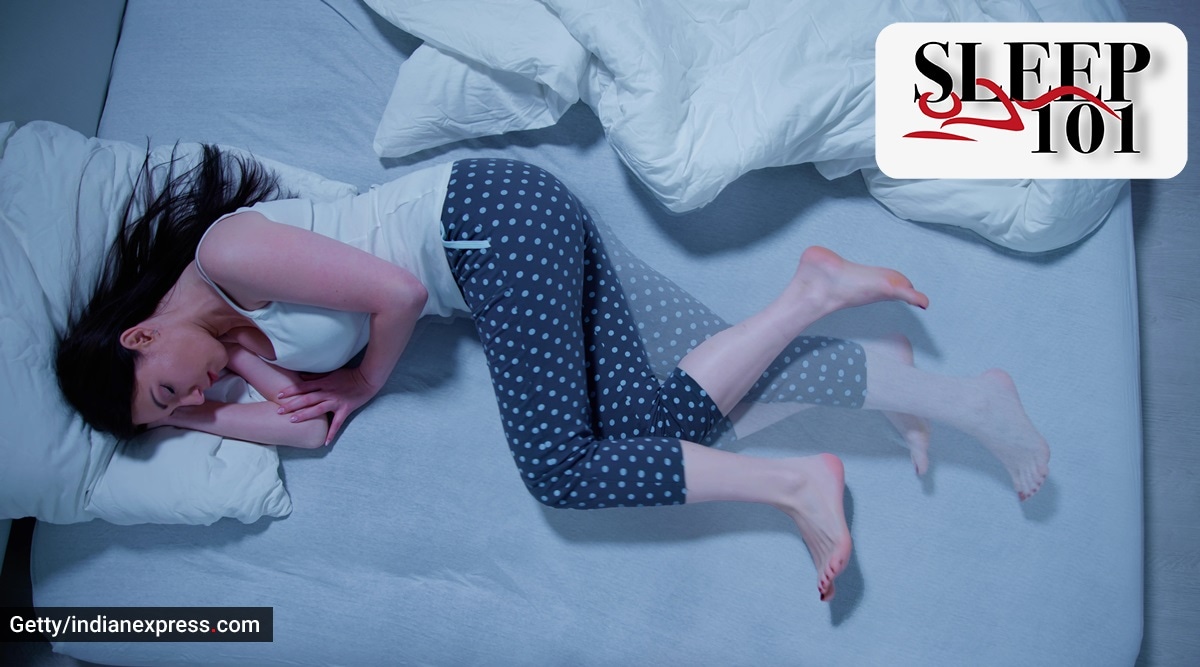 RLS is both a sleep problem and a movement disorder (Source: Getty Images/Thinkstock)
Have you ever experienced a tingling or crawling sensation in your legs that just wouldn’t let you sleep? Or felt an irresistible urge to move your legs, beyond your control? If yes, then you might be suffering from what is called the Restless Legs Syndrome (RLS). Dr Sanjay Manchanda, Chairman Department of Sleep Medicine, Sir Ganga Ram Hospital, New Delhi said that RLS is a neurological condition, and more specifically, a neurological sleep disorder.
He explained, “RLS is both a sleep problem and a movement disorder because the symptoms are caused by resting and attempting to sleep. RLS symptoms can range from moderate to severe. It is perceived as an irrepressible desire to move during sleep, particularly the legs. And it is even more severe at night, where it can induce anything from a creepy crawly sensation in the legs to painful legs to jerky limb movement.”
While the urge to move your legs may look harmless, it can cause sleep deprivation and can lead to significant sleep disruption, making it difficult to fall asleep or return after waking up. “Moving the legs or walking usually lessens the pain, although the symptoms generally return after the section is stopped. It could cause cortical arousal, leading to poor quality of sleep and daytime somnolence,” Dr Manchanda said.
But, what causes it? Dr Sujit Kumar, Senior Consultant Neurologist and Epileptologist, Apollo Hospitals, Seshadripuram, Bangalore said the causes include iron deficiency anaemia, renal failure, peripheral neuropathy, and, sometimes, can happen without any cause. Here are some other causes, as per Dr Suhas HS, Consultant Pulmonologist, Manipal Hospital, Sarjapur, Bangalore.
*End-stage renal disease and hemodialysis
*Neuropathy (nerve damage)
*Sleep disorders such as sleep apnea, sleep deficit
*Hormonal changes
*Pregnancy, especially during the last trimester. The symptoms subside within four weeks of delivery in most cases.
*Use of alcohol, nicotine, and caffeine
 It can cause sleep deprivation and can lead to significant sleep disruption (Source: Getty Images/Thinkstock)
Agreeing with the impact of RLS on sleep, Dr Suhas said, “A person with restless leg syndrome has an irresistible urge to move, which is often accompanied by uncomfortable sensations in the lower limbs. Sensations in the leg may feel like aching, throbbing, pulling, itching, crawling, or creeping. Usually, sensations begin after rest when a person is inactive for extended periods, especially during sleep. Often the person has difficulties falling asleep and staying asleep. As a result, the quality of sleep gets hampered and often results in changes in mood, exhaustion, daytime sleepiness, problems concentrating, impaired memory, decreased productivity, depression and anxiety.”
Conversely, lack of a good night’s sleep is one of the etiological factors for developing RLS. “A lack of adequate sleep can worsen RLS symptoms. It can lead to increased levels of stress, which can exacerbate RLS symptoms. Additionally, fatigue can make it more difficult to cope with RLS symptoms during the day,” Dr Lakshmi Lavanya, Senior Neurologist, Kamineni Hospitals, Hyderabad said.
Agreeing, Dr Manchanda said that it is important to address both sleep disturbances and RLS in order to improve overall sleep quality and alleviate RLS symptoms. Experts said that RLS symptoms might differ from person to person in terms of intensity and frequency, and may only show up once or twice per week.
To manage the condition, they stressed the need for consulting a health expert to better understand the severity and underlying causes. “It is advisable to see a doctor if you experience an intense, frequently overwhelming urge to move your legs that is frequently accompanied by uncomfortable and unpleasant sensations,” Dr Suhas said, adding that a few lifestyle adjustments may be enough to treat mild cases of restless legs syndrome that are unrelated to an underlying medical disease.
These include:
*Getting good sleep (by following a regular bedtime ritual, sleeping regular hours, and avoiding alcohol and caffeine late at night)
*Quitting smoking if you smoke
*Exercising regularly during the daytime
“Various tools are used for treating and managing RLS including medications. For example, dopaminergic drugs can be used to treat the condition. Benzodiazepines, such as Clonazepam, may also be prescribed. In cases of restless and painful legs, Gabapentin-like drugs may be necessary to alleviate pain and improve sleep quality. In some cases, iron supplementation may be recommended, but this should be done under the supervision of a sleep physician or a qualified general physician,” Dr Manchanda concluded.
(Next in the series: Here’s why you may be waking up in a bad mood)
📣 For more lifestyle news, follow us on Instagram | Twitter | Facebook and don’t miss out on the latest updates!