3 min read
📣 For more lifestyle news, click here to join our WhatsApp Channel and also follow us on Instagram
© IE Online Media Services Pvt Ltd



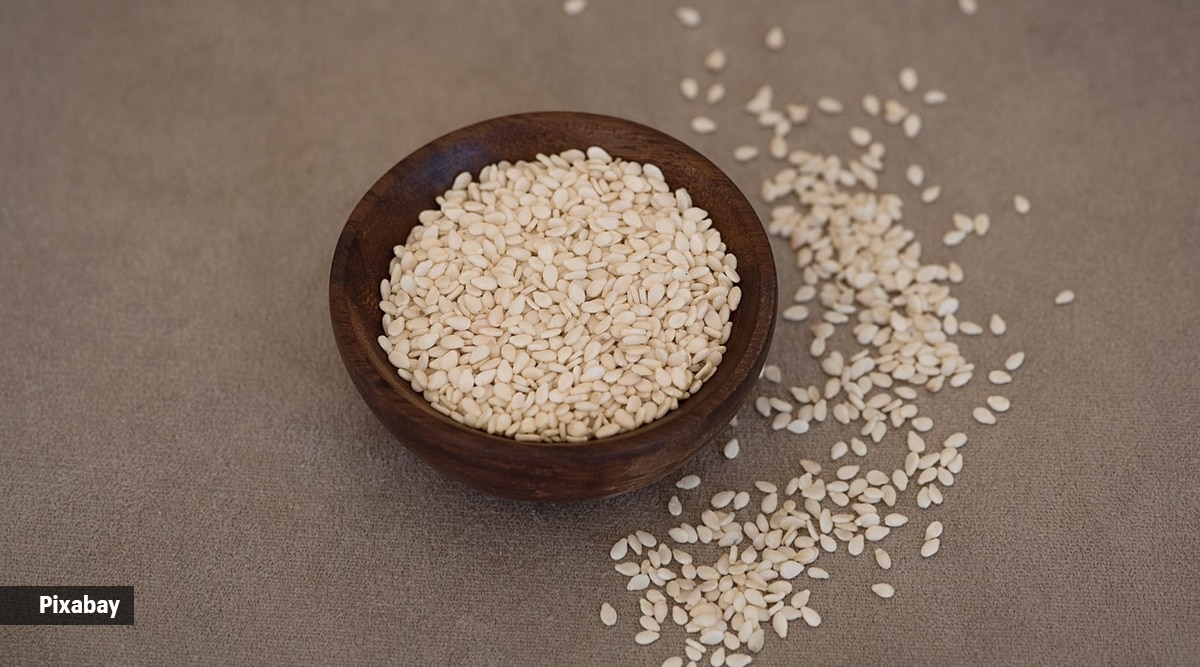 Here's what to know about sesame seeds (Source: Pixabay)
From til chikki and laddoo to roti and gajak, sesame seeds have been an integral part of the Indian diet and local cuisines for a long time.
Scientifically known as Sesamum indicum, these small, oil-rich seeds are primarily cultivated, in mainly northern part of India, for oil, according to Dr Ushakiran Sisodia, registered dietician and clinical nutritionist, Nanavati Max Super Speciality Hospital, Mumbai.
“They are a rich source of macronutrients, including proteins, healthy fats and a range of vitamins and minerals,” she added.
Let’s take a look at the many health benefits of these seeds.
Per 100 g serving of sesame seeds contains these nutrients, according to Dr Sisodia.
• Calories: Approximately 573 kcal
• Protein: Around 18 g
• Fat: About 50 g
• Carbohydrates: Roughly 23 g
• Fibre: About 12g
• Calcium: Approximately 975 mg
• Magnesium: Around 350 mg
• Phosphorus: Approximately 638 mg
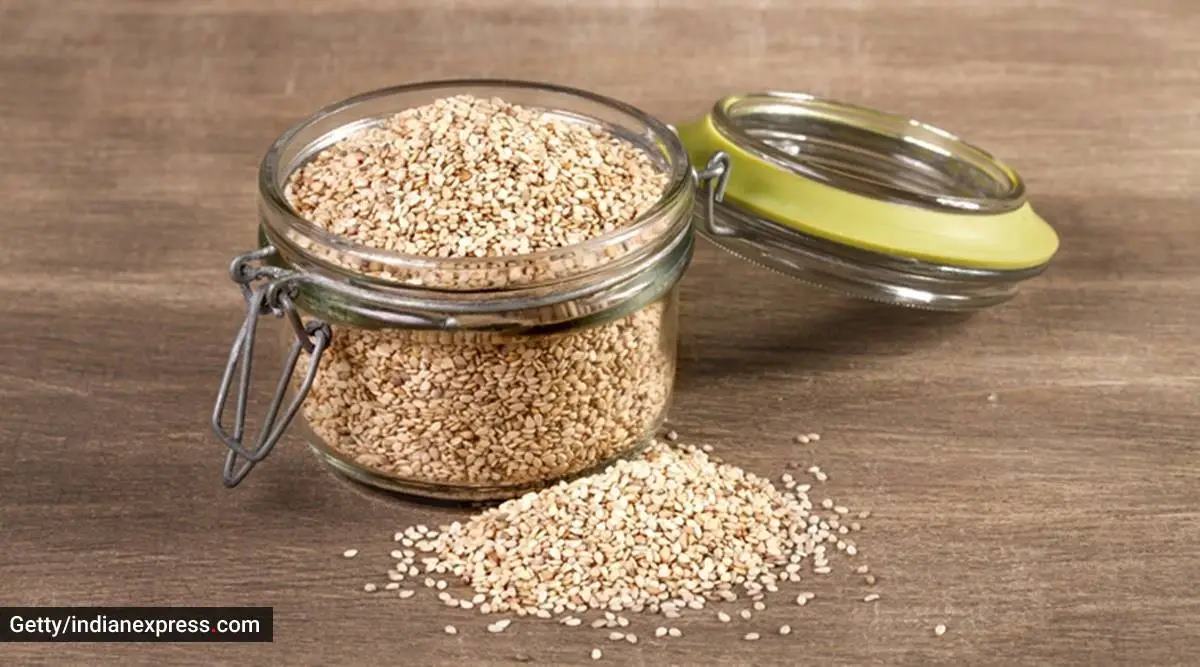 Sesame seeds have a low glycaemic index and healthy fats, making them suitable for people with diabetes, according to Dr Sisodia. (Photo: Getty Images/Thinkstock)
As per Dr Sisodia, these are the health benefits of sesame seeds.
Rich in antioxidants: Sesame seeds are rich in antioxidants, mainly sesamol and sesamin, which help us fight oxidative stress.
Reduces the risk of heart disease: These seeds also have a high level of unsaturated fat, which can help control cholesterol levels, potentially reducing the risk of heart disease.
Contributes to bone health: They also contribute to bone health due to calcium and phosphorus content.
Sesame seeds have a low glycaemic index and healthy fats, making them suitable for people with diabetes, according to Dr Sisodia.
But each time diabetics are including a new ingredient to the diet, they should consult their doctor or nutritionist.
Sesame seeds are a good source of various nutrients like calcium and magnesium that could be beneficial during pregnancy, said Dr Sisodia.
Consume the seeds in moderation and consult your gynaecologist to ensure there is no disadvantage of having them.
 Excessive consumption can lead to digestive issues. (Source: Pixabay)
Dr Sisodia explained that there are some things to keep in mind before you eat sesame seeds.
• Allergies: Some people may be allergic to sesame seeds.
• Caloric density: They are calorie-dense, so moderation is key.
• Overconsumption: Excessive consumption can lead to digestive issues and probably weight gain because of their caloric density.
• Myth 1: Sesame seeds can cure any form of anaemia.
Fact: While they are a good source of iron, they are not a one-stop solution for treating anaemia.
• Myth 1: Sesame seeds are high in sugar.
Fact: They are actually low in sugar, making them suitable for most people when consumed in moderation.
📣 For more lifestyle news, follow us on Instagram | Twitter | Facebook and don’t miss out on the latest updates!