4 min read
📣 For more lifestyle news, click here to join our WhatsApp Channel and also follow us on Instagram
© IE Online Media Services Pvt Ltd



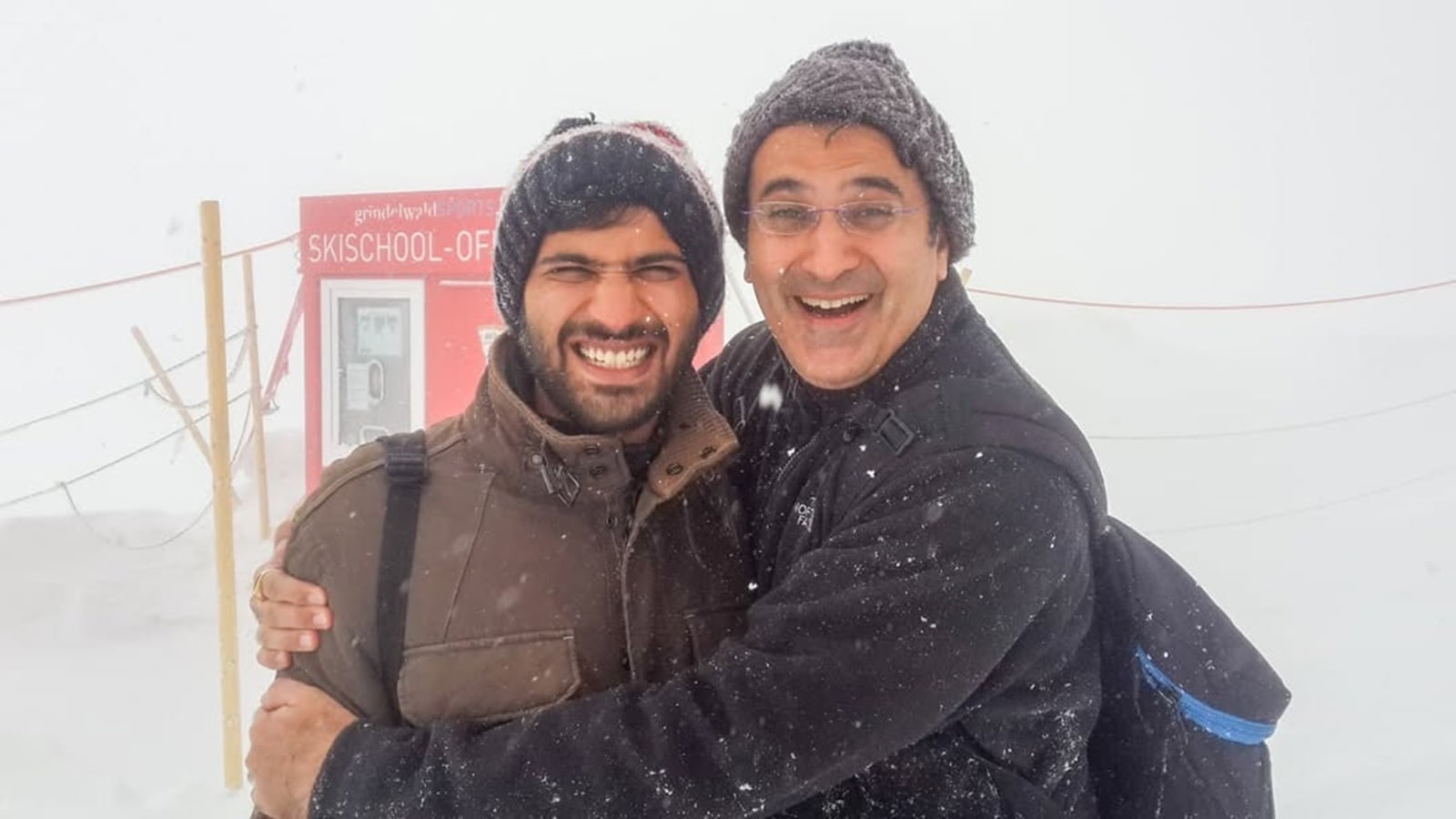 Parmeet Sethi with son Aaryamann (Source: Instagram/Parmeet Sethi)
Dating today looks very different from what it did a generation ago. But not everyone from the older generation relates to the new digital forms of intimacy, as Archana Puran Singh and Parmeet Sethi’s son Aaryamann recently found out.
In a special vlog celebrating 100k YouTube subscribers, Aaryamann revealed he was dating Vikram Vedha actress Yogita Bihani and had a virtual date planned with her. “I am feeling a little sad because Yogita is not here. We will try to fix that. I have a virtual date planned with her after this,” he said.
His father Parmeet Sethi, confused by the concept, responded, “Yeh kuch nayi cheez suni maine abhi (This is something new that I am hearing about).” Aaryamann laughed and said, “Keep up with the times dad.” Later, Parmeet crashed the virtual date and asked, “What is this? Yeh kya ho raha hai? (What is happening here?)” Aaryamann responded, “Yeh humara virtual date chal raha hai papa (We are on a virtual date, papa). Thank you for interrupting, but we were just talking about you.” Parmeet, still puzzled, added, “This is virtual date? Yeh kya zamana aagaya hai? (What era are we living in?) You should have met her in person. What do you even mean by virtual date?”
Sonal Khangarot, licensed rehabilitation counsellor and psychotherapist, The Answer Room, tells indianexpress.com, “Virtual dating has become increasingly common, especially among younger couples who are comfortable building connections online. Pros of virtual dating include deeper emotional conversations, flexibility, and the ability to build intimacy through communication. For people in different cities, countries, or time zones, it offers a way to stay connected without waiting for ideal circumstances.”
View this post on Instagram
However, she adds that cons include the absence of physical touch and shared physical experiences, which can become painful during moments of loneliness, stress, or celebration. “Not being able to hug or simply sit beside a partner can lead to emotional disconnection or longing. Miscommunication may also be more likely when non-verbal cues are missing.”
If you’re in a virtual relationship, Khangarot suggests that you should create rituals of connection—whether it’s video dinner dates or checking in emotionally—to keep the bond alive and growing.
Many parents and older family members may find digital dating unusual, but younger individuals can bridge this gap by relating it to something familiar. For example, we often have close relatives like a maasi or mama living in other cities, and we stay connected with them through calls, video chats, and messages. Similarly, virtual relationships use the same tools to build emotional closeness. “Explaining it this way helps older generations understand that digital connection doesn’t mean the bond is any less real—it’s just shaped by today’s tools,” notes Khangarot.
When the heart is in the right place and intentions are clear, distance can truly make the heart grow fonder. Couples today might enjoy moon gazing together on a video call or plan virtual date nights to stay emotionally connected despite physical separation. “Introducing these habits to family can be done with lightness and love, sharing how these moments help the bond grow stronger. It’s important to express that while the methods are modern, the values — commitment, effort, and care — remain traditional,” mentions Khangarot.