Publishers: Harper Sport
Pages: 510
Price: Rs 799
Before the 2007 World Cup in the Caribbean, I had the choice of picking a non-India team I wished to follow during the tournament.
“Pakistan,” I had said with glee, and without a hint of hesitation. I had my reasons.
A year ago, while covering the under-19 World Cup, I was charmed by the openness of the fabulously talented players from Pakistan. They were young men radiating originality and imagination. They spoke their mind, hinted at intrigue, floated conspiracy theories. They had engaging stories you could write about, delightful off-the-record gossip that you couldn’t. They won the final against India after a miraculous comeback that was so Pakistani. Those affable boys, a mix of peasants and smart city slickers, all with flowing hair, were so human, so full of life. It was a dream team for any reporter.
As it turned out during the bigger World Cup in West Indies, their seniors were all that, and much more. They didn’t do well in 2007, but did re-confirm the fact that with Pakistan, you can never go wrong. The death of their coach Bob Woolmer, after a painful loss to minnow Ireland, proved to be the story of that World Cup. Fate’s obsessive affair with Pakistan ensured that even in losses, like during their triumphs, they remained the newsmakers.
That, in a nutshell, is Pakistan over the years, a nation that gets talked about a lot.
They have been generous contributors to the cricket narrative, responsible for both enriching and devaluing the game. They have given the world champion cricketers, inspirational captains, underachieving enigmas, match-fixers, spot-fixers, dope offenders, toe-crushing pacers, speed maniacs, sultans of swing, doctors of deceit, chuckers, run machines, biased and neutral umpires, neutral Test venues, doosra, reverse swing and Shahid Afridi.
Story continues below this ad
Historically, Pakistan cricket too, like the last mentioned ball-biting, eternally youthful, mercurial all-rounder, so often gets classified as the “unpredictable one”. This general perception, though, is a shallow stereotype, an uneducated leave when faced with a mystery ball. It isn’t a fair comment; it’s as good as giving up on cricket’s complex riddle.
Now finally, Osman Samiuddin, espncricinfo.com’s man in Pakistan for years and now working for The National in Abu Dhabi, has taken out time to guide us through the green maze. All through his thick book, he engages you, educates you and, most importantly, gives you the word that you have been looking for years. There have been many “unpredictable ones” playing this game of glorious uncertainties, but nobody is worthy enough to be called “The Unquiet Ones” except our dear noisy neighbours.
Samiuddin gets you at hello, first with the title and then with the bewitching cover. It has Pakistan’s, or rather the world’s, most talented cricketer, Wasim Akram, savouring a famous win he has freshly scripted. He has a bat in one hand, a souvenir stump in another and his high-voltage smile out-glowing his electric green Pakistan helmet. A barefeet teammate, his barely soiled soles betraying his leaping strides across the turf from the edge of his seat in the dressing room, is lunging madly at Akram’s neck. Another spindly Pakistan player, not even half the size of the entangled-in-embrace Akram, is trying to lift him off the ground. You know his effort to launch the tall, muscular hero in the air is futile but the euphoria of the magical moment, one among the many Akram facilitated for his team, has given him the entitlement and belief to do the impossible.
It’s the frame that somewhat explains the singular cricketing success of a nation despite the insufficiency of its early days or the present-day isolation. “Like humans, Pakistan was born without a shred on its back,” writes Samiuddin, revisiting the Partition. Back then, it was among the poorest in the world without infrastructure, trained manpower and literacy. On the cricketing field, they were rich and regal. In 1954, Pakistan, still a toddler, registered a Test win in their first series against England, a giant leap so vividly captured in the book’s opening chapter ‘The Oval Triumph’. They have continued to embarrass bigger and richer cricketing nations. For the record, Pakistan, despite playing close to 100 Tests less than India, has surprisingly just one Test win less than the Big Brother next door.
Story continues below this ad
Osman puts the early success to jazba, a trait drilled into the nation by the likes of Manto and Faiz. “Like the spirit of a new convert, a belief that even if things weren’t great they could be worked on,” he explains. This jazba jumps out of the pages all through the book — in Pakistan, no player or official believes in sitting in a corner, sulking.
Early in the book, Pakistan cricket’s Pierre de Coubertin Nur Khan rips apart the ICC officials for running the institution like a private body. There is also the incident about Pakistan’s first captain Abdul Hafeez Kardar, who, piqued by former British PM Clement Attlee for not mentioning Pakistan while talking about the region during a dinner in Burma, led a walkout of his team. That courage to rock the boat or to be themselves is ingrained in the Pakistani DNA. They never get intimidated or are reluctant to ask questions, however silly at times.
Like Akram asking his senior Javed Miandad before his first tour how much money he should carry, not knowing that he would be paid to play.
But my favourite anecdote is about Imran Khan’s chilling team talk and the influence it had on young team mates. Pacer Aaqib Javed, just 16 during a game in West Indies, got these short but very effective words of wisdom from Imran when he was about to bowl his first ball to the king himself, Vivian Richards. “Maaro b******d ko bouncer,” Imran told him. After that, as Aaqib says, he began to think like a lion.
Story continues below this ad
This is just one of the many colourful tales that Samiuddin writes, taking the readers close to charismatic captains or inspired pacers. Many of those you have heard before, maybe through Samiuddin from his vast body of work while at ESPNcricinfo. But the triumph of the book is in the writer’s elucidation of these anecdotes, which helps us understand the conundrum that is Pakistan cricket. Or the way he lends perspective to Pakistan cricket’s much celebrated autocracy — first by Kader and later by Imran — that played a big role in shaping this phenomenal cricketing nation. “Pakistan has experience with such leadership types, men who hijack the voice of a country rather than necessarily speak for a nation… Kardar and Imran are, in this sense, stroked from the same old, dried paintbrush as Jinnah and the Bhuttos.”
We have been listening to “The Unquiet Ones” for ages, now finally we also understand them.


 7 min read


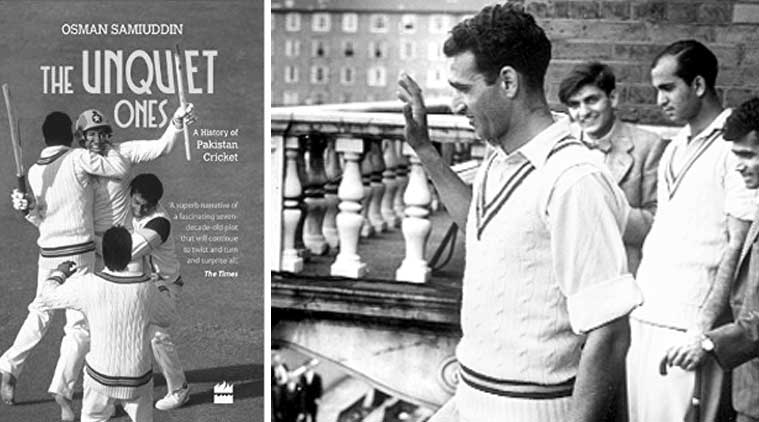 Abdul Hafeez Kardar at the Oval in 1954. Pakistan won a Test in their first series against England under his captaincy.