Premium
This is an archive article published on March 10, 2019

Return of the Native

Filmmaker Randeep Maddoke gives a voice to the landless farmers in Punjab in his documentary film Landless.

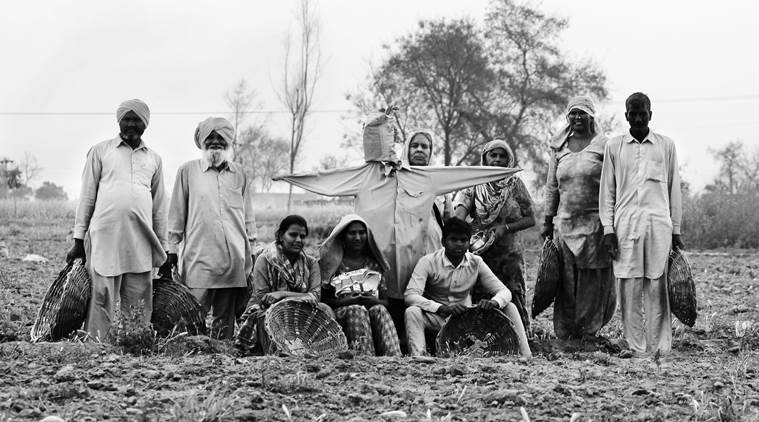
documentary films, landless, randeep maddoke, filmmaker, kolkata people's film festival, udaipur film festival, gorakhpur film festival, dalit labourers, indian express news Still from the film Landless

THE land nurtures and the land deprives, the land gives and the land takes — the land is not only a demarcating line that divides people into two classes in Punjab, but at times, it is also a battlefield where landowners oppress the landless and where the landless struggle to break themselves free from the clutches of this oppression. “Till now, all efforts have been made to put forward the story and version of the dominant class. With Landless, we have tried to put forward the views of the landless,” says Randeep Maddoke, sharing the thought behind his first documentary film, which was recently screened at the Kolkata People’s Film Festival. It has also travelled to the Udaipur Film Festival and Gorakhpur Film Festival.

An activist with the Punjab Khet Mazdoor Union, the award-winning photographer and teacher belongs to the same community of landless Dalit labourers that the film gives a voice and face to. The film is an outcome of a still photography project on landless labourers that Maddoke began in 2005, after the case of Bant Singh, a Dalit agrarian labourer and activist in Jhabar village, who was reportedly beaten up by upper caste Jat men for fighting for justice for his minor daughter who was gangraped. Bant lost his arms and a leg in this attack. Maddoke was then a student at Government College of Art in Chandigarh and took care of Bant when he was admitted in PGI. The incident triggered the photography project. Maddoke travelled to numerous villages across Punjab, documenting the life and struggles of landless Dalit labourers. “Apart from photographs, I began video recording our conversations about their trials and tribulations, as I felt it was very important. Many of my friends felt that the project must be transformed into a film, and I agreed, as not many films and documentaries have put forward their side of the story. Also, film is a more democratic medium, as it can reach wider audiences and rural areas, while photography has its limitations — it is restricted to galleries and an elite audience. It took me more than five years to get the footage and finally make Landless,” shares Chandigarh-based Maddoke, who is currently on a teaching assignment in Jalandhar.

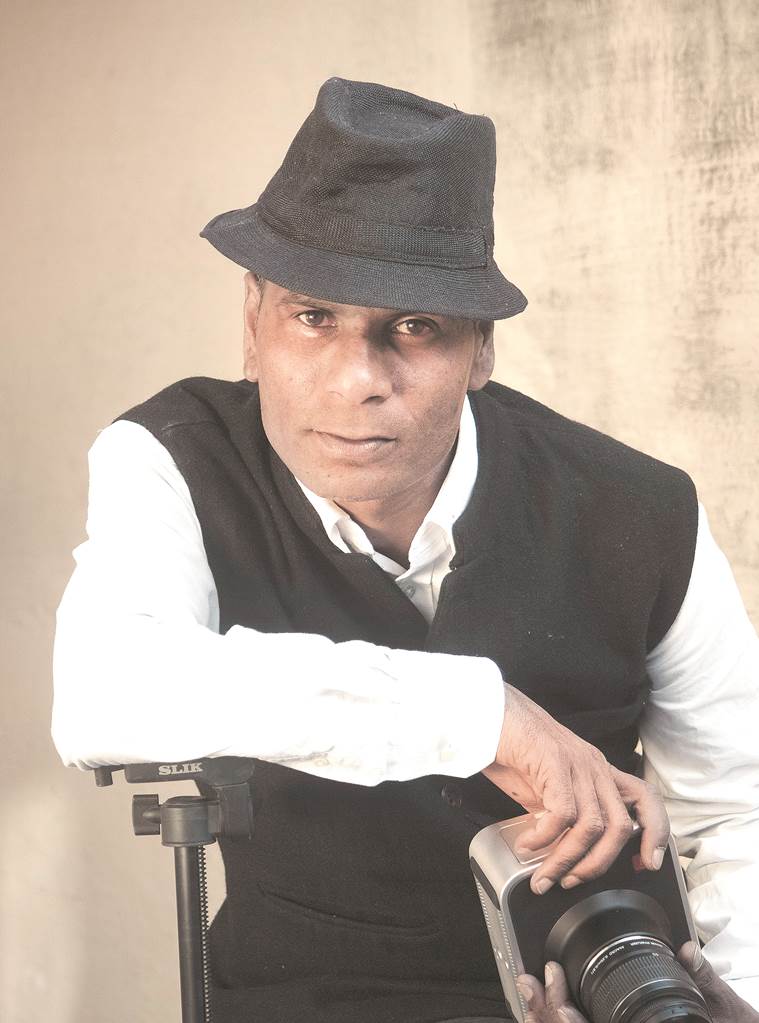
documentary films, landless, randeep maddoke, filmmaker, kolkata people's film festival, udaipur film festival, gorakhpur film festival, dalit labourers, indian express news Filmmaker Randeep Maddoke

Studying the works of great filmmakers and reading and researching the various forms of documentary films, Maddoke has been able to tell complex and true stories in a visual language that steers away from the news-capsule format, with long takes, metaphors, music and sounds giving the shots a new meaning and adding many layers to the film. The filmmaker says it was a deliberate decision not to have quick camera movements. “You are not on a war field, there has to be a certain stillness, silence and sensitivity to capture the anguish of someone who is dying inside,” says Maddoke.

In this deep and intrinsic relationship between caste and land, the oppression of landless Dalit labourers by dominant caste farmers, women are often the biggest sufferers, says Maddoke. He goes deep into the agrarian crisis to record stories from Mansa, Sangrur, Bhatinda, Muktsar and Patiala to document the oppression the landless face as they depend on the land of others, and live in abject poverty, with no scope for protest. In the film, he discusses issues such as farmer suicides, hard labour, social boycott, contract labour and the role of politicians and moneylenders. “The women are easy targets and these are people on the margin, no one talks about them. I am not an outsider, I am one of them, as I was born here. I have worked as an agricultural labourer to earn money, so I know the difficulties, the harshness of their life, the helplessness of the women, the lack of basic amenities, humiliation and indignity they face. I am no different from the people in the film. As an artiste, it is my responsibility to talk of people who are not in the mainstream and of real issues, which I hope Landless does.”

Parul is a Principal Correspondent at The Indian Express in Chandigarh. She is a seasoned journalist with over 25 years of experience specializing in public health, higher education, and the architectural heritage of Northern India. Professional Profile Education: Graduate in Humanities with a specialized focus on Journalism and Mass Communication from Panjab University, Chandigarh. Career Path: She began her career covering local city beats and human interest stories before joining The Indian Express in 2009. Over the last decade and a half, she has risen to the rank of Principal Correspondent, becoming the publication’s primary voice on Chandigarh’s premier medical and academic institutions. Expertise: Her reporting is deeply rooted in the institutional dynamics of PGIMER (Post Graduate Institute of Medical Education and Research) and Panjab University. She is highly regarded for her ability to navigate complex administrative bureaucracies to deliver student-centric and patient-centric news. Recent Notable Articles (Late 2024 - 2025) Her recent work highlights critical reporting on healthcare infrastructure, academic governance, and urban culture: 1. Public Health & PGIMER "PGIMER expands digital registry: Centralized patient records to reduce wait times by 40%" (Nov 20, 2025): A detailed look at the digital transformation of one of India's busiest medical institutes to tackle patient influx. "Robotic Surgery at PGI: Why the new urology wing is a game-changer for North India" (Oct 12, 2025): Reporting on the acquisition of state-of-the-art medical technology and its impact on affordable healthcare. "Shortage of life-saving drugs: Inside the supply chain crisis at government pharmacies" (Dec 5, 2025): An investigative piece on the logistical hurdles affecting chronic patients in the tri-city area. 2. Education & Institutional Governance "Panjab University Senate Election: The battle for institutional autonomy" (Dec 18, 2025): In-depth coverage of the high-stakes internal elections and the friction between traditional governance and central reforms. "Research funding dip: How PU’s science departments are navigating the 2025 budget cuts" (Nov 5, 2025): An analysis of the fiscal challenges facing researchers and the impact on India's global academic ranking. 3. Art, Culture & Heritage "Le Corbusier’s legacy in peril: The struggle to preserve Chandigarh’s Capitol Complex" (Dec 22, 2025): A feature on the conservation efforts and the tension between urban modernization and UNESCO heritage status. "Chandigarh Art District: How street murals are reclaiming the city’s grey walls" (Oct 30, 2025): A cultural profile of the local artists transforming the aesthetic of the "City Beautiful." Signature Style Parul is known for her empathetic lens, often centering her stories on the individuals affected by policy—whether it is a student navigating university red tape or a patient seeking care. She possesses a unique ability to translate dense administrative notifications into actionable information for the public. Her long-standing beat experience makes her a trusted source for "inside-track" developments within Chandigarh’s most guarded institutions. X (Twitter): @parul_express ... Read More


📣 For more lifestyle news, click here to join our WhatsApp Channel and also follow us on Instagram


Latest Comment
Post Comment
Read Comments
Advertisement
Advertisement
Advertisement
Advertisement