6 min read
📣 For more lifestyle news, click here to join our WhatsApp Channel and also follow us on Instagram
© IE Online Media Services Pvt Ltd



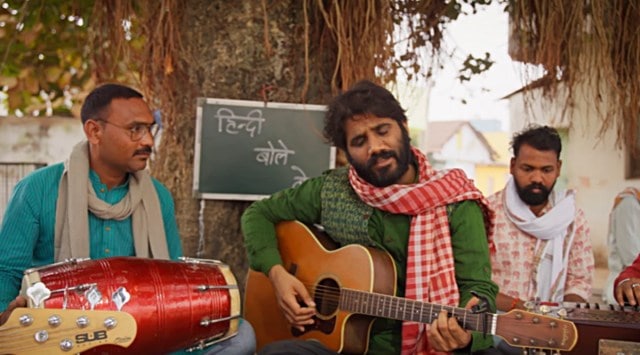 (Source: Kavish Seth/ Instagram)
 It was 2015. Musician Kavish Seth was walking down the road at Kemps Corner, Mumbai, to go to a bookstore to attend the book launch of a fellow Indian Institute of Technology (IIT) Mumbai alumni. For those not familiar with the geography of the City of Dreams, Kemps Corner is the corner of South Bombay, or SoBo, usually traversed by the uber-rich.
Seth was keen on understanding the startup ecosystem, on a boom back then. “I got up and asked my question in Hindi and people turned around to see me with gazes that said, ‘Ye kaun hai, Hindi mein kyun baat kar raha hai? (Who is this? Why is he talking in Hindi?)’,” he said.
Seth felt so unnerved and embarrassed by the situation that he chose to walk out immediately after his question was answered. He felt even angrier at having left, as if he even had anything to be embarrassed about. Cursing himself, he returned home, and that was when his song ‘Hindi Bole Toh Bole ke Gavar Hai’ was born. Its official music video came out on July 12.
It is interesting to note that just a year before this happened to Seth, Jitendra Singh, then Union minister of state for personnel, public grievances and pensions, had declared that the government would not discriminate based on language against students who are not proficient in English after they had alleged this was happening during civil services exams.
Whether or not the government makes laws, the musician says this bias is intrinsic, learned, and hence difficult, even impossible, for some to shake off.
“This is the reason why I made this song,” Seth said, who has been working as a singer-songwriter in the industry since 2014.
Seth created Zubaan, a music initiative that attempts to provide opportunities for collaboration among independent musicians from around India. Chapters have begun in Odisha, Varanasi, Deoria, Kausani, Khetri, Nagpur/ Wardha/ Gadchiroli, Mumbai, and Kolkata, with over 30 artists working together and performing throughout the mainland.
Seth said while performing at one of these chapters with some Bhojpuri artistes was when the song took its form. “When I went to Benaras, I played this song for them. They always have their harmoniums and dholaks handy and they added it to the song. I loved it. I could see where the song belonged,” he said.
Seth named the genre of his song chabootra, which translates to terrace in English but is more like a dais on the terrace where you can sit and talk to your neighbours.
He did not want people to think of the song as folk. “Aap guitar bajaein toh blues, jazz hai; main harmonium bajaun toh folk hogaya kya? Aap sheher mein gana baja rahe hai toh aap indie hain, main gaanv mein bajaun toh folk ho gaya kya? (If you play the guitar in the city, you’re playing Blues or Jazz; if I do it the village, I’m folk?),” he said.
Thumri, Kajari, Garba, Hori, the semi-classical and classical songs originating from different parts of the country, are not just folk. They’re genres by themselves, Seth postured, saying that America is not the only janmbhoomi (birthplace) of musical genres.
Chabootra is a place of social gatherings and that is what Seth hopes to do with the song. “Aap jab ye gaana sunoge aap seedha chabootre pe hi pahaunchoge…chaupal lagi hai vaha pe sab log baithe hai aur gaa rahe hai (You’ll want to sit together and discuss and play this song at the chabootra).”
Seth has played ‘Hindi Bole’ at several places in the country as he travelled to find musicians to work with him for Zubaan. Once when he was at a gig in Lucknow, they played this song on the drive back from the airport and the cab driver was amazed that there could even be a song like this.
“When I played this for the Adivasi community in Bhopal, the kids made their own version of the song, which went, ‘Gondi bole toh bole ke gavar hai’ (When I speak Gondi, you say I’m uncultured),” Seth said.
One of the people he met similarly in the small town of Timarni in Madhya Pradesh is a startup owner who now runs a successful cultural centre. But when he pitched his idea to the Azim Premji Foundation, he was underconfident because his English-speaking skills weren’t the best. Seth said his friend thought, “Shayad mujhe kuch aata hi nahi, shayad maine kuch dhang se kiya hi nai hai (I don’t think I’ve ever done anything worthwhile),”.
He may have written the song originally to express his anger towards himself and the alumni at that event but now it has become a marker of identity, not just for himself but several others too.
A journalist he once met told Seth something that has stayed with him over the years. “Geet kalaakar gaata hai, jab log saath aate hai toh vo sangeet ban jata hai (A singer sings their song, it is when people come together to it that the song becomes music).”
This was Seth’s motive behind ‘Hindi Bole’. We come together listening to this piece of his heart, which eventually became the heart of hundreds as he travelled across the country. You accept who you are, the language barrier and all.
📣 For more lifestyle news, follow us on Instagram | Twitter | Facebook and don’t miss out on the latest updates!