Journalism of Courage



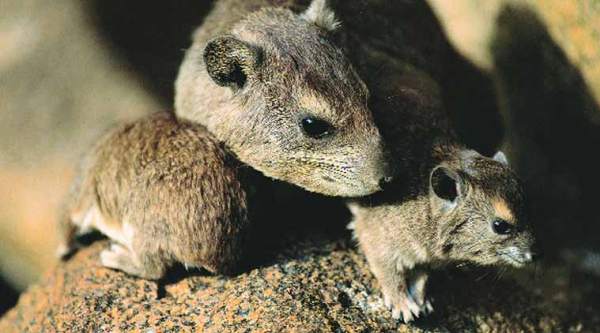 We might love to hate them, but there’s no escaping these rodents. (Source: Express Archive)
Bristly, scaly-tailed, beady-eyed, cunning, canny, vicious, dirty, adaptable and everywhere! Don’t we just love to hate and revile them! In back alleys, trash cans and my kitchen, in hospitals and airplane cockpits nibbling cables, in Mumbai slums and legendary all over New York.
They are rodents related to mice and those other unprepossessing creatures — bandicoots (ghoos in this part of the world.) and they originated in Asia. They travelled the world on ships and planes and ran amuck on islands. Ever since they wiped out half of Europe with the Black Death, they’ve never been forgiven — though it was the flea they carried that passed on the plague. But what’s to forgive? They can also do foot-in-mouth, rabies, swine fever and much more. Here they devour 20 per cent of our grain stock (well,we do just carelessly leave it lying around). Even their scientific names sound mean: the black rat is Rattus rattus, the brown rat, Rattus norvegiens.And yet…
Give a rat a bushy tail and do we have a cutie squirrel? As it is, white rats and mice have been kept as pets by legions of little boys to gross out little girls, usually in the West. We have a temple dedicated to them — the Deshnok Karni Mata Temple in Rajasthan — where they are pampered and thought to be reincarnated as sadhus (it figures, doesn’t it). They’re believed to be the vehicle of the god Ganesh (logic is never a strong point in mythology, which is what makes it so delightful).
The scientific and medical community loves them. Lab rats teach us that everything causes cancer. Put them on a diet of 10 kg of mercury and polonium 24x7x365 and see what happens. Put them on a diet of 10 kg of spirulina and spinach 24x7x365 and see what happens. They try out new drugs on them — to ensure that the new wonder slimming drug doesn’t make us grow horns and a tail and howl at the moon. They’ve even grown a human ear on the back of a rat — whatever next? A backup brain?
They also say that rats think like us. Our psychologies are similar. They help us understand group behaviour — like what happens when you stuff 500 of them in a one foot square box (usually cannibalism). So what’s new? They subject them to all kinds of mind-warping experiments which they can then try out in Guantanamo Bay — or vice versa. And like us, they’re fast breeders, so we never run out of them.
They’ve contributed to science, medicine, and even literature and cinema. Offhand, I can think of the water rat in The Wind in the Willows, Templeton in Charlotte’s Web, Ratatouille, Stuart Little, Tom and Jerry and the one, the only Mickey Mouse! And of course, the nasty Pied Piper of Hamelin, with whom all naughty baby rats are
threatened when they don’t drink their polonium-laced milk.
Um…but I do need him. Some time ago, I discovered a toilet roll unravelled from an upstairs bathroom, all the way down the stairs. At the bottom, the trail went cold. That evening — a suspicious scuffling from an air-conditioner: inside, a cozy little loo paper nest — but the baby dirty dozen had fled. One was later spotted watching the National Geographic Channel from the sideboard. No doubt, they are intelligent. They don’t like cats and owls. Nor do many of us.
No question. Rats ‘R’ Us.
Ranjit Lal is an author, environmentalist and bird watcher.

 4 min read