4 min read


© IE Online Media Services Pvt Ltd



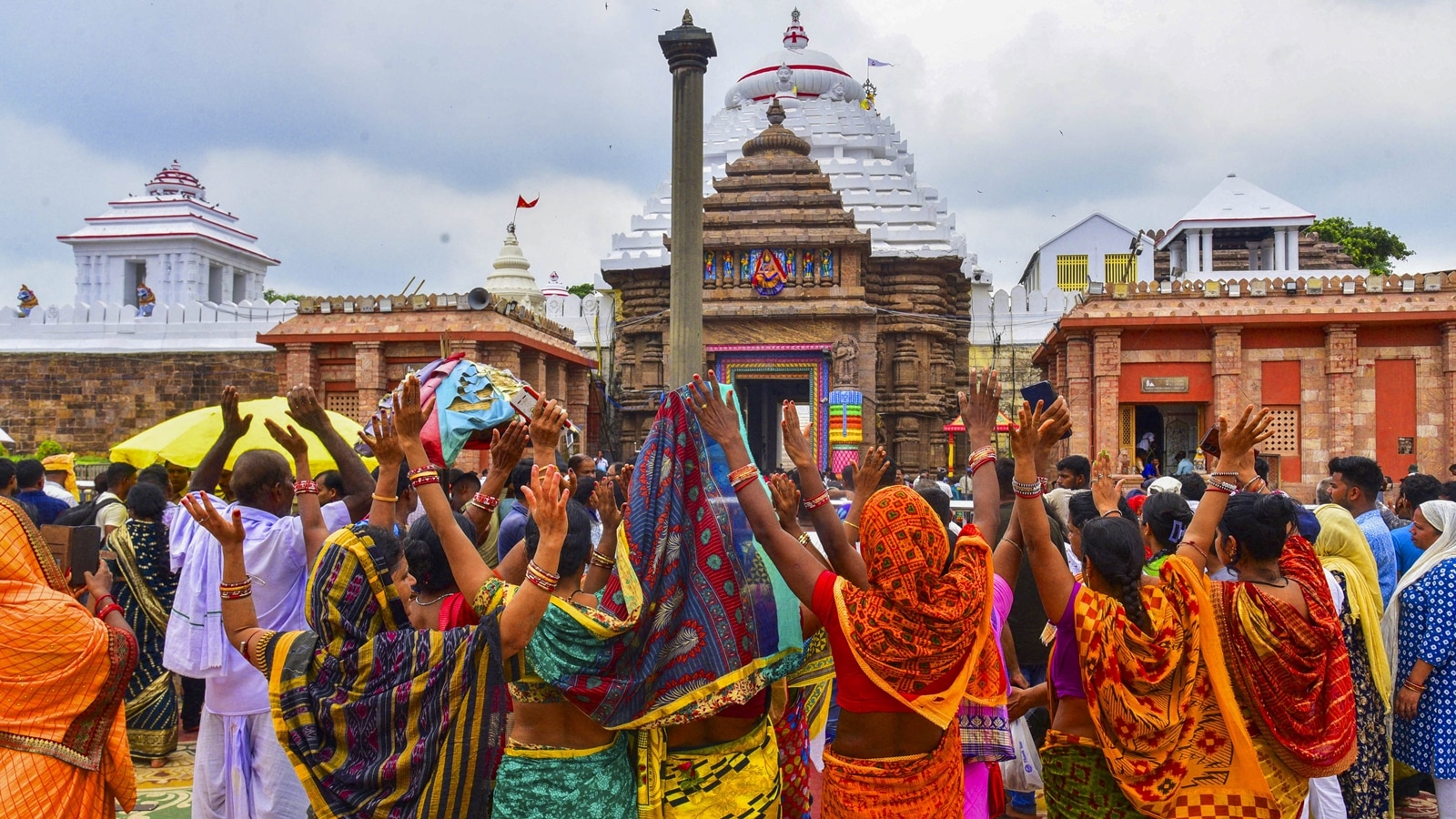 Hindu Deity Eternal Minor: Orissa High Court dismissed a plea seeking a direction to the Lord Jagannath Temple administration to sell a property. (File Photo)
Hindu Deity Eternal Minor: The Orissa High Court recently dismissed a plea seeking a direction to the Lord Jagannath Temple administration to sell a property in its possession in view of a government policy.
Justice Dixit Krishna Shripad was hearing the plea filed by a private person who sought a direction to the temple administration to allow him to purchase the property in question in line with the government’s policy.
“It has long been settled since the days of the Privy Council that a Hindu deity is an eternal minor and therefore, a minor’s property cannot be sold in the absence of statutory enablement,” the court observed.
The order also quoted Salmond’s Jurisprudence, in its Twelfth Edition by Fitzgerald, as saying, “Ownership is a bundle of rights, which inter alia includes the right to alienate property subject to regulatory statutes.”
“The right to alienate necessarily includes the right not to alienate. Such a statute is not cited before the Court to relate the so-called state policy to the same under which the petitioner had staked his claim for buying the property in question”, the court said.
The court pointed out that only because the temple authorities or the government authorities had been invited to offer, once an offer is made by a citizen, it need not necessarily be accepted.
The petitioner sought the direction on the ground that he has held the possession of the property for decades.
His counsel, advocate G C Rout submitted that in view of the state policy and its high functionaries, a legitimate expectation was created, and therefore, his client, having the property, had applied to buy the said property, and the rejection of his application is absolutely unsustainable.
Government policy
In 2022, the Orissa government made amendments to the Sri Jagannath Temple Act, 1954, dealing with lands owned and managed by the temple.
According to the new amendments, the temple administration and officials concerned now possess the power to sell or lease out temple land without any approval from the state government.
Before 2022, people who had occupied or had the temple land for a long period of time had to approach the state government for sale or transfer of the land.
Government policy
In 2022, the Orissa government made amendments to the Sri Jagannath Temple Act, 1954, dealing with lands owned and managed by the temple.
According to the new amendments, the temple administration and officials concerned now possess the power to sell or lease out temple land without any approval from the state government.
Before 2022, people who had occupied or had the temple land for a long period of time had to approach the state government for sale or transfer of the land.
Around 60,426 acre of land in the name of Lord Jagannath, has been identified in 24 districts across the state. Over 395 acres of land has been identified in West Bengal, Maharashtra, Madhya Pradesh, Andhra Pradesh, Chhattisgarh, and Bihar as well.
But these lands have been occupied by people or even institutes like schools and hospitals for more than five decades. After the temple administration identified these lands, in 2003 it proposed that the occupants can buy the land or take it on lease from the temple rather than driving them away.
So the land in this case can be bought by people who are already occupying land owned by the temple and have no land rights to claim ownership. The temple administration also allows sale of land which has remained unused to eligible persons for setting up of schools, hospitals, etc.
From 2001 to 2010, a total of 291 acres of land was settled and from 2011 to 2021, a total of 96 acres of land was settled.So far a total of 11.20 crore has been earned through the settlements, Law Minister Pratap Jena had mentioned in a written reply in the state assembly.