5 min read
© The Indian Express Pvt Ltd



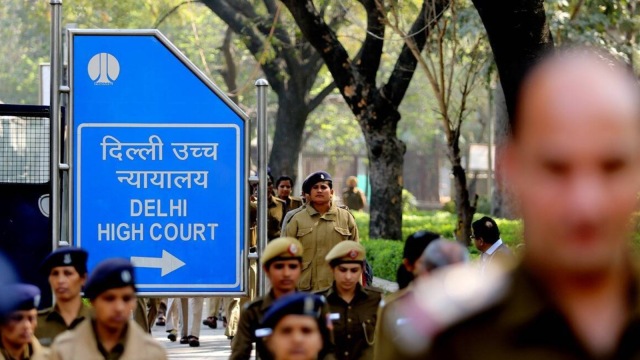 The Delhi High Court has issued guidelines to recover compensation paid under the Victim Compensation Scheme if sexual offence cases are quashed on compromise or victims turn hostile.
 The Delhi High Court has framed guidelines for recovering compensation paid to survivors in sexual offence complaints where a compromise has been reached.
Dealing with a case where a woman had retracted her allegations against three men she had accused of sexual assault, Justice Swarana Kanta Sharma, on December 15, observed that “in absence of any guidelines, in many cases, after receiving compensation, in case the FIRs are quashed on the basis of compromise or the witness turns hostile and resiles from her statement completely after receiving interim compensation, the recovery of compensation is not made.”
The court firstly directed that henceforth, in all petitions filed before the Delhi HC seeking quashing of FIRs or criminal proceedings in cases involving sexual offences — on the basis of compromise or settlement — it shall be mandatory to disclose whether the victim has received any compensation under the Victim Compensation Scheme.
The court further directed, “In cases involving sexual offences where compensation has been awarded to the victim under the Victim Compensation Scheme, it shall be the duty of the learned Trial Court to forward a copy of the order and the relevant record to the DSLSA — to enable DSLSA to examine, in accordance with law and the applicable scheme, whether proceedings for recovery of compensation are required to be initiated — in the following situations: (i) where the FIR or criminal proceedings are quashed on the basis of settlement or compromise and such order is received by the Trial Court; (ii) where the victim turns hostile during trial, resiles from her earlier allegations, or completely exonerates the accused.”
The direction comes after the court also noted that at present, the secretary, DSLSA (Delhi State Legal Services Authority), does not receive information regarding orders of quashing of FIRs registered for offences under Section 376 of IPC or under the relevant provisions of the POCSO Act, particularly where such quashing is on the basis of settlement or compromise.
“As a result, DSLSA is often unable to examine whether interim or final compensation granted under the Victim Compensation Scheme is liable to be recovered in appropriate cases,” Justice Sharma reasoned.
The court opined that the guidelines are necessary since “effective implementation of these recovery provisions is essential to preserve the integrity of the victim compensation framework”.
“If interim compensation disbursed in cases where allegations are subsequently withdrawn or found to be false is routinely allowed to remain unrecovered, it may not only result in misuse of public funds but may also dilute the credibility and sustainability of schemes meant to support genuine victims of sexual violence. The continued public faith and confidence in such welfare measures depends upon their careful, fair, and even-handed administration,” the court ruled.
The Delhi Victim Compensation Scheme, 2018, lays down the framework for grant of interim as well as final compensation to women victims of sexual offences, including the manner in which applications are to be made, assessed, and disbursed. The Scheme also contains provisions addressing recovery of compensation in appropriate cases.
The court’s recommendation of the guidelines was based on the Scheme as well as the Standard Operating Procedure framed by the DSLSA, which elaborates the mechanism and procedure for effecting such recovery.
The court’s guidelines came upon the state’s urging, after the additional public prosecutor, who had challenged the discharge of three men accused of sexually assaulting a woman, had flagged a trend.
According to the state, in a number of cases involving allegations of sexual offences, the survivor, after the registration of an FIR, applies for and is granted interim compensation under the Victim Compensation Scheme. However, it was observed that at a later stage, the victim may resile from her allegations, enter into a compromise, or seek quashing of the FIR or proceedings, making it difficult to recover the interim compensation that was once paid.
In the present case, the woman, while initially supporting the accusations, had subsequently resiled from the allegations.
The court observed that “when serious allegations are made and then withdrawn without explanation, it weakens public confidence in the process meant to protect victims of sexual violence”. It further recorded that “the unfortunate result is that women who have truly suffered such crimes may find their voices questioned or their experiences doubted.”
“For this reason, false allegations of sexual offences cannot be treated lightly and must invite careful and firm scrutiny in accordance with law, so genuine victims are not made to suffer on account of misuse by a few,” the court reasoned.