Journalism of Courage



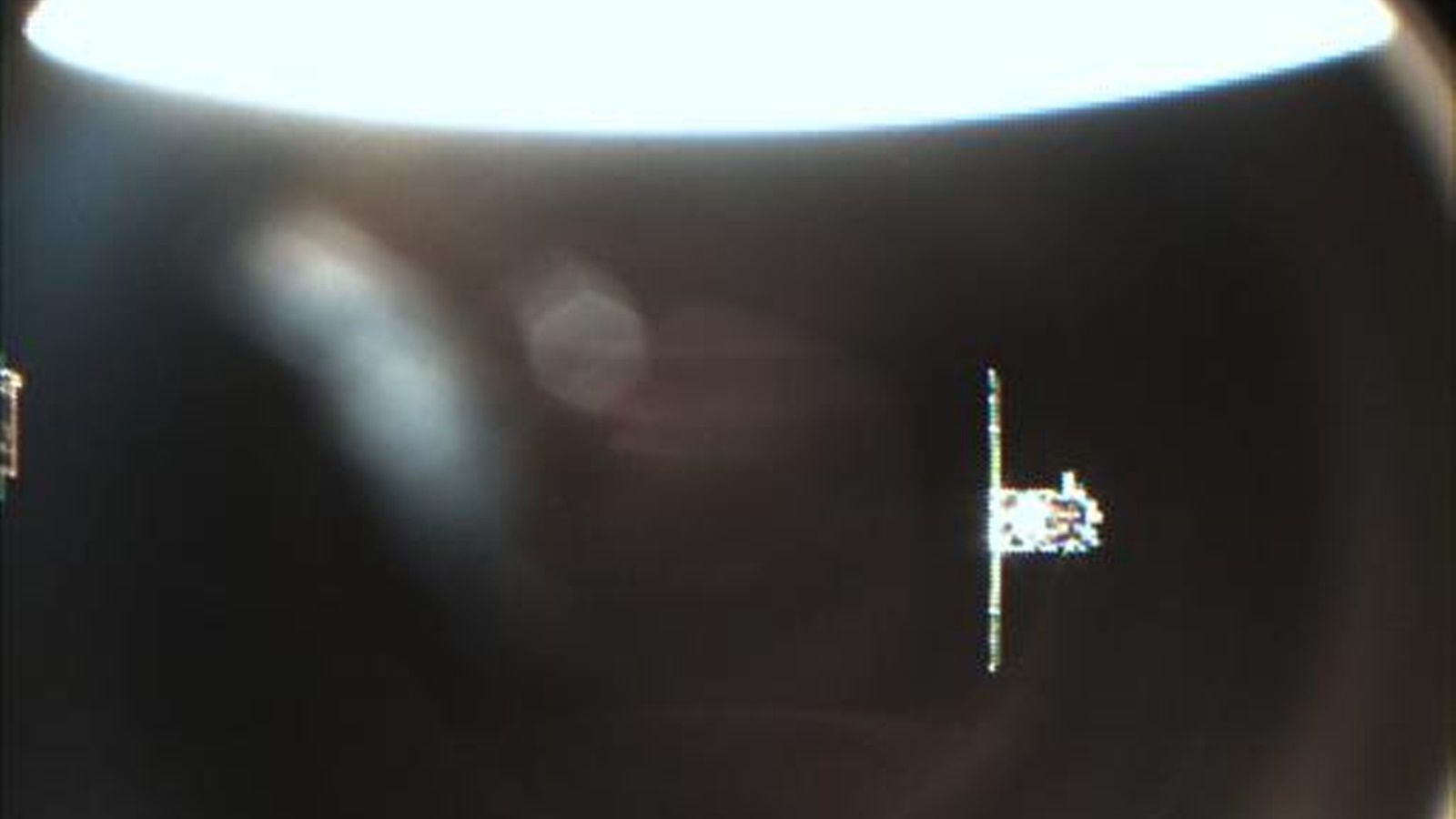 The SpaDeX satellites hold position at 15m. (@isro/X)
The Indian Space Research Organisation (ISRO) brought the two SpaDeX satellites as close as 3 metres to each other on Sunday morning as they continued moving at high speeds in the orbit.
After completing the manoeuvre, the space agency moved the satellites away from each other again.
“A trial attempt to reach up to 15 m and further to 3 m is done. Moving back spacecrafts to safe distance,” the space agency said in a statement. It added, “The satellites will be brought back to the positions and the docking attempted only after analysing the data.”
The satellites were left at a distance of 230 metres from each other on Saturday night. Early next morning, ISRO brought the satellites first to 105 metres from each other. The satellites were captured as tiny specks by the on-board video camera. The satellites were then brought to 15 metres and the position held steady. Both the satellites were then clearly visible on the on-board cameras. “We are just 50 feet away for an exciting handshake,” said Isro. After this, the satellites were brought 3 metres from each other and then allowed to drift back to a safe distance.
ISRO had to postpone the docking plans on two earlier occasions, on January 7 and January 9, because the satellites had not been able to achieve the required alignment. “After the last manoeuvre, the satellites had drifted away, but they were safe. Now, we are re-attempting the entire process. There are certain fixed hold points, the satellites would be brought to these hold points again, before we attempt docking again,” an ISRO official had said at that time.
SpaDeX Docking Update:
SpaDeX satellites holding position at 15m, capturing stunning photos and videos of each other! 🛰️🛰️
#SPADEX #ISRO pic.twitter.com/RICiEVP6qB
— ISRO (@isro) January 12, 2025
As per the docking plan, the Chaser satellite is supposed to be progressively brought closer to the Target satellite, holding positions at a distance of 5 km, 1.5 km, 500 m, 225 m, 15 m, and 3 m, before joining together. All the hold points were accomplished on Sunday.
Once the satellites dock with each other, the space agency will also demonstrate exchanging electrical power between the two and giving commands to the composite spacecraft as one. A successful docking would make India the fourth country in the world — after United States, Russia, and China — to have achieved space docking.
Spadex mission is designed to demonstrate space docking — a process by which two fast-moving satellites or spacecrafts are brought into the same orbit, brought closer together, aligned autonomously or manually, and finally joined. This capability is necessary for carrying out missions that require bigger payloads that a single launch cannot carry.
The first actual Indian mission requiring the docking capability is likely to be Chandrayaan-4, which is supposed to bring lunar samples back to Earth. The re-entry module of this mission, which will be designed to withstand the heat of re-entry to the Earth’s atmosphere, is planned to be launched separately. The transfer module carrying samples from the Moon will come and dock with the re-entry module in the Earth’s atmosphere.
Docking would also be required for setting up the Bharatiya Antariksh Station. The first module is planned to be launched in 2028. It is supposed to have five modules, which are expected to be launched separately and brought together in space. The human mission to Moon, which would also require the capability, is not expected to happen before 2040.

 4 min read