4 min read


© The Indian Express Pvt Ltd



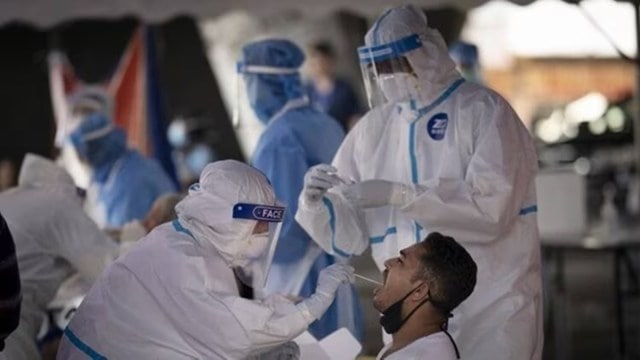 Doctors suggest that those above the age of 60 years, or living with conditions such as uncontrolled diabetes and hypertension, chronic kidney disease, heart disease, and liver disease, may consider taking their precaution dose. (Representational)
With COVID-19 cases on the rise — and the new JN.1 sub-variant being reported from the country — should you be worried about your vaccination holding up? More than 95 per cent of the people in the country have received the first two doses of a COVID-19 vaccine and around a quarter have received the third or precaution dose as well.
Should you get your precaution dose?
Doctors suggest that those above the age of 60 years, or living with conditions such as uncontrolled diabetes and hypertension, chronic kidney disease, heart disease, and liver disease, may consider taking their precaution dose, especially if they are living in or travelling to areas where the infection is in circulation.
Masking up when going to crowded places or when one has symptoms such as fever, cough and sore throat, can also prevent transmission of infection.
Is there a need for additional doses?
Data from Singapore — which is currently witnessing a surge driven by JN.1 — shows that those who received their last dose of vaccine less than a year ago were at a lower risk of severe illness as compared to those who received it more than a year ago. Those who received the vaccine more than a year ago were 1.6-fold more likely to need hospitalisation, shows data from Singapore’s Ministry of Health.
High coverage of the two primary doses and repeated silent infections may have resulted in lasting protection against severe illness, say experts.
“Almost everyone in India has had the infection at least two or three times so far. Most have also received at least two doses of the vaccine. This high, population-level immunity will mean that we are not likely to see the typical pneumonia-like symptoms that were seen during the first and second wave. Most infections would cause upper respiratory tract symptoms. So vaccinating to reduce the number of infections does not make sense,” said Dr Anurag Agarwal, Dean of Biosciences and health research at the Trivedi School of Biosciences of Ashoka University and member the World Health Organisation’s Technical Advisory Group on Sars-CoV-2 Virus Evolution.
Immunity from a natural infection is known to last longer and better protect against future infections.
“Not only has the vaccination and infection resulted in most people gaining immunity, India also does not have a large elderly population in whom the disease may be more severe. There aren’t many people living in old age homes where rapid transmission can happen as it was seen in other countries. All these factors mean that large-scale vaccination again with an updated vaccine will not be cost-effective in India,” says Dr Agarwal. A vaccination, he argues, makes sense for countries where 30 to 40 per cent people continue to remain uninfected.
Is there a need to update vaccines?
The existing vaccines in the US — which were developed against the recombinant XBB variants — continue to be effective against Pirola and its descendant JN.1 as per US Centers for Disease Control and Prevention (CDC). Unlike countries such as the US using mRNA vaccines, most COVID-19 vaccines available in India were developed against the ancestral variant of Sars-CoV-2. They have only been tested in the laboratory against initial Omicron variants and were found to be effective.
But, the vaccines along with natural infection, are likely to continue to protect against the new variants as well, experts say.
An assessment by WHO Technical Advisory Group on COVID-19 Vaccine Composition showed that Pirola and JN.1 were both effectively neutralised by serum from humans who had the infection and vaccination both but not with serum of animals who just had the vaccine and not a natural infection. This could be because of a cumulative effect of immunity through infection and vaccination in humans, the WHO assessment said.
Are there Omicron-specific vaccines available in India?
The Omicron-specific mRNA vaccine developed by Gennova Biopharmaceuticals was approved by the drug regulator earlier this year for a single booster dose for adults.