6 min read
© The Indian Express Pvt Ltd



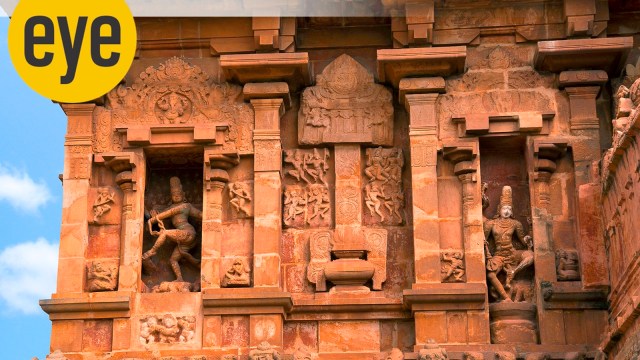 At the Brihadeeswara Temple with Natraja on the left (Getty Images)
Winter has a way of tightening the world. Cold stiffens the body, routine calcifies the spirit and even joy begins to feel scheduled. We start craving escape — not the performative kind with passport stamps and curated chaos, but a quieter slipping-away. A muse. A pause. A place that doesn’t shout its beauty but lets it breathe. Travel, when done right, is sustenance. It feeds us without demanding spectacle. And sometimes the richest departures are the ones that never leave our own shores.
Southern India offers such an escape—warmth without excess, history without noise, faith without force. Here, the land hums rather than dazzles. It asks you to slow down, to unpeel, to discover gently. The temples rise not as monuments to power but as invitations to presence. The cuisine comforts without costume. The roads curve with intention. You return changed, not because you went far, but because you went deep.
Begin with Thanjavur, then drift to Madurai, and finally let the hills of Munnar and Kodaikanal cool and cradle you. This is a journey of continuity—stone to silk, chant to chai, plains to pine—where escape feels like coming home to something you didn’t know you were missing.
You fly into Tiruchirappalli (TRZ), and the road to Thanjavur unfurls like a remembered verse—banana groves, water channels, tiled homes, the occasional bullock cart still negotiating modern time. Thanjavur does not announce itself; it reveals itself. At its heart stands the Brihadeeswarar Temple, a thousand-year-old syllable of stone composed by Raja Raja Chola. The vimana rises with mathematical grace, a geometry of devotion that feels less constructed than conjured.
Inside, the air is cool and unhurried. Priests chant; bells punctuate silence. Outside the temple walls, a butcher sharpens his knife, a flower-seller strings jasmine, a tea stall hisses. Sacred and secular share a footpath here. There is no contradiction — only continuity. This is the genius of the South: divinity is not elevated above life; it is embedded within it.
Thanjavur’s bronzes—Chola icons of Shiva as Nataraja — carry movement frozen into metal. They dance even when still. The silks, with their temple borders and weighty weaves, feel like heirlooms the moment they touch your skin. And the food—sambar perfumed with roasted spices, vazhaipoo poriyal, milagu rasam—does not try to impress. It reassures.
Here, Advaita Vedanta doesn’t need explanation. It is lived. The oneness of being is evident in the way stone, song, sweat, and sustenance share a single rhythm. You leave Thanjavur steadied, your inner weather warmer.
From Madurai Airport (IXM), the city rushes toward you—rickshaws, rhythm, ritual. Madurai is not shy. It pulses. The Meenakshi Amman Temple rises like a technicolor prayer, gopurams layered with stories, gods, demons, dancers—myth rendered municipal. This is a temple that breathes. Enter at dawn or late evening and you’ll feel it: the collective heartbeat of a city in conversation with its deity.
Meenakshi is not distant. She is queen, mother, lover, protector. Around her, life crowds close. A goldsmith hammers bangles as bells ring. A bookshop sells Tamil classics beside plastic toys. Outside one gate, there’s incense; outside another, idlis steaming and kothu parotta clattering into being. You can step out of sanctum silence straight into the sizzle of a griddle. The divine does not mind.
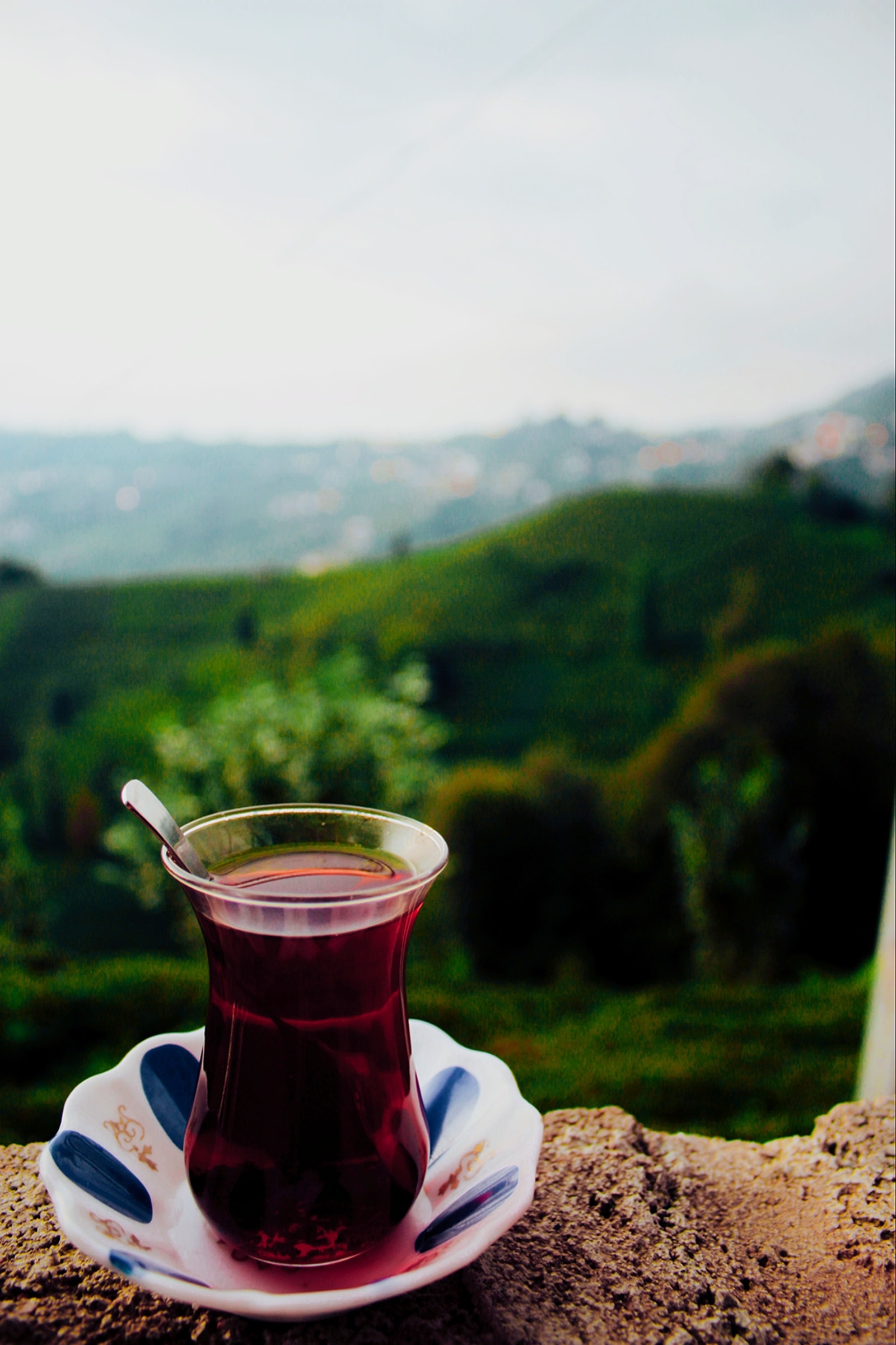 A cup of tea in Munnar.
Madurai’s handloom cottons are airy and honest, its jigarthanda sweet-cool and mischievous, its nights long and loud. And yet, beneath the bustle, there is clarity. The trinity—Brahma, Vishnu, Shiva—feels less philosophical here and more practical: creation, preservation, transformation enacted daily. You don’t think about enlightenment; you brush against it while buying flowers.
Madurai stays with you because it doesn’t curate itself for you. It insists you meet it on its terms. And in doing so, it teaches you how to stay awake.
When the plains have spoken enough, the hills offer a different grammar. Fly into Kochi (COK) or Coimbatore (CJB) for Munnar, where the road begins to climb and the air thins into quiet. Tea gardens ripple like green water, mist edits the landscape, and time loosens its grip. Munnar heals by subtraction. It takes away noise, urgency, excess.
Walk through a plantation at dawn. Smell wet leaves and eucalyptus. Drink tea where it is grown, not performed. Even the wildlife—nilgiri tahr on a distant ridge—appears without announcement. Munnar doesn’t seduce loudly; it lulls.
A few hours away, approached best from Madurai, Kodaikanal offers a softer hush. Pines whisper, fog drapes, the lake mirrors moods. Kodaikanal feels introspective, almost European in temperament, but resolutely Indian in soul. Churches and temples coexist. Bakeries smell of butter and cardamom. You sit longer. You think less.
Here, escape becomes rest. Rest becomes reflection. Reflection becomes return.
Because these places don’t demand transformation; they allow it. They heal not by spectacle but by steadiness. They seduce not with novelty but with nuance. Long after you’re back—after the emails and the cold and the mundane—you’ll remember a bell echoing in stone, a silk border catching light, a cup of tea in mist. You’ll remember how easy it felt to be present.
And perhaps that’s the real escape: not leaving, but learning how to arrive—again and again—into warmth, into wonder, into yourself.