4 min read
© The Indian Express Pvt Ltd



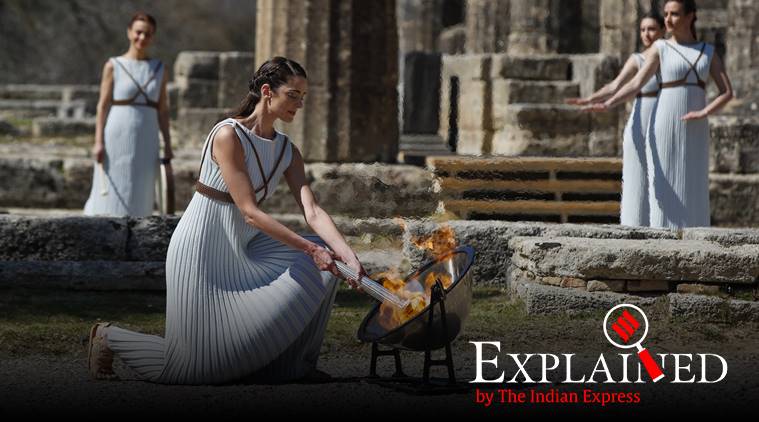 Greek actress Xanthi Georgiou, playing the role of the High Priestess, during the official flame lighting ceremony at the closed Ancient Olympia site, birthplace of the ancient Olympics in southern Greece, Thursday, March 12, 2020. (AP Photo: Thanassis Stavrakis)
The Olympic Flame for the 2020 Tokyo Games has been lit in Olympia in Greece, where the Ancient Olympic Games used to take place. The flame was lit amid an unprecedented lockdown as Greece experienced its first death from COVID-19.
There has been speculation about the postponement or cancellation of the Tokyo Games, which are scheduled to begin on July 24 this year.
Dick Pound, the longest-serving member of the IOC, told The Associated Press in an interview previously that there is a three-month window to decide the fate of the Tokyo Games, but till that time it will be “business as usual”. A decision to cancel the Games will be taken in consultation with the World Health Organization (WHO).
Amid the coronavirus scare, several sporting events across the world have either been postponed or cancelled, including eight golf events, seven football events (Four Serie A, Asian Champions League, Japan’s J league) and three tennis events among others. Read the latest list here
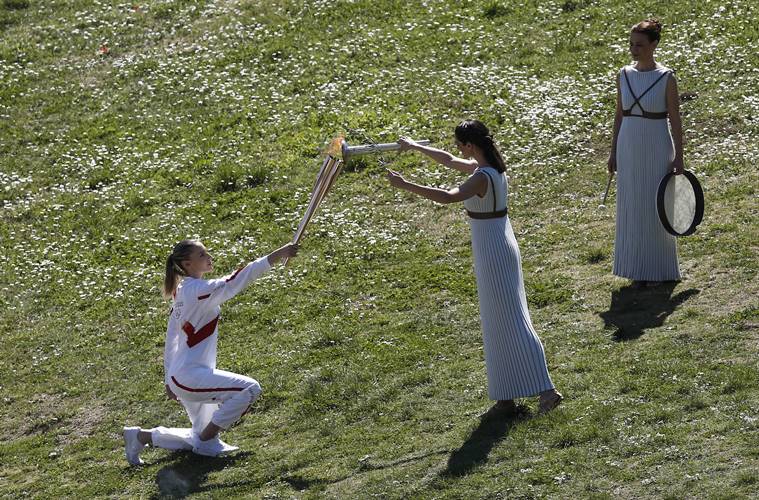 Greek actress Xanthi Georgiou, center, playing the role of the High Priestess, lights the torch of the 2020 Tokyo Olympic Games, held by Greek shooting Olympic champion Anna Korakaki, left, the first torchbearer, during the flame lighting ceremony at the closed Ancient Olympia site, birthplace of the ancient Olympics in southern Greece, Thursday, March 12, 2020. (AP/PTI Photo)
The ceremony is held in front of the ruins of the Temple of Hera, and the flame is lit by actresses who play the part of the priestesses. It is lit in the traditional method of using the sun’s rays reflected on a parabolic mirror.
A flame is lit during a rehearsal ceremony, in case it turns out there is no sun on the day of the official event. This flame is used to light the Olympic Fire.
📢 Express Explained is now on Telegram. Click here to join our channel (@ieexplained) and stay updated with the latest
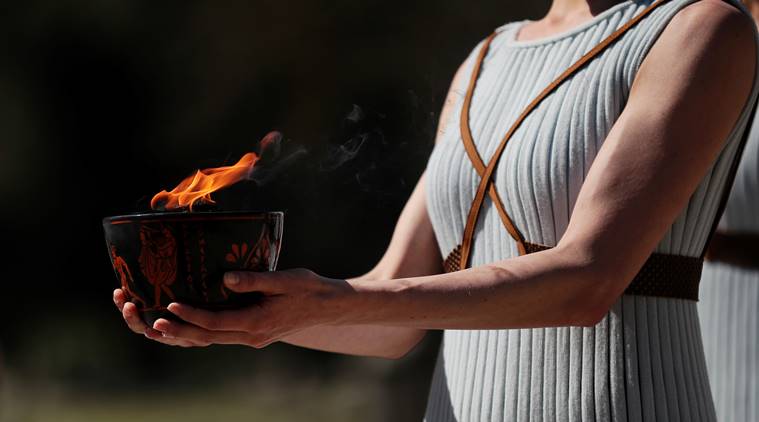 A priestess holds the flame during the Olympic flame lighting ceremony for the Tokyo 2020 Summer Olympics. (Reuters Photo: Alkis Konstantinidis)
The Olympic Flame emphasises the link between the Ancient and Modern Games, and is usually carried by runners on foot from Olympia to its final destination — Japan, this year. During the relay, the torch must never go out.
However, other modes of transportation may also be used, by air for instance, in which case the flame is sheltered in a security lamp and at night time kept in a special cauldron.
Don’t miss from Explained | Coronavirus declared a pandemic. What does this mean?
It is carried to the host city usually by celebrities or athletes. Among the thousands of torch-bearers who carry the flame from Olympia to the host country, the first and the last torchbearers are particularly important. The last torchbearer is responsible for lighting the cauldron in the stadium during the opening ceremony of the Games.
The flame is kept lit for the duration of the Games and is extinguished only at the closing ceremony.