2 min read

Journalism of Courage



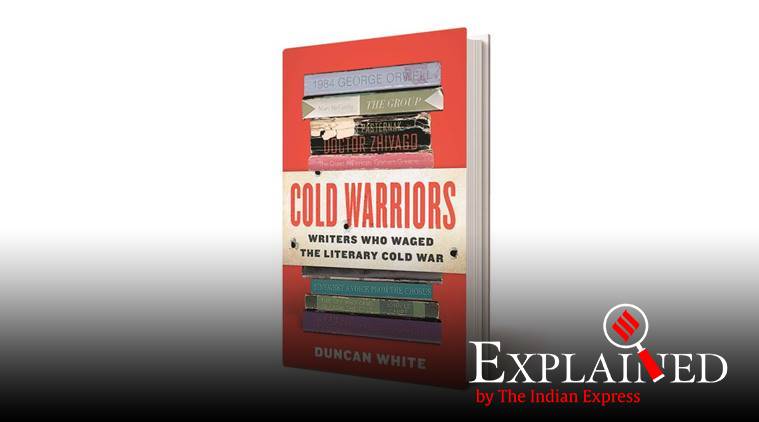 The book spans events including the Spanish Civil War and the collapse of the Berlin Wall.
During the Cold War, authors walked a tightrope between the competing ideas of capitalism and communism. If they offended those in power, they could face possible exile or imprisonment, or even execution. Intelligence networks in the US and Britain, as well as the Soviet Union, ran propaganda networks devoted to literary warfare. Duncan White of Harvard University has now chronicled how this intellectual struggle was waged on both sides of the Iron Curtain.
Cold Warriors: Writers Who Waged the Literary Cold War tells the history of journalists, spies and writers whose work changed the course of the Cold War through their involvement with dissidence, espionage and propaganda. The book spans events including the Spanish Civil War and the collapse of the Berlin Wall. The book follows Graham Greene, Stephen Spender, Mary McCarthy, George Orwell and Andrei Sinyavsky as the key writers, but also includes John le Carré, Ernest Hemingway, Boris Pasternak, Lillian Hellman and many more.
White begins the book with: “Between February and May 1955, a group secretly funded by the Central Intelligence Agency launched a secret weapon into Communist territory. Gathering at launch sites in West Germany, operatives inflated ten-foot balloons, armed them with their payload, waited for favourable winds, and launched them into Poland. These, though, were not explosives or incendiary weapons: they were books.”