4 min read

Journalism of Courage



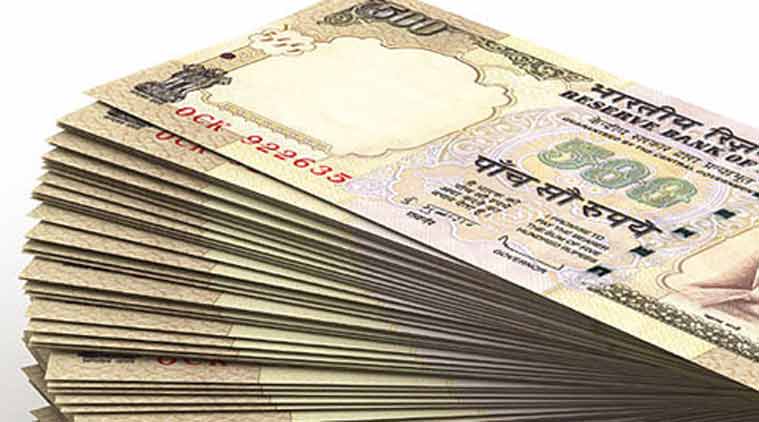 Finance Minister Arun Jaitley has said that by 2017, India would be in a position to obtain information on illegal funds stashed abroad in real time.
Five Indians are in a list of suspected tax evaders published in the Swiss Federal Gazette. Shaji Vikraman explains what this means
Why have the names come out now?
The Swiss government, following negotiations with a high-level Indian delegation, agreed last October to provide information on deposits in cases where the Indian Income-Tax Department had carried out independent, evidence-backed investigations. I-T has probed several cases of Indians with offshore accounts — many of them were part of the HSBC list. Indian requests for information on suspected tax evaders appear to have finally worked. The next key step will come when the two countries sign a treaty for Automatic Exchange of Information (AEOI), for which talks are on. On Wednesday, Switzerland signed an AEOI with the EU.
[related-post]
Why are the names being put out in a public gazette in Switzerland?
Following recent changes in Swiss laws, the Berne government has to intimate the account-holder that information on the country of origin or residence is being revealed. Names are published in the gazette apparently if addresses are not available, with the accountholder then getting the opportunity to contest the sharing of more information with the country that has sought it.
Is this the first time such a list is being released?
Not globally. The ‘India’ list in the Swiss Federal Gazette is part of a global list that has names of Russian, British and Spanish nationals as well, indicating that these countries too would have sought information based on their tax agreements with the Swiss. A list of over 3,000 names was given to France earlier, complete with details of bank accounts. Before that, the US had forced the Swiss to give information on Americans trying to evade tax in the US.
Will things change with an AEOI?
Significantly, because the two countries would then have committed to automatically pass on to each other any information or details on violation of tax laws, without need for a specific request. Such a treaty will end so-called “fishing expeditions”, and allow flow of information by default. Finance Minister Arun Jaitley has said that by 2017, India would be in a position to obtain information on illegal funds stashed abroad in real time.
What is the backdrop to the global crackdown on tax evasion?
Much of it gained momentum after the 2008 global financial crisis. With several national governments in financial trouble, and amid increasing agitation over rising inequality, moves to close in on tax havens were accelerated. The Organisation for Economic Co-operation and Development (OECD), a grouping of well-off nations, flagged the issue and put out standards which it said other countries would have to comply with. A “grey list” of countries seen as supporting tax evasion or not cooperating with OECD was released, along with potential threats of action. The list had Liechtenstein, Luxembourg, Switzerland and several other countries, forcing them to fall in line.
Also, in August 2009, the G20, which includes the world’s most influential and economically powerful countries, moved against attempts by countries to support or aid attempts to evade taxes, despite protests by Switzerland. Even greater pressure was put by the US, which had, over four years ago, enacted the Foreign Account Tax Compliance Act (FATCA), under which all foreign financial institutions had to automatically pass on information on US citizens seen to be evading taxes in their home countries. India is now set to sign the FATCA — and financial sector regulators and institutions are gearing up to meet compliance standards set by the US.
The US Justice Department too turned on the heat, by probing — and later fining — banks, including marquee names such as Credit Suisse and UBS for aiding tax evasion. A fine of $ 780 million was slapped on UBS.