Premium
This is an archive article published on February 4, 2016

Sex determination: An old law, a new debate

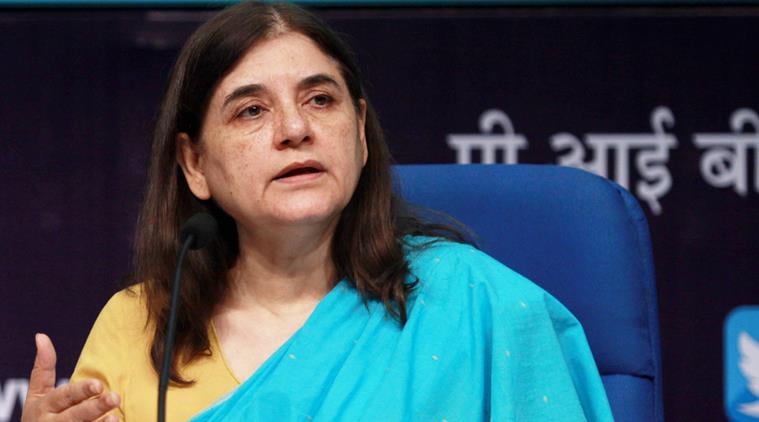
On Monday, Maneka Gandhi said sex determination during pregnancy must be made compulsory, a statement she later said was only an “alternative view”.

maneka gandhi, sex determination, , women and child development, child sex determination in india Women and Child Development Minister Maneka Gandhi.

What does the law say about sex determination?

The Pre-Conception and Pre-Natal Diagnostic Techniques (Prohibition of Sex Selection) Act, 2003, commonly called PC-PNDT Act, makes it illegal to determine the sex of the unborn child or even use sex-selection technologies. The law first came into force in 1996 as the Pre-Natal Diagnostic Techniques (Regulation and Prevention of Misuse) Act, 1994, in response to the falling sex ratio and fears that ultrasound technologies were being used to determine the sex of the foetus. The law was amended in 2003 to bring the technique of preconception sex selection within the ambit of the Act – essentially, banning practices where medical practitioners try to influence the sex of the child before conception by using techniques such as sperm sorting (where a sperm cell is specifically chosen because of its sex chromosome). The law as it stands not only prohibits determination and disclosure of the sex of the foetus but also bans advertisements related to preconception and prenatal determination of sex.

What are the provisions of the Act?

According to the Act, ultrasound clinics, genetic counselling centres and genetic laboratories cannot be used for conducting pre-natal diagnostic techniques except for detecting abnormalities such as chromosomal abnormalities, genetic metabolic diseases, sex-linked genetic diseases and congenital anomalies. The Act makes it mandatory for all ultrasound facilities to be registered and for medical practitioners to maintain records of every scan done on pregnant women.

[related-post]

What was the need for such an Act and how many convictions have there been so far?

Since 2000, both high courts and the Supreme Court have delivered a series of judgments, taking a serious view of sex-selective practices by the medical fraternity and the connection it may have with skewed sex ratios. In September 2001, following a public interest litigation – filed by the Centre for the Enquiry of Health and Allied Themes, rights group Mahila Sarvangeen Utkarsh Mandal and Dr Sabu George, who had been pushing for the effective implementation of the PMDT Act — the Supreme Court passed an order for strict implementation of the Act and reiterated it again in September 2003.

The rate of conviction has been poor. From 2003 to December 2014, only 206 doctors had been convicted by courts, of which Maharashtra had the highest number at 96, followed by Rajasthan, Punjab and Haryana. At least 15 states and four union territories had zero convictions all these years.

The woman and child development minister’s proposal is that the gender of the child be compulsorily registered and the birth be tracked. Activists have opposed the idea, saying it will only make female foeticide more rampant. (Illustration by: C R Sasikumar) The woman and child development minister’s proposal is that the gender of the child be compulsorily registered and the birth be tracked. Activists have opposed the idea, saying it will only make female foeticide more rampant. (Illustration by: C R Sasikumar)

Isn’t the Act effective enough?

Story continues below this ad

According to experts, the problem isn’t with the Act but with its implementation. State advisory committees that help in implementing the Act do not meet regularly. Besides, there is poor monitoring of ultrasound clinics. Such clinics are required to maintain records of the scans they conduct but the violators are often let off with a fine.

What is Maneka Gandhi’s proposal?

Responding to a question about people employing different means to detect the gender of an unborn child despite the existence of the Act, the Minister of Women and Child Development said in Jaipur that she had proposed “to all parties and ministers” that the gender of the child be compulsorily registered and the birth be tracked. “This PC-PNDT Act is not under me, but with the health ministry. But till when will we keep arresting people? In this country, if a person goes to an ultrasound owner and asks for the gender of his (unborn) kid, who will dare say no,” Maneka said. She later clarified that hers was only an “alternative view” and that no such formal proposal was being considered either by the ministry or the Cabinet.

What are the objections to Maneka Gandhi’s proposal?

Activists and experts have roundly opposed the idea, saying it will only make female foeticide more rampant. “How feasible is it to monitor 29 million pregnancies annually when the government hasn’t been able to check 50,000 ultrasound clinics,” Dr George, the campaigner for ‘saving the girl child’, told The Indian Express.

Experts say that the idea of compulsory sex determination will only push women to unsafe abortions. “There will be greater pressure on the pregnant woman from her family if they find out early on that her second or third child is a girl,” said George.

Story continues below this ad

Experts also say that no test can be made mandatory in a democracy such as India. Besides, they say, the proposal is an encroachment on a woman’s reproductive rights and shifts the burden on the woman by criminalising her. “Spare the woman. It’s more import to change societal mindsets,” says Vibhuti Patel, head of the department of economics at SNDT Mumbai University and a woman’s rights activist.

Anuradha Mascarenhas is a Senior Editor at The Indian Express, based in Pune. With a career spanning three decades, she is one of the most respected voices in Indian journalism regarding healthcare, science and environment and research developments. She also takes a keen interest in covering women's issues . Professional Background Education: A gold medalist in Communication and Journalism from Savitribai Phule Pune University and a Master’s degree in Literature. Author: She authored the biography At The Wheel Of Research, which chronicles the life and work of Dr. Soumya Swaminathan, the former Chief Scientist at the WHO. Key Focus: She combines scientific accuracy with storytelling, translating complex medical research into compelling public and human-interest narratives. Awards and Recognition Anuradha has won several awards including the Press Council of India's national award for excellence in journalism under the gender based reporting category in 2019 and the Laadli Media award (gender sensitivity -2024). A recipient of the Lokmat journalism award (gender category-2022), she was also shortlisted for the RedInk awards for excellence in journalism-2021. Her debut book At The Wheel Of Research, an exclusive biography of Dr Soumya Swaminathan the inaugural chief scientist of World Health Organisation was also nominated in the Popular Choice Category of JK Paper AUTHER awards. She has also secured competitive fellowships including the Laadli Media Fellowship (2022), the Survivors Against TB – New Research in TB Media Fellowship (2023) and is part of the prestigious 2025 India Cohort of the WomenLift Health Leadership Journey.” Recent Notable Articles (Late 2025) 1. Cancer & Specialized Medical Care "Tata Memorial finds way to kill drug-resistant cancer cells" (Nov 26, 2025): Reporting on a breakthrough for triple-negative breast cancer, one of the most aggressive forms of the disease. Discipline, diet and purpose; How a 97-year-old professor defies ageing'' (Nov 15, 2025) Report about Prof Gururaj Mutalik, the first Head of Department at Pune's B J Government Medical College who at 97 credits his longevity to healthy habits and a strong sense of purpose. 2. Environmental Health (The "Breathless Pune" Series) Long-term exposure even to 'moderate' air leads to chronic heart, lung, kidney issues" (Nov 26, 2025): Part of an investigative series highlighting that even "safe" pollution levels are damaging to vital organs. "For every 10 µg/m3 increase in PM2.5 level, there was 6-8% jump in medicine sales" (Nov 23, 2025): Using commercial data to prove the direct link between air quality and respiratory illnesses in Pune. 3. Lifestyle & Wellness News "They didn't let cancer, diabetes and heart disease stop them from travelling" (Dec 22, 2025): A collaborative piece featuring survivors who share practical tips for traveling with chronic conditions. At 17, his BP shot up to 200/120 mmHG; Lancet study flags why child and teen hypertension doubled between 2000 and 2020'' (Nov 12,2025)--A report that focusses on 17-year-old-boy's hypertensive crisis and reflects the rising global trend of high blood pressure among children and adolescents. 4. Scientific Recognition & Infrastructure For promoting sci-comm, gender diversity: IUCAA woman prof highlighted in Nature" (Nov 25, 2025): Covering the global recognition of Indian women scientists in gender studies and physics. Pune researchers find a spiral galaxy like the Milky Way from early universe'' (December 3, 2025)- A report on how Indian researchers discovered a massive galaxy that existed when the universe was just 1.5 billion years old , one of the earliest to have been observed so far. Signature Beat: Health, Science & Women in Leadership Anuradha is known for her COVID-19 reportage, where she was one of the first journalists to provide detailed insights into the Covishield and Covaxin trials. She has a dedicated interest in gender diversity in health and science, often profiling women researchers who are breaking the "leaky pipeline" in STEM fields. Her writing style is scrupulous, often featuring interviews with top-tier scientists and health experts from various institutions.   ... Read More


Latest Comment
Post Comment
Read Comments
Advertisement
Advertisement
Advertisement
Advertisement