Premium

Why Punjab has sought Rs 600 crore from the Centre for dealing with drugs cases

Punjab faces unique challenges related to the smuggling of drugs due to its geography, with CM Bhagwant Mann recently raising the issue with Home Minister Amit Shah.

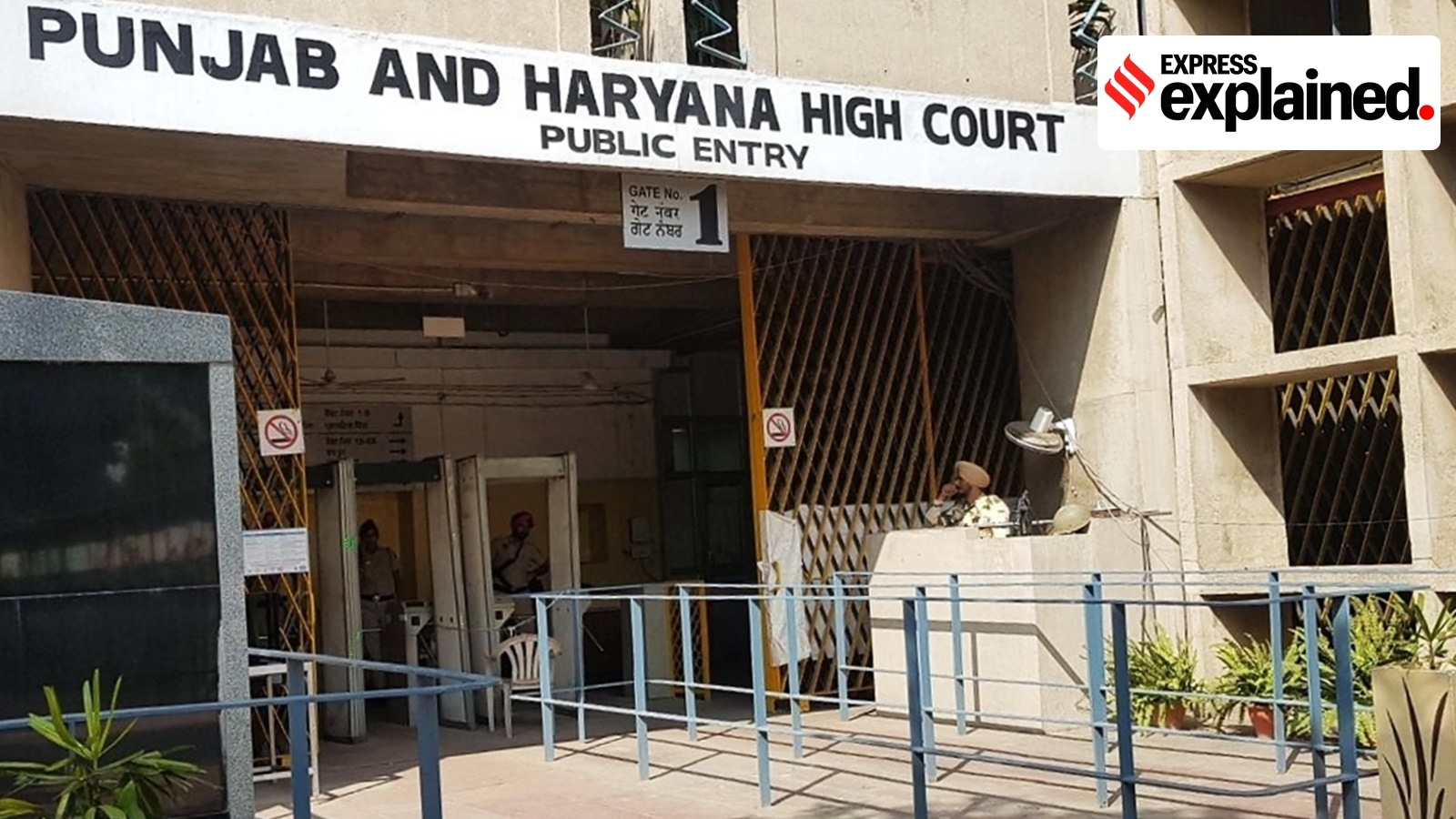
punjabIn 2024, the Punjab and Haryana High Court highlighted the need for special NDPS courts to expedite pending cases. (Express photo by Jasbir Malhi)

The Punjab government has sought a one-time special assistance of Rs 600 crore from the Centre to set up special NDPS (Narcotic Drugs and Psychotropic Substances) courts for the speedy disposal of drug-related cases.

Chief Minister Bhagwant Mann recently raised the issue with Union Home Minister Amit Shah during a regional conference on drug trafficking and national security. Here is why.

First, what are NDPS courts?

NDPS courts are established under the NDPS Act of 1985. It is the main legislation that deals with drugs and their trafficking. Various provisions of the Act punish the production, manufacture, sale, possession, consumption, purchase, transport, and use of banned drugs. Under the Act, special courts can be set up to try such cases.

Mann emphasised the urgency of clearing the backlog of NDPS cases, which stood at 35,000 as of January 1, 2025. He requested Shah’s intervention to provide Rs 60 crore annually to the state for the next 10 years. The funds would be utilised to set up exclusive NDPS courts, appoint public prosecutors, and hire supporting staff.

What is the pendency of NDPS cases in Punjab?

At the current disposal rate, it takes an average of seven years for a session court to complete the trial of pending cases (excluding newly added ones). Without intervention, this timeline could stretch to 11 years within five years, with the backlog projected to rise from 35,000 to 55,000 cases.

To clear the pendency within five years, Punjab requires 79 new NDPS special courts and the appointment of 79 public prosecutors with supporting staff, Mann said. The state has also sought funding under the National Fund for Control of Drug Abuse (Chapter 7-A of the NDPS Act) for:

• Anti-Narcotics Task Force operations

• Live monitoring systems in six border districts

• Technical surveillance equipment and infrastructure for 5G jamming solutions in prisons

• De-addiction centres in jails and AI surveillance systems

• A special prison for drug traffickers

• Anti-drug awareness campaigns in all 28 districts

Story continues below this ad

Additionally, Punjab has requested Rs 8,846 crore from the 16th Finance Commission to tackle narco-terrorism and drug abuse comprehensively.

Why is Punjab seeking the Centre’s help?

Punjab faces unique challenges related to the smuggling of drugs due to its geography. It shares a 552 km international border with Pakistan, with a 43 km fencing gap and a 35 km riverine gap. This makes it vulnerable to cross-border drug trafficking. The state also lies close the “Golden Crescent,” a major drug route passing through the opium-producing regions of Iran, Pakistan, and Afghanistan.

Mann pointed out that increased vigilance and fencing have pushed traffickers to rely on drones, reducing the risk of interception. He called drug trafficking a national problem, highlighting its potential to destabilise socio-economic structures and urged the Centre for a collaborative approach.

In September 2024, the Punjab and Haryana High Court highlighted the need for special NDPS courts in Punjab, Haryana, and Chandigarh to expedite pending cases. A division bench of Justice Sureshwar Thakur and Justice Sudeepti Sharma had urged the Chief Justice to engage with state governments on this issue. The Bench described having special NDPS Courts in Punjab, Haryana, and Chandigarh as a “dire necessity”. The court noted the prolonged delays in trials and their impact on granting bail under Section 37 of the NDPS Act.

Story continues below this ad

A Law Commission report of 1997 also noted that “inherent weaknesses in the enforcement of NDPS Act” need to be tackled. Among the reasons cited for it was the non-establishment of adequate special courts for speedy trial.

How has Punjab attempted to crack down on drugs?

Punjab’s drug crisis has been ongoing for the last few decades. As per the official figures, as many as 46,746 cases under the NDPS Act were registered by the district police, State Special Operations Cell (SSOC), and Government Railway Police in the 51 months between January 1, 2013, to March 31, 2017. Under the Congress government, for a similar number of months, 46,273 cases were registered between April 1, 2017, and June 30, 2021, by the same agencies.

Since the AAP government came to power in 2022, it has registered over 31,500 NDPS cases, arresting 43,000 accused and seizing 3,000 kg of heroin, 2,600 kg of opium, and 4.3 crore pharmaceutical drugs.

Illegally acquired property worth Rs 449 crore belonging to drug traffickers has been frozen. The state also maintains a database of 3,32,976 criminals, including over 1 lakh drug offenders, with drug seizure records and voice analysis for better case management. In the last five years, Punjab has reported 1,247 drone sightings and recovered 417 drones.

Kanchan Vasdev is a Senior Assistant Editor in The Indian Express’ Punjab bureau. She is a highly experienced journalist with 22 years of expertise covering high-stakes politics, governance, and social issues in Northern India. Professional Background Role: Primary reporter covering the Punjab Chief Minister’s Office (CMO), government policies, and the Aam Aadmi Party (AAP) leadership in the state. Experience: She previously worked with The Tribune and has played a key role in launching various city editions. Special Projects: Abandoned Brides: Authored a monograph on brides abandoned by NRIs as part of the Prabha Dutt Memorial Fellowship. Environment: Worked as a Centre for Science and Environment (CSE) fellow, focusing on the pollution levels in the Satluj river. Recent Notable Articles (Late 2025) Her recent reporting focuses on the legislative strategies and political maneuvers of the Bhagwant Mann-led Punjab government: 1. Legislative & Governance Standoffs "Punjab govt advances special Assembly session to pass resolution against VB-G RAM G Bill" (Dec 20, 2025): Reporting on the state's move to block the Centre's "Viksit Bharat" mission, which the state claims will undermine MGNREGA. "Punjab govt doubles down on special sessions, sixth in January" (Dec 19, 2025): Detailing the AAP government's use of special sessions as a legislative tool amid tensions with the Governor. "Punjab asks 'VIP teachers' working near Chandigarh to go back to border districts" (Dec 16, 2025): Reporting on CM Mann's move to end the practice of influential teachers avoiding postings in remote areas. 2. Political Analysis & Rural Polls "Punjab rural polls: Why Akalis are likened to dinosaurs in Punjab" (Dec 19, 2025): Analyzing CM Bhagwant Mann's rhetoric against the Shiromani Akali Dal (SAD) following local body elections. "AAP claims win in 78% Punjab zila parishads as counting continues" (Dec 18, 2025): Breaking down the results of the 2025 rural elections. "Rahul Gandhi and Sidhu alike, says Bhagwant Mann" (Dec 13, 2025): Covering the CM's critique of the Congress leadership. 3. Law Enforcement & Bureaucracy "Suspended Punjab IPS officer Ravjot Kaur Grewal awaits reinstatement" (Dec 10, 2025): Investigative reporting on the bureaucratic red tape involving the Election Commission and the state government. "Punjab declines to give parole to Amritpal Singh" (Nov 27, 2025): Detailing the state government's refusal to grant parole to the radical preacher and sitting MP. 4. Welfare & Economy "Punjab government's plan to add more freebies to 'atta-dal' scheme hits funds roadblock" (Dec 4, 2024): An analysis of the fiscal challenges facing the state's flagship food security program. "Mann leads Punjab delegation to Japan and South Korea for investor outreach" (Dec 2, 2025). Signature Beat Kanchan Vasdev is known for her insider access to Punjab's political executive. Her writing provides deep insights into how state policies are formulated and the friction points between the state government and central authorities. Her dual expertise in environment and law allows her to report on complex issues like the "Farmhouse Policy" (Dec 18, 2025) and river pollution with a unique policy-oriented lens. X (Twitter): @kanchan99 ... Read More


 

Latest Comment
Post Comment
Read Comments
Advertisement
Advertisement
Advertisement
Advertisement