Premium

How Centre’s draft notification could benefit proposed Adani cement project in Maharashtra

One immediate beneficiary of exemptions to environmental clearances could be a proposed Adani-owned plant near Kalyan, in the Mumbai Metropolitan Region.

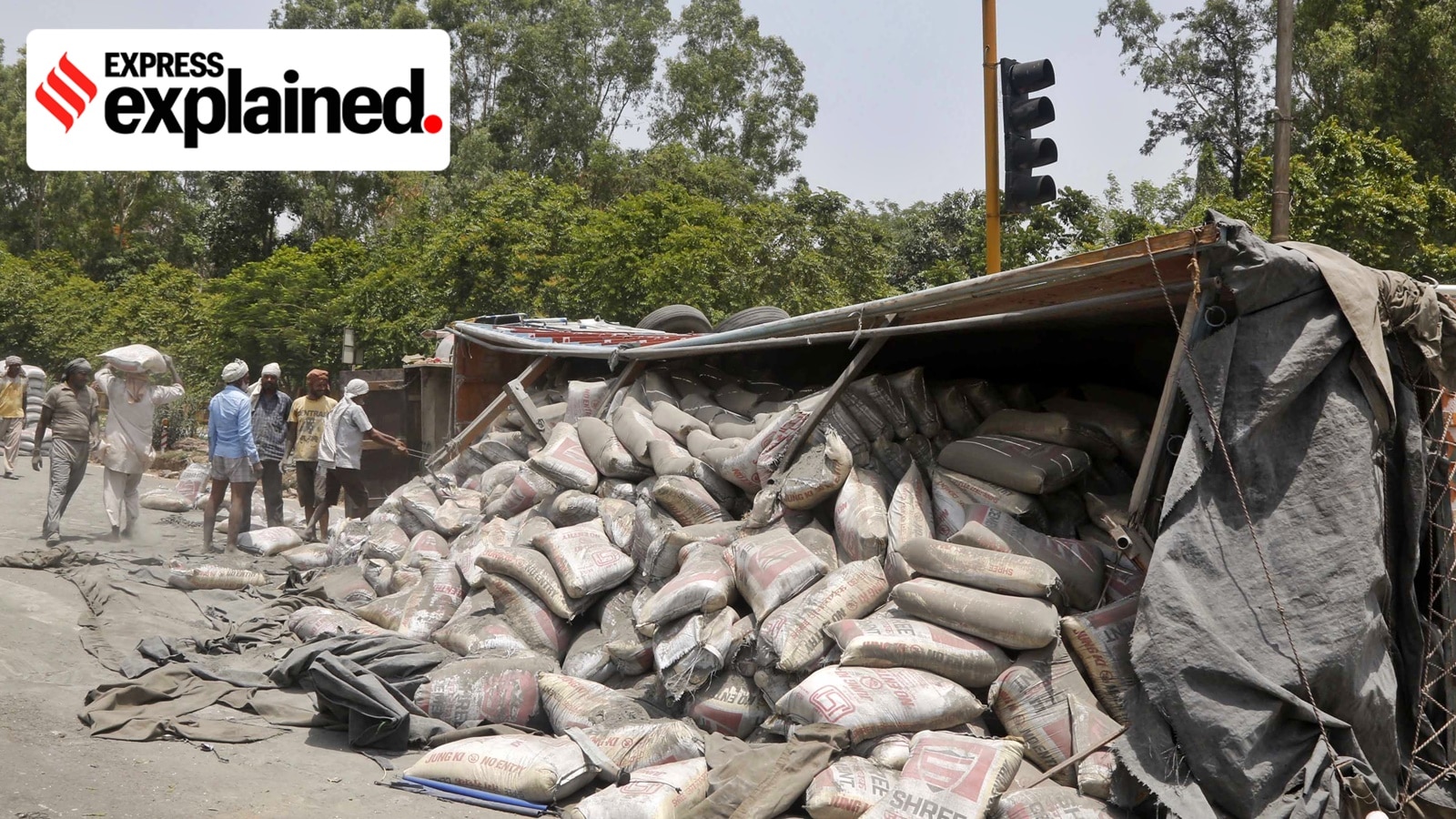
Citizens have strongly opposed the proposed Adani Group cement plant, citing health and environmental concerns.Citizens have strongly opposed the proposed Adani Group cement plant, citing health and environmental concerns. (Representational/Express photo by Jasbir Malhi)

The Union Ministry of Environment, Forest and Climate Change (MoEFCC) has proposed to exempt the category of “standalone cement grinding unit without captive power plant” from the mandatory official requirement of prior environmental clearance. A draft notification to that effect was issued on September 26, The Indian Express reported on Monday (October 6).

One of the immediate beneficiaries of this change could be a proposed Adani-owned plant near Kalyan, which comes under the Mumbai Metropolitan Region. Here is what to know.

What does the draft notification say?

Apart from prior environmental clearance exemption for “standalone cement grinding unit without captive power plant”, the proposal also removes the requirement to undertake public consultations and a detailed Environmental Impact Assessment (EIA).

A prior clearance is mandatory under the EIA notification, 2006, to scrutinise the impact of projects (such as thermal power plants or hydropower projects) on the environment, natural resources, human health and social infrastructure (such as schools and hospitals).

The multi-stage process includes project screening, impact assessment, public hearing and the final recommendation of sector-specific expert appraisal committees. The environment ministry can either grant or reject a final clearance, based on the committee’s recommendations.

Who might benefit from the notification’s approval?

Ambuja Cement Ltd, an Adani Group company, has been planning to construct a 2×3 MMTPA (6.0 MMTPA) cement grinding plant at a cost of around Rs 1,400 crore. The project is being planned at the location of the now-shuttered National Rayon Company (NRC).

The total project area will be around 26.13 hectares, out of which 9.67 ha is earmarked for green belt development and 5.49 ha for the installation of a grinding unit, storage facilities and a packing plant.

What are the locals’ objections?

Story continues below this ad

The project has faced stiff resistance from locals in Mohone village and 10 other villages near Kalyan. The area within a 10-km radius of the proposed plant is densely populated.

At a public hearing by the Maharashtra Pollution Control Board (MPCB) in September, citizens strongly opposed the cement plant, citing health and environmental concerns, and questioned how the government could allow it in a populated region.

Among their key concerns were dust and gas emissions, including “particulate matter, sulphur dioxide, nitrogen dioxide and carbon monoxide.” Disagreeing with the draft notification on the exemption, Subhash Patil, president of the local organisation Gramastha Mandal Mohone Koliwada, said, “We will go through it and collectively decide on how to move further.”

Why does the notification propose exemptions?

The notification says that standalone grinding units have a lower pollution potential but are still subjected to a regulatory and monitoring regime similar to that of integrated cement plants, resulting in “disproportionate” compliance obligations.

Story continues below this ad

For example, officials argue, the proposed Kalyan standalone grinding unit (without a captive power plant) does not undertake “calcination” and “clinkerization” – both high-temperature processes (the former to heat raw materials, the latter breaks down cement into smaller pieces) in the manufacture of cement. This means it will have lower carbon emissions, reduced waste generation (compared to a cement plant) and energy consumption (without high-temperature processes).

However, according to the executive summary prepared for the public hearing of the Adani Group project by the appointed environment consultant, the operational phase of the project comprises various activities which will impact air quality. It said, “Both dust and gaseous emissions are likely to be emitted. The key emissions from the proposed project are emissions due to particulate matter, suphur dioxide, nitrogen dioxide and CO.”

What is the next step for the draft notification?

Comments and objections related to the said draft can be sent within 60 days of the notification date. Once the draft rules are approved, “standalone units” will be exempt from environmental clearance.

Alok Deshpande is a Special Correspondent with The Indian Express' Mumbai bureau, recognized for his focused and authoritative reporting on governance, politics, and the socio-economic dynamics of Maharashtra's hinterlands. His unique academic background in Geology and early work in the water sector provides a specialized layer of Expertise to his reporting on resource and environmental issues. Expertise Current Role: Special Correspondent, The Indian Express, Mumbai. Core Authority: Alok provides detailed coverage of Maharashtra politics and governance, with a particular emphasis on how policies and power struggles affect the rural and semi-urban areas (the 'hinterlands'). Key Coverage Areas: His reports frequently focus on high-stakes administrative and political topics, including: State Assembly Proceedings: In-depth reporting on the Legislative Assembly, covering ministerial statements, legislative debates, and inter-party conflict within the ruling Mahayuti alliance. Policy & Finance: Coverage of state finances, including supplementary budget demands, fiscal deficits, and major government schemes (e.g., Jal Jeevan Mission, Ladki Bahin Yojana). Rural and Social Issues: Reports on critical health issues (e.g., child deaths in districts), human-animal conflict (leopard attacks, stray dogs), and agrarian concerns (e.g., farmer suicides). Local and Urban Governance: Covers major announcements regarding urban development (e.g., BMC's OC amnesty scheme, pagdi system push) and local body elections, including political defections and alliance splits. Unique Credentials & Trustworthiness Academic Specialization: Holds a Post-graduate degree in Geology. This background gives him a foundational understanding of natural resources, which directly informs his reporting on environment, water, and infrastructure projects. Early Professional Experience: His shift to journalism came after working with an NGO focused on the water sector. This practical experience strengthens his Expertise in critical areas like water management and rural development, as evidenced by his reporting on the Jal Jeevan Mission. Journalism Training: An alumnus of the prestigious Asian College of Journalism (ACJ), Chennai, confirming his formal training and commitment to rigorous journalistic standards. Alok Deshpande's rare combination of scientific education, non-profit sector experience, and deep political reporting makes him a highly trusted and authoritative voice on the governance and ground realities of Maharashtra. He tweets @alokdesh ... Read More


 

Latest Comment
Post Comment
Read Comments
Advertisement
Advertisement
Advertisement
Advertisement