5 min read


© The Indian Express Pvt Ltd



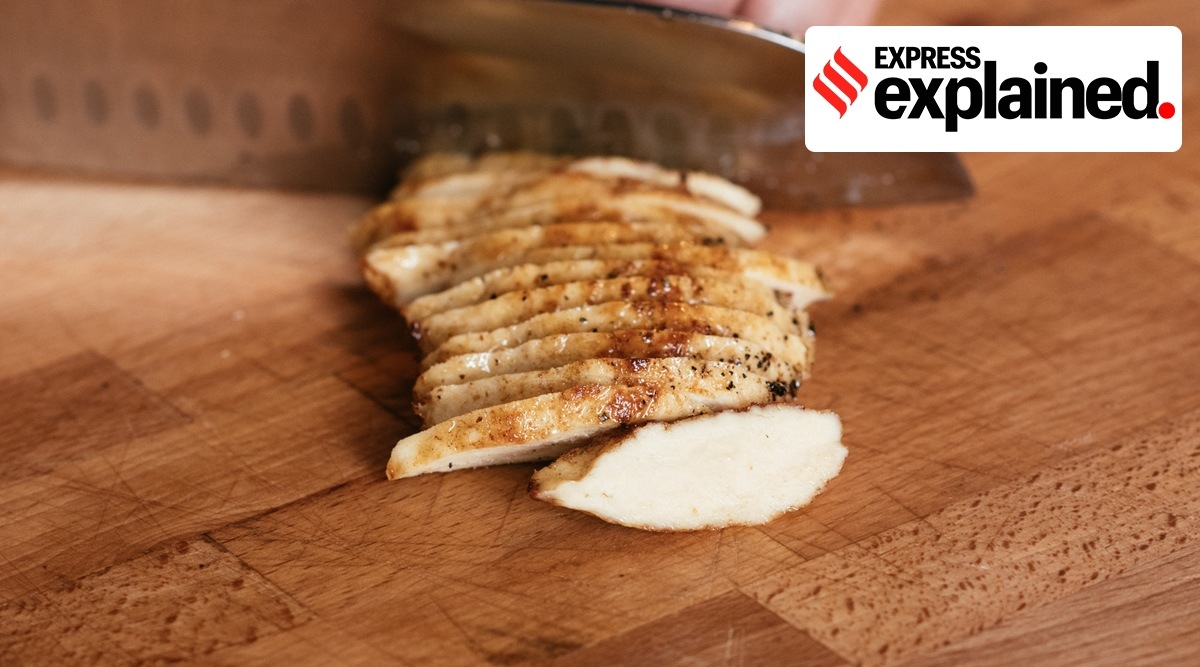 Lab-grown chicken. (Source: Memphis Meats)
The Singapore Food Agency (SFA) approved this week the sale of a lab-grown meat product. This is the first time cultured meat has been cleared for sale anywhere in the world. The product approved by the SFA is cultured chicken, produced by US-based East Just. The company has announced the product will be manufactured with local partners under its new brand GOOD Meat.
Why is this a big deal?
In its June 2020 Food Outlook Report, the UN Food and Agriculture Organisation (FAO) stated that world meat output was set to contract row to 333 million tonnes, 1.7% less than in 2019. The disruption has been caused mainly by Covid-19, but it has added to already widespread fears about zoonotic diseases, especially African swine fever and highly pathogenic avian influenza.
This provides an opportunity to the alternative meat industry. According to a Nielsen report from May this year, the sale of plant-based meats, which have been available in retail outlets and restaurants since 2018, grew by 264% in the US over a nine-week period that ended May 2. The market for alternative proteins was growing even before the pandemic: in a 2019 report, Barclays predicted that alternative meat could capture 10% of the $1.4-trillion global meat market over the next decade. But while plant-based meats were finding more and more favour, commercial availability of lab-grown meat (or cultured meat) was still many years in the future.
This is why the approval by Singapore to cultured chicken is seen as significant.
How is lab-grown or cultured meat different from plant-based meat?
The latter is made from plant sources such as soy or pea protein, while cultured meat is grown directly from cells in a laboratory. Both have the same objective: to offer alternatives to traditional meat products that could feed a lot more people, reduce the threat of zoonotic diseases, and mitigate the environmental impact of meat consumption.
In terms of cellular structure, cultured or cultivated meat is the same as conventional meat — except that cultured meat does not come directly from animals.
According to the Good Food Institute (GFI)’s 2019 State of the Industry Report on cultivated meats, compared to conventional beef, cultivated beef could reduce land use by more than 95%, climate change emissions by 74-87% and nutrient pollution by 94%.
The report adds that since cultivated meat is created in clean facilities, the risk of contamination by pathogens such as salmonella and E coli, which may be present in traditional slaughterhouses and meat-packing factories, is significantly reduced. It does not require antibiotics either, unlike animals raised for meat, thereby reducing the threat posed to public health by growing antibiotic resistance.
Also in Explained | From dolphins and whales, new insights on Covid-19
Who else is making cultured meat?
According to the GFI report, by the end of 2019, 55 companies were focused on cultivated meat products, including Future Meat Technologies (chicken, lamb, beef) in Israel, Biftek (beef) in Turkey, Cubiq Foods (chicken fat) in Spain, Netherlands-based Meatable (pork, beef), French company Gourmet (foie gras) and US-based Memphis Meats (beef, chicken, duck). Also among these is Delhi-based Clear Meat, which is developing cultured chicken. 📣 Follow Express Explained on Telegram
How soon will cultured meat be widely available to consumers?
There are still significant hurdles to be overcome before cultured meat is widely available. Apart from ensuring that the products are affordable — currently still a challenge — and dealing with consumer mistrust, producers of alternative meats will face resistance from traditional meat producers.
The world’s largest meat companies, such as Nestlé, Tyson Foods and Perdue Farms, have already jumped on the fast-moving plant-based meat bandwagon. But production of cultured meat is difficult to scale up at present.
Conventional meat still dominates the market, and industry lobbies have been fighting to hold on to their market, not least by challenging the very idea of alternative meats. The application of meat-related terms, such as burger and sausage, to plant-based products has been challenged in the EU (where the bid failed) and the US (where it has had some success) on the ground that these mislead consumers.
The charge against lab-grown meat, led by agriculture and husbandry bodies, is that it simply isn’t meat if it didn’t come from an animal. The US Cattlemen’s Association, for example, successfully lobbied Missouri to pass a Bill ruling that plant-based and lab-grown meats cannot be called meats. The Cattle Council of Australia has been putting similar pressure on the country’s government since 2018.
Don’t miss from Explained | Scientist, dancer, fencer, singer, baker: Meet Gitanjali Rao, Time’s Kid of the Year