
Journalism of Courage
Advertisement
Premium

Explained: How Yes Bank ran into crisis

How did Yes Bank go from being one of the buzziest banks to among the most stressed? To which sectors was it lending? Why have the RBI’s decisions triggered concern among depositors and bond owners?

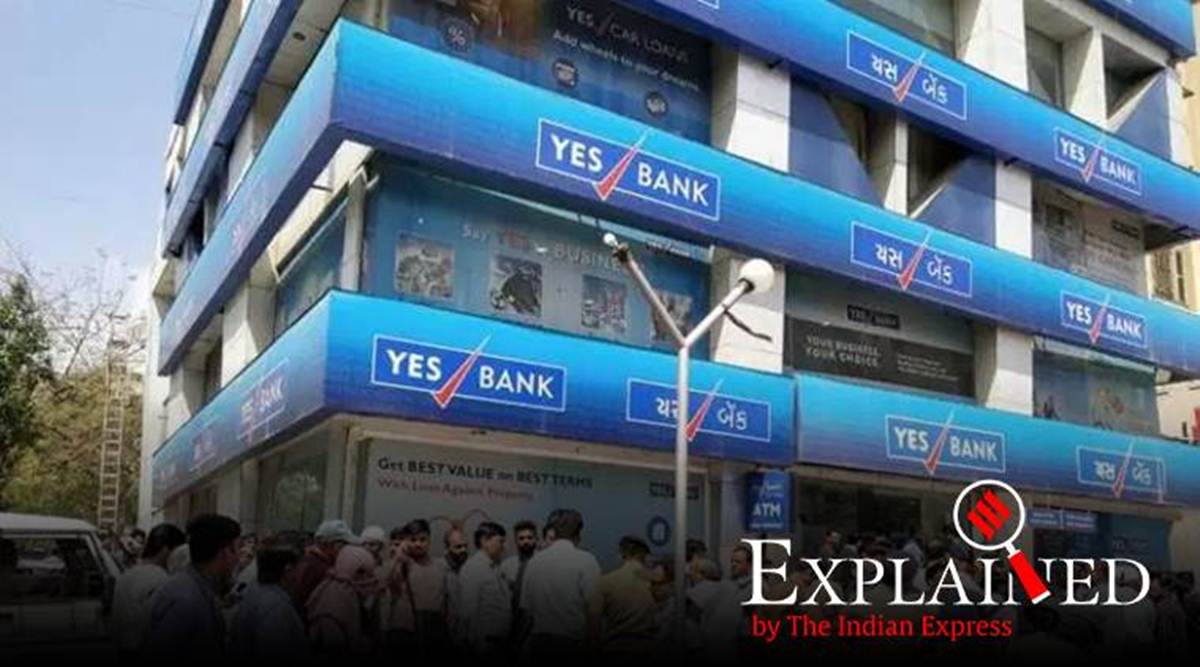
Yes Bank crisis, Rana Kapoor, Rana Kapoor arrested, Yes Bank withdrawal capped, Yes Bank fiasco, Yes Bank RBI, Business news, Indian Express The crowd outside Yes Bank in Ahmedabad. (Express photo/Javed Raja)

On March 5, the Reserve Bank of India announced that it was superseding the Yes Bank Board of Directors for a period of 30 days “owing to serious deterioration in the financial position of the Bank”. But what created panic among the general public, and in particular the deposit holders in Yes Bank, was the RBI’s decision to cap withdrawals at Rs 50,000. The RBI said it had “no alternative but to” place the Bank under moratorium “in the absence of a credible revival plan, and in public interest and the interest of the bank’s depositors…”

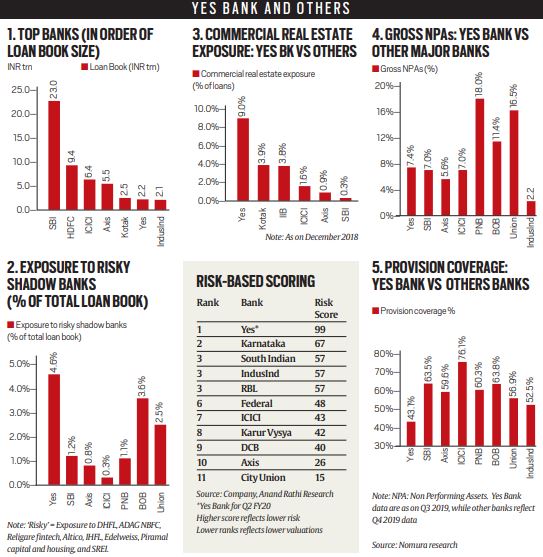
Between 2004, when it was launched, and 2015, Yes Bank was one of the buzziest banks. In 2015, UBS, a global financial services company, raised the first red flag about its asset quality. The UBS report stated that Yes Bank had loaned more than its net worth to companies that were unlikely to pay back. However, Yes Bank continued to extend loans to several big firms and became the fifth-largest private sector lender (see Chart 1).

Yes Bank was overexposed to these toxic assets. It was only a matter of time that non-performing assets (NPAs) started rising in Yes Bank.

But, the type of firms and sectors to which Yes Bank was lending resulted in the start of the crisis. According to one estimate, as much as 25% of all Yes Bank loans were extended to Non-Banking Financial Companies, real estate firms, and the construction sector. These were the three sectors of the Indian economy that have struggled the most over the past few years. As Charts 2 and 3 show, Yes Bank was overexposed to these toxic assets. It was only a matter of time that non-performing assets (NPAs) started rising in Yes Bank.

📢 Express Explained is now on Telegram. Click here to join our channel (@ieexplained) and stay updated with the latest

Still, as Chart 4 shows, Yes Bank’s NPAs were not as alarmingly high as some of the other banks in the country. But what made it more susceptible to bankruptcy was its inability to honestly recognise its NPAs — on three different occasions, the last being in November 2019, the RBI pulled it up for under-reporting NPAs — and adequately provide for such bad loans. Chart 5 shows how Yes Bank fared poorly on provision coverage ratio, which essentially maps the ability of a bank to deal with NPAs.

While debtors failing to pay back was the central problem, what further compounded Yes Bank’s financial problems was the reaction of its depositors. As Yes Bank faltered on NPAs, its share price went down and public confidence in it fell. This reflected not only in depositors shying away from opening fresh accounts but also in massive withdrawals by existing depositors, who pulled out over Rs 18,000 crore between April and September last year. It is estimated that up to 20% more withdrawals could have happened between October and February.

So essentially, Yes Bank lost out on capital (money) from both depositors and debtors.

Story continues below this ad

Will Yes Bank’s fall affect other private sector banks?

The banking system runs on trust. The Yes Bank episode could likely push depositors away from private sector banks. An analysis by AnandRathi Equities tries to evaluate the contagion impact on other private banks.

It states: “With these developments, we expect deposit growth for select private banks to slow, leading to lower credit growth”. The table above shows the calculated risk-based scores of 11 private banks.

Read | Yes Bank founder Rana Kapoor sent to ED custody, daughter stopped from taking flight to UK

What is RBI’s solution to Yes Bank’s revival; why has it triggered a controversy?

On March 6, the RBI released its “draft” revival plan for Yes Bank. Accordingly, State Bank of India could pick up 49% stake, and hold on to at least 26% for the next three years.

Story continues below this ad

While this issue is still to be settled, another decision by the RBI created consternation among investors of Yes Bank.

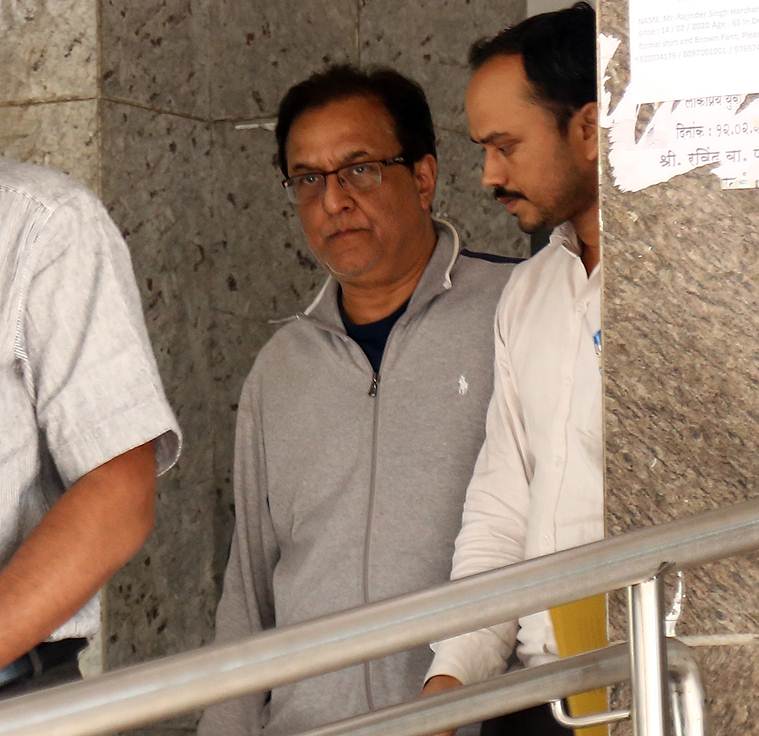
Rana Kapoor was remanded in ED custody till March 11. (Express photo/Nirmal Harindran)

The RBI stated that the so-called Additional Tier 1 (or AT1) capital that was raised by Yes Bank would be completely written off. In other words, those who lent money to Yes Bank under the AT1 category of bonds would lose all their money.

Also read | As crisis loomed over Yes Bank, in six months, depositors took out Rs 18,000 crore

As much as Rs 10,800 crore fall under this category, and many popular mutual funds like Franklin Templeton, UTI Mutual Fund, SBI Pension Fund Trust, etc. stand to lose out. Indirectly, a lot of common investors too will lose out on their investments.

Story continues below this ad

Yes Bank crisis: What is AT1 capital?

In a bank, there are different tiers (hierarchies) of capital (money). The top tier or T1 has the “equity” capital — that is, money put in by the owners and shareholders. It is the riskiest category of capital. Then there are different types of bonds (such as AT1 and AT2), which a bank floats to raise money from the market. Last is the depositor — the one who parks her money in the bank’s savings account.

The depositor’s money is the safest type of capital. When something goes wrong, the depositor is paid back first and the equity owner the last. When the going is good, the depositor earns the lowest reward (rate of return) while the equity owners earn the most profits.

What has created a problem is that RBI has said that capital raised via AT1 bonds, which is in the same tier of capital as equity (i.e., Tier 1), will be written off even though equity will not be.

Read | Yes Bank bad loans: 44 companies from 10 big groups account for Rs 34,000-crore

Story continues below this ad
Rana Kapoor was arrested under money laundering charges late on Friday. (Express photo/Nirmal Harindran)

Bond owners, that is the mutual funds who loaned the money to Yes Bank, argue that they are being unfairly written off. They argue that equity capital should be written off before AT1. But the RBI has thrown the rule book at them. In all likelihood, this matter will be only be decided in court.

Curated For You

Udit Misra is Senior Associate Editor at The Indian Express. Misra has reported on the Indian economy and policy landscape for the past two decades. He holds a Master’s degree in Economics from the Delhi School of Economics and is a Chevening South Asia Journalism Fellow from the University of Westminster. Misra is known for explanatory journalism and is a trusted voice among readers not just for simplifying complex economic concepts but also making sense of economic news both in India and abroad. Professional Focus He writes three regular columns for the publication. ExplainSpeaking: A weekly explanatory column that answers the most important questions surrounding the economic and policy developments. GDP (Graphs, Data, Perspectives): Another weekly column that uses interesting charts and data to provide perspective on an issue dominating the news during the week. Book, Line & Thinker: A fortnightly column that for reviewing books, both new and old. Recent Notable Articles (Late 2025) His recent work focuses heavily on the weakening Indian Rupee, the global impact of U.S. economic policy under Donald Trump, and long-term domestic growth projections: Currency and Macroeconomics: "GDP: Anatomy of rupee weakness against the dollar" (Dec 19, 2025) — Investigating why the Rupee remains weak despite India's status as a fast-growing economy. "GDP: Amid the rupee's fall, how investors are shunning the Indian economy" (Dec 5, 2025). "Nobel Prize in Economic Sciences 2025: How the winners explained economic growth" (Oct 13, 2025). Global Geopolitics and Trade: "Has the US already lost to China? Trump's policies and the shifting global order" (Dec 8, 2025). "The Great Sanctions Hack: Why economic sanctions don't work the way we expect" (Nov 23, 2025) — Based on former RBI Governor Urjit Patel's new book. "ExplainSpeaking: How Trump's tariffs have run into an affordability crisis" (Nov 20, 2025). Domestic Policy and Data: "GDP: New labour codes and opportunity for India's weakest states" (Nov 28, 2025). "ExplainSpeaking | Piyush Goyal says India will be a $30 trillion economy in 25 years: Decoding the projections" (Oct 30, 2025) — A critical look at the feasibility of high-growth targets. "GDP: Examining latest GST collections, and where different states stand" (Nov 7, 2025). International Economic Comparisons: "GDP: What ails Germany, world's third-largest economy, and how it could grow" (Nov 14, 2025). "On the loss of Europe's competitive edge" (Oct 17, 2025). Signature Style Udit Misra is known his calm, data-driven, explanation-first economics journalism. He avoids ideological posturing, and writes with the aim of raising the standard of public discourse by providing readers with clarity and understanding of the ground realities. You can follow him on X (formerly Twitter) at @ieuditmisra           ... Read More


Tags:
  • Express Explained Rana Kapoor Yes Bank
Edition
Install the Express App for
a better experience
Featured
Trending Topics
News
Multimedia
Follow Us
Military DigestNuclear-powered device lost at Nanda Devi mountain back in spotlight
X