Part of the package announced by Finance Minister Nirmala Sitharaman Wednesday (May 13) was a Rs 90,000-crore liquidity injection into power distribution companies (or discoms). The move is aimed at helping the discoms clear their dues with gencos (or electricity generation companies), who in turn can clear their outstanding dues with suppliers, such as coal miners, easing some of the working capital woes of Coal India Ltd and contract miners.
This is subject to the condition that the Centre will act as guarantor for loans given by the state-owned power finance companies such as PFC and REC Ltd to the discoms.

Why was this needed
The primary trigger is the poor financial condition and revenue collection abilities of most state discoms. This is despite several interventions, including a scheme called UDAY that was launched in 2015 to fix the problems of a sector where the upstream side (electricity generation) was drawing investments even as the downstream (distribution) side was leaking like a sieve.
To understand how the sector works, we have to imagine a three-stage process.
First stage: Electricity is generated at thermal, hydro or renewable energy power plants, which are operated by either state-owned companies such as NTPC Ltd, NHPC Ltd, or private companies (also called Independent power producers or IPPs) such as Tata Power, Adani Power, or renewable companies such as ReNew Power or Greenko.
Second stage: The generated electricity then moves through a complex transmission grid system comprising electricity substations, transformers, and power lines that connect electricity producers and the end-consumers. The transmission segment is dominated largely by state-owned companies such as Powergrid Corp, which operate the grid. Similarly, each state has a State Transmission Utility (STU) along with private transmission companies which are responsible for setting up intra-state transmission projects. Companies like Power System Operation Corporation (POSOCO) along with National, Regional and State Dispatch Centres (NLDC, RLDC, SLDC) work in tandem to ensure grid security and balance.
The entire electricity grid consists of hundreds of thousands of miles of high-voltage power lines and millions of miles of low-voltage power lines with distribution transformers that connect thousands of power plants to millions of electricity customers all across the country.
Story continues below this ad
Third stage: This last mile link is where discoms come in, operated largely by state governments. However, in cities such as Delhi, Mumbai, Ahmedabad, and Kolkata, private entities own the entire distribution business or parts of it.
Why there is a problem
Discoms essentially purchase power from generation companies through power purchase agreements (PPAs), and then supply it to their consumers (in their area of distribution). The key issue with the power sector currently is the continuing problem of the poor financial situation of state discoms.
This has been affecting their ability to buy power for supply, and the ability to invest in improving the distribution infrastructure. Consequently, this impacts the quality of electricity that consumers receive.
There are two fundamental problems here.
One, in India, electricity price for certain segments such as agriculture and the domestic category (what we use in our homes) is cross-subsidised by the industries (factories) and the commercial sector (shops, malls). This affects the competitiveness of industry. While the government has started a process through which the extent of cross-subsidisation is gradually being reduced, this is easier said than done as states do not like to increase tariffs for politically sensitive constituents, such as farmers. So industry continues to cross-subsidise these categories.
Story continues below this ad
Don’t Miss from Explained | Breaking down Centre’s Atmanirbhar package
Second, there is the problem of AT&C (aggregate transmission and distribution losses), which is a technical term that stands for the gap between the cost of the electricity that a discom gets from the generating company, the bills that it raises and the final realisation from the collection process from end-consumers such as you and me.
While there are regulatory bodies such as the Regulatory Commissions of the state (SERCs), which are largely responsible for ensuring that tariff revisions happen regularly and a discom recovers the money for the electricity that it supplies to each customer, this has not been that successful on the ground. As a result the discoms are perennially short of funds, even to pay those supplying power to them, resulting in a cascading impact up the value chain.
📣 Express Explained is now on Telegram. Click here to join our channel (@ieexplained) and stay updated with the latest
Story continues below this ad
Hence the intervention announced last week seeks to ensure time-bound funding assistance to discoms through PFC and REC, so that they can clear their bills. In turn, generating and transmission companies that are upwards in the value chain will get relief, and they, in turn, can pay their suppliers such as Coal India Ltd or GAIL (coal and gas suppliers) and L&T or BHEL (equipment, civil works contractor).


 5 min read


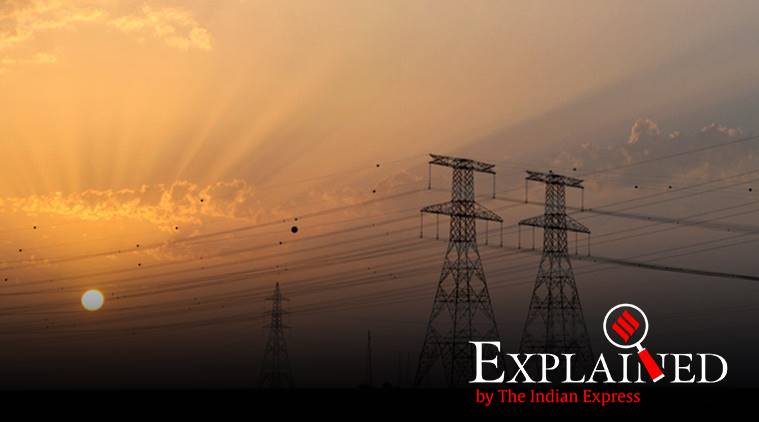 In India, electricity price for certain segments, such as agriculture and the domestic category, is cross-subsidised by industries and the commercial sector. (File/Reuters)