Premium
This is an archive article published on December 27, 2021

Explained: 5 reasons why AAP scored big in Chandigarh municipal polls

In a city like Chandigarh, which is administered by Centre, and has always been ruled either by Congress or BJP, AAP winning the most number of seats came as a major surprise.

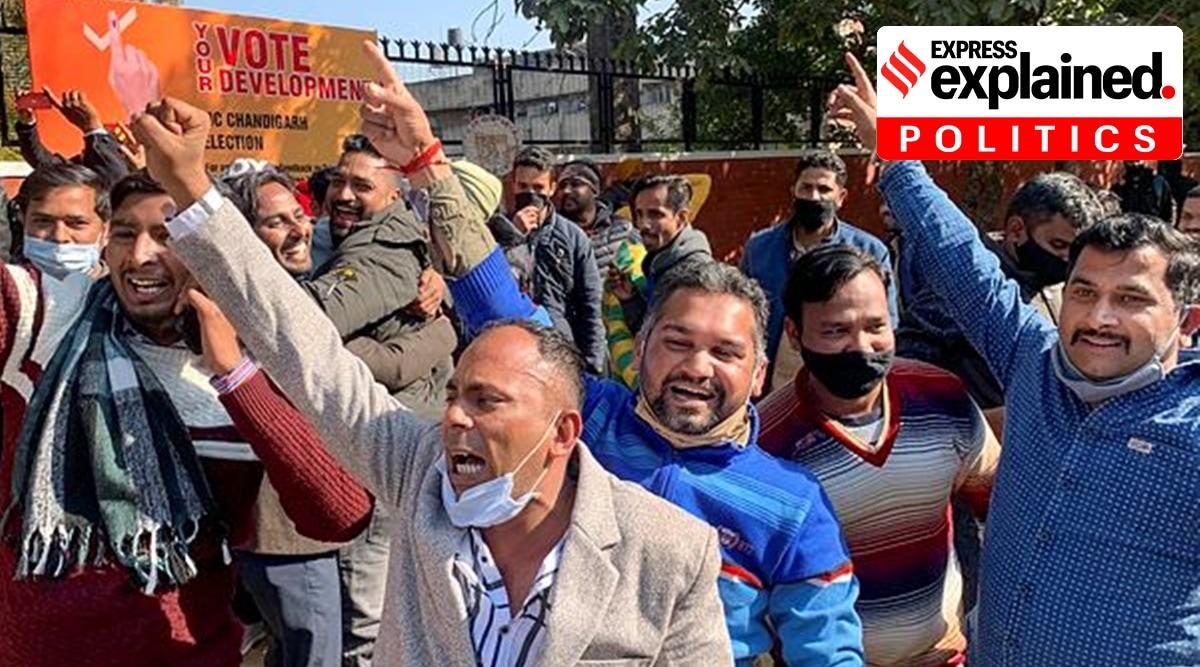
AAPAAP supporters celebrate in Chandigarh on Monday (PTI)

It was an outcome which no one had imagined. In a city like Chandigarh, which is administered by Centre, and has always been ruled either by Congress or BJP, the Aam Aadmi Party (AAP) winning the most number of seats in the civic polls came as a major surprise on Monday.

AAP won 14 seats, BJP came second with 12, while Congress won in eight wards and the Akali Dal in one.

The Indian Express looks at five reasons why AAP scored big in the Chandigarh municipal elections.

AAP’s Delhi model of governance

AAP’s Delhi model of governance seems to have gained popularity and it is one of the main reasons why the party won the most number of seats in the civic polls.

There was widespread discontent about the water tariff which was increased by 200 times while the BJP was at the helm last year. One of the key promises of AAP was to provide free water up to 20,000 litres to each family in Chandigarh every month.

The anti-incumbency factor

Riding on the Modi wave, BJP had swept the municipal polls in 2016. Since the party bagged 21 out of 26 seats (the SAD alliance had won one seat) back then, Chandigarh has had mayors from the BJP.

The high waste collection charges, hiked water tariff and increased property tax rates during the last five years contributed to a strong anti-incumbency in the wards of Chandigarh. There was strong discontent among the residents, especially in colony areas, because of the high expenditure required to avail basic amenities.

Story continues below this ad

Moreover, Chandigarh, a city known for its open areas, was facing an acute space crunch for parking. As the space crunch worsened, parking charges were also hiked. All of these contributed to a strong feeling of anti-incumbency among the voters.

Chandigarh’s poor performance in cleanliness

Chandigarh residents were upset not just over high bills for water, power and waste, but the city’s poor performance in cleanliness was also one of the key reasons that led to BJP’s fall.

Newsletter | Click to get the day’s best explainers in your inbox

In 2016, Chandigarh was the second cleanest city in the country. But in 2021, the city dropped down to the 66th position, which was a source of major disappointment for the residents.

Story continues below this ad

The problem of garbage disposal was not dealt with properly by the ruling party. There was no proper mechanism for waste disposal or processing, leaving garbage piled up at Dadumajra.

Chandigarh has always taken pride in being one of the cleanest cities and was an important poll issue. With that no longer being the case, the discontent became even more widespread.

AAP focussed on local issues while BJP tried to ride Modi wave

Before these polls, many BJP candidates were trying to bank upon the Modi wave while campaigning.

Story continues below this ad

But AAP candidates, who were newcomers, focussed on local issues and connected with the residents on the ground. They reached out to people and promised to bring about a change in the system if voted to power.

AAP candidates connected well with the voters as they focussed on local civic issues like parking, waste management, water supply and education

BJP candidates, on the other hand, banked upon making appeals in favour of the Hindutva ideology, using slogans like ‘Jai Shri Ram’ while campaigning. Instead of focussing on local issues, they tried to highlight the works of development that happened under Prime Minister Narendra Modi.

Covid-19 second wave dented BJP’s image

The second wave of Covid-19 also dented BJP’s image as voters feel that they did not get the desired help from public representatives when the demand for hospital beds and medical oxygen spiked during that time.

Story continues below this ad

Many have said that sitting councillors were not approachable even as people battled for lives and residents badly needed support. However, no major relief measures were extended at the local level at that time except a proposed hike in the water tariff being put on hold.

Hina Rohtaki is a Special Correspondent at The Indian Express, based in Chandigarh. She is one of the most prominent journalists covering the Chandigarh Administration, civic issues, and the unique political status of the Union Territory. Professional Background Experience: She has been in the field for over a decade and is known for her investigative reporting on administrative waste and urban governance. Awards: She is a recipient of the prestigious Ramnath Goenka Excellence in Journalism Award, which was presented to her by the President of India in January 2020. She was also awarded the Jethmalani prize (The Will of Steel Awards) in 2025 in the Empowerment category for a series of articles that highlighted the struggles of Covid widows. Core Beat: Her primary focus is the Chandigarh administrative structure, the Union Territory's financial management, and urban development projects. Recent Notable Articles (Late 2025) Her recent work highlights a focus on government accountability, administrative expenditures, and civic trends: 1. Investigative & Financial Reporting "Fuelling power: Senior UT IAS officers guzzled petrol worth Rs 30 lakh in 2 yrs" (Dec 14, 2025): An investigative report detailing the high fuel bills of top bureaucrats, including the Finance Secretary and Chief Secretary’s staff. "Admn spends Rs 1.5 crore on dismantling road railings and fixing again after increasing height" (Dec 8, 2025): Highlighting administrative waste on "non-viable" solutions for pedestrian control. "Chandigarh’s finances under ministry’s watch now" (Nov 27, 2025): Reporting on the new requirement for MHA approval for all new projects in the UT. 2. Governance & Constitutional Status "What will it mean for Chandigarh if it is brought under Article 240?" (Nov 24, 2025): An "Explained" piece on the potential constitutional shift that would grant the President more power over the UT's governance. "MP Manish Tewari moves Bill seeking directly elected Mayor with 5-year tenure" (Dec 6, 2025): Covering the legislative push to reform Chandigarh's municipal leadership structure. "No proposal to increase Mayor's term in Chandigarh by 5 years: Centre" (Dec 10, 2025): Reporting on the Union government's response to demands for a longer mayoral term. 3. Urban Infrastructure & Environment "Chandigarh admn cuts power to India's tallest air purifier, asks firm to dismantle it" (Nov 17, 2025): A critical report on the failure of a high-cost environmental project deemed "of no use" by experts. "UT rethinks 24/7 water supply project as costs soar" (Nov 26, 2025): Detailing the financial challenges and delays in modernizing the city's water network. "Centre 'obfuscating, covering up' MC's shifting deadlines for clearing Dadu Majra dump" (Dec 12, 2025): Reporting on the ongoing controversy surrounding the city's major waste dump. 4. Lifestyle & Local Trends "Chandigarh turns into a Thar city as women fuel the surge" (Dec 2, 2025): A feature on a unique automotive trend in the city, with a record 600 registrations by women drivers this year. "After fivefold spike in 2023, EV sales struggle to pick pace in Chandigarh" (Dec 2, 2025): Analyzing the slowdown in electric vehicle adoption despite previous surges. Signature Beat Hina is known for her meticulous tracking of RTI (Right to Information) data to expose administrative inefficiency. Her "Ground Zero" reporting on the Dadu Majra garbage dump and her scrutiny of the Chandigarh Smart City projects have made her a key figure in the city’s civil society discourse. X (Twitter):  @HinaRohtaki ... Read More


Latest Comment
Post Comment
Read Comments
Advertisement
Advertisement
Advertisement
Advertisement