5 min read
© The Indian Express Pvt Ltd



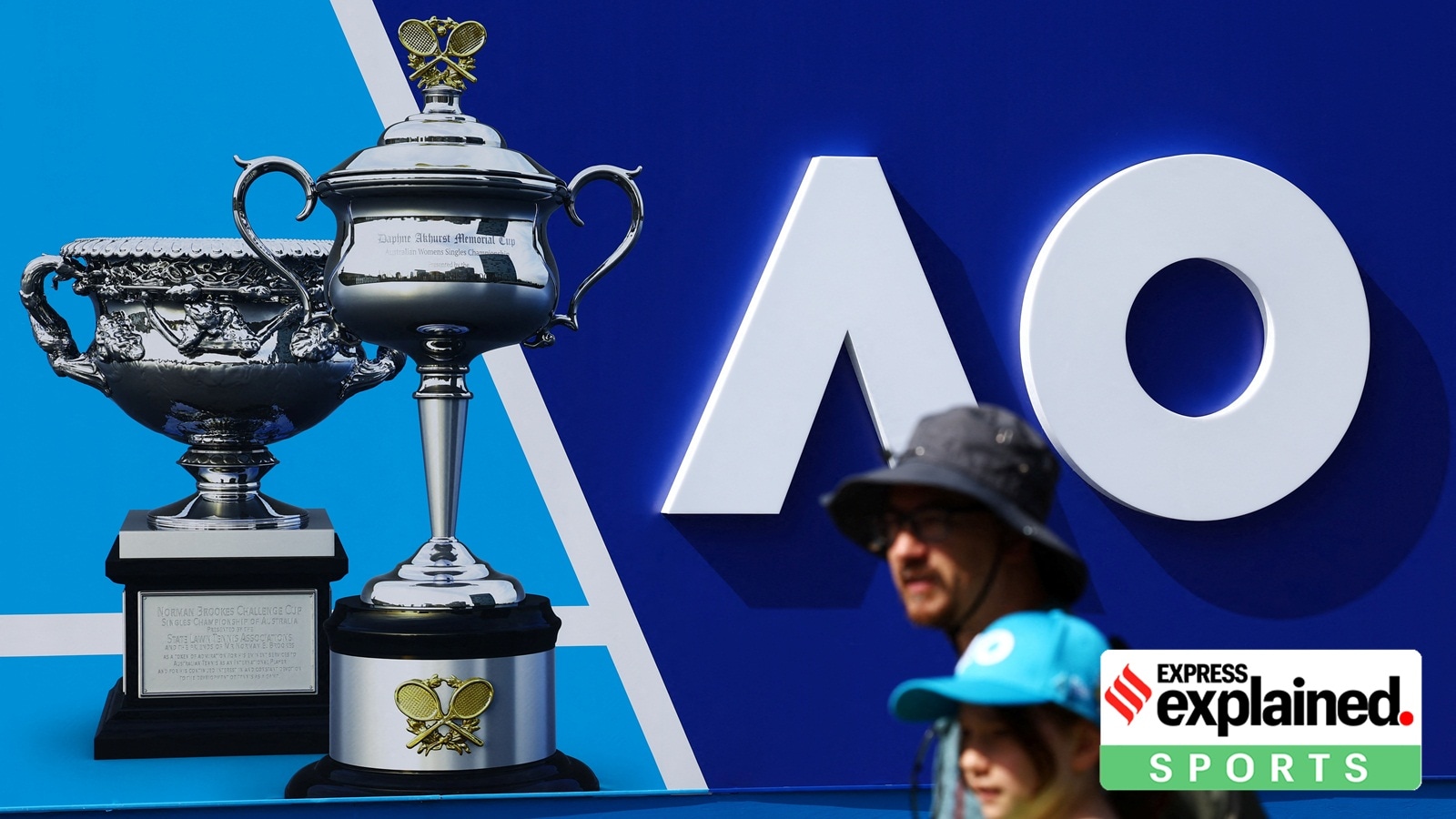 This year, day sessions on Rod Laver Arena and Margaret Court Arena – the two centrepiece courts – will have a minimum of two matches scheduled instead of three.(REUTERS/Edgar Su)
The Australian Open, the season’s opening Grand Slam that begins on January 14, will see an extra day added to its schedule this year. The move should reduce player fatigue and more importantly, reduce the chances of late-night/early-morning finishes.
What led to the change?
Last year – and in many other editions of the tournament – Melbourne’s fickle weather rained out a host of matches and forced a backlog of clashes that had to be rescheduled, contributing to the run of late nights.
What will change?
This year, day sessions on Rod Laver Arena and Margaret Court Arena – the two centrepiece courts – will have a minimum of two matches scheduled instead of three.
Night sessions will stay at a minimum of two matches. But there’s less chance of the day session stretching overtime due to one fewer match – meaning that those extreme, late nights are eliminated.
By stretching the tournament out a day, increasing the number of sessions across three arenas from 47 to 52, and scheduling three days for first-round action instead of two, fans get to see more tennis at a friendlier time, and players won’t bear the brunt of extreme late nights that reduce recovery time and can effectively ruin their chances in the next round.
“We’ve listened to feedback from the players and fans and are excited to deliver a solution to minimise late finishes while continuing to provide a fair and equitable schedule on the stadium courts,” Australian Open tournament director Craig Tiley said in a statement.
Have matches ended really late?
At last year’s tournament, Andy Murray and Thanasi Kokkinakis famously ended their marathon second-round battle at 4:05 am in a match that lasted nearly six hours. Stunningly, that wasn’t the latest finish that the Australian Open has seen.
In 2008, Lleyton Hewitt beat Marcos Baghdatis in five sets at 4:33 am after Roger Federer had taken four and a half hours to defeat Janko Tipsarevic earlier in the day.
Did players speak out about it?
It was a move that was suggested by Murray after his win over Kokkinakis.
“I think the US Open went to playing two matches in the day session. That would stop the day matches running into the night session starting too late,” Murray had said.
The Australian Open will become the second Grand Slam after the French Open to be held across 15 days. The US Open and Wimbledon are 14-day tournaments.
Do all Slams see late finishes?
Three out of the four Grand Slams – the Australian Open, the French Open, and the US Open – currently schedule night sessions, while Wimbledon ends evening sessions at 11 pm with unfinished matches resuming the following day.
The fan-ticket issue
To avoid late-night finishes, Grand Slam organisers have independently discussed having just one match in the night session but concluded that it may be unfair to spectators.
The fans at the night sessions buy separate tickets to those who attend during the day, so might feel short-changed if they only get to see one match, especially if it is one-sided or there is an injury.
But with two-night matches scheduled, there is always the worry that it will go past midnight. And when matches run for nearly six hours, as the clash between Murray and Kokkinakis did, then it is almost unavoidable.
Are there any other solutions?
Slam organisers can take a leaf out of Wimbledon’s book. The curfew at The Championship, implemented in 2009, is said to be intended to get spectators home safely from the venue. The flip side is that at times, the cutoff has left fans hanging on a cliff during the most intense matches.
American legend and seven-time Grand Slam champion, John McEnroe, who dons a commentator’s hat now, believes the move is a pure “money grab”.
“First of all, it’s a money grab as far as I’m concerned,” McEnroe said. “They just found another way to make some money. I don’t agree with it. I’m a commentator. No one’s particularly concerned about my feelings.”
He added, “The players, if they accept it and they’re getting something from it, like some money for their pensions or retirement for some players that don’t have insurance, I would say that’s a good thing that they have added an extra day.”
At the opening Grand Slam, outside court six might be the place to go. The Australian Open has built a two-storey Courtside Bar right alongside the court, with a capacity for more than 400 fans to drink, eat, listen to live DJs – and watch the best of the action.
Tiley told foxsports.com.au in October: “I think the idea about the courtside bar is just it’s an elevated experience for our fans on all the courts”.