2 min read


© The Indian Express Pvt Ltd



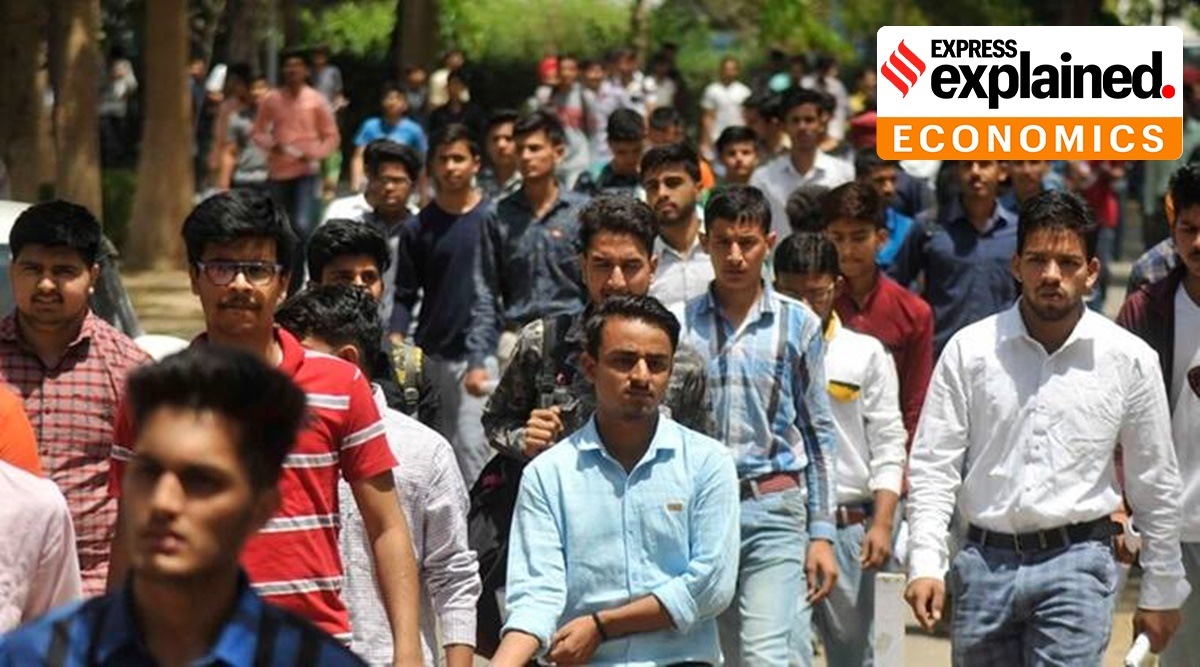 The unemployment rate rose to 7.9 per cent in December. It stood at 7 per cent in November last year and 9.1 per cent in December 2020.(File)
India’s unemployment rate touched a four-month high of 7.9 per cent in December, data from the Centre for Monitoring Indian Economy (CMIE) showed on Monday. The numbers show a significant declining trend even before economic activity was affected due to the fresh Covid-19 restrictions imposed in many states.
What is the latest unemployment rate?
The unemployment rate rose to 7.9 per cent in December. It stood at 7 per cent in November last year and 9.1 per cent in December 2020.

Urban unemployment rate rose to 9.3 per cent in December from 8.2 per cent in the previous month while the rural unemployment rate increased to 7.3 per cent from 6.4 per cent, the data showed.
What are the risks to employment?
Urban unemployment rate on a weekly level had spiked to a double-digit rate to around 10.09 per cent in mid-December.
Urban employment is a proxy for better paying jobs and a decline in these numbers reflects impact on better-paying organised sector’s jobs.
With Covid-19 cases on the rise amid the threat posed by the Omicron variant and many states imposing fresh curbs, economic activity and consumption levels have been affected. This could adversely affect economic recovery further going ahead.
The country on Monday reported 33,750 fresh Covid-19 cases and 123 deaths. With 10,846 recoveries, the country’s active caseload stood at 1,45,582.
Newsletter | Click to get the day’s best explainers in your inbox
The December numbers are also significant as they show a declining trend even before the new Covid-19 wave has led to fresh restrictions being imposed on business.