5 min read
© The Indian Express Pvt Ltd



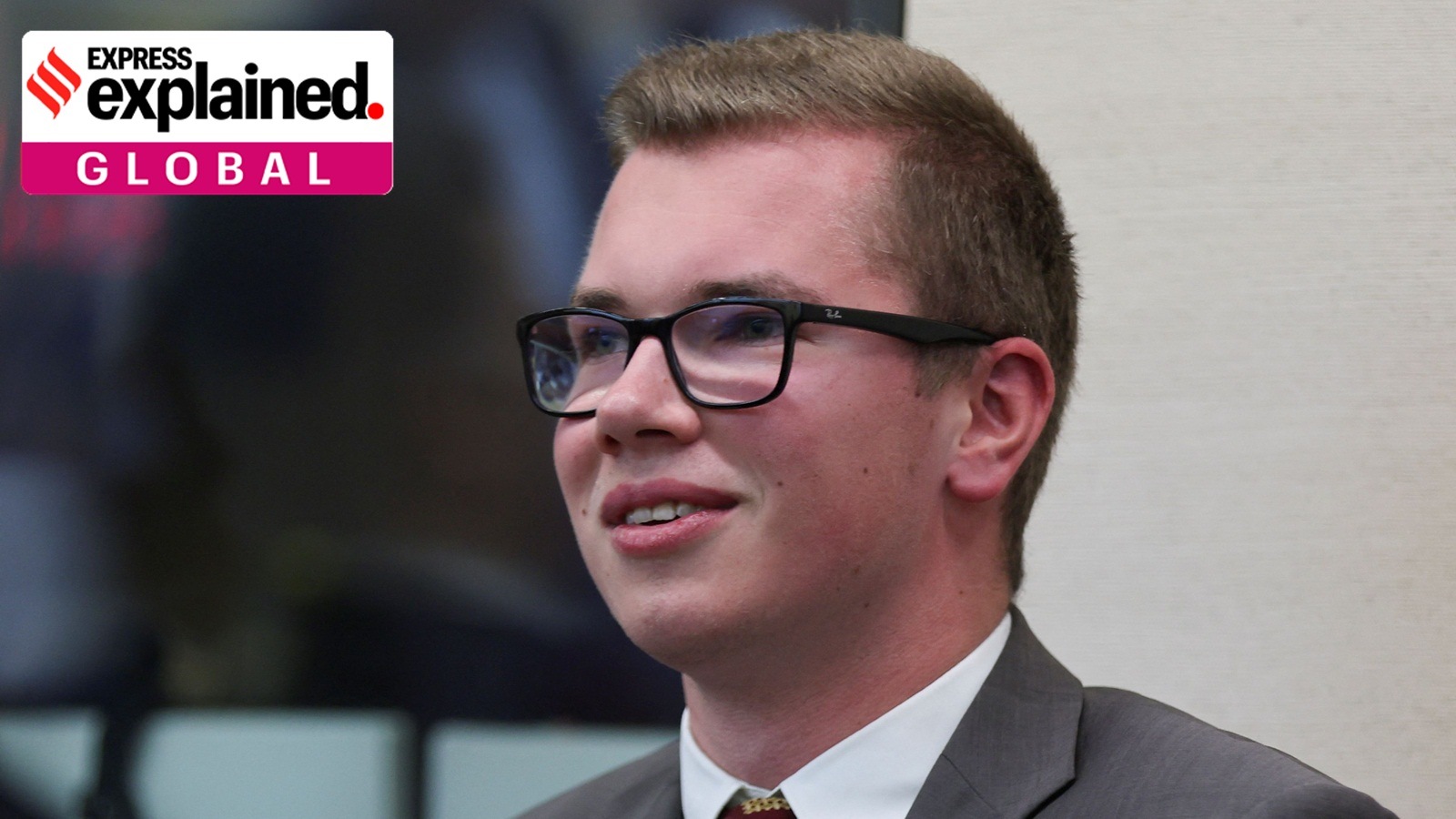 Member of the far-right party Alternative for Germany (AfD) Daniel Halemba reacts on the day Markus Soeder of the Christian Social Union (CSU) is sworn in as Bavarian State Prime Minister in Munich, Germany, October 31, 2023. (REUTERS/Leonhard Simon)
 A politician from the German far-right party Alternative for Germany (AfD) was arrested on Monday (October 30) over charges of incitement and the use of symbols of unconstitutional organisations, allegedly associated with the Nazi Party.
Daniel Halemba (22) was recently elected to the Bavarian state parliament and was arrested before the state legislature’s session began. A warrant for his arrest was issued last week.
Halemba was the youngest member to be elected to the Bavarian parliament. According to the German news agency DW, he was also a member of a student fraternity named Burschenschaft Teutonia Prag zu Würzburg, which was raided by authorities last month.
The raid followed suspicions that symbols and objects associated with the Nazi Party were on the group’s premises. Four other members of the fraternity are also under investigation. Financial Times reported that neighbours had also complained of regularly hearing members shouting “Sieg Heil”.
In German history, members of the far-right Nazi Party and supporters of its leader Adolf Hitler would shout slogans such as “Heil Hitler!” (‘Hail Hitler!’) or “Sieg Heil!” (‘Hail victory!’), accompanied with a salute where one arm would be outstretched, resembling oath-taking.
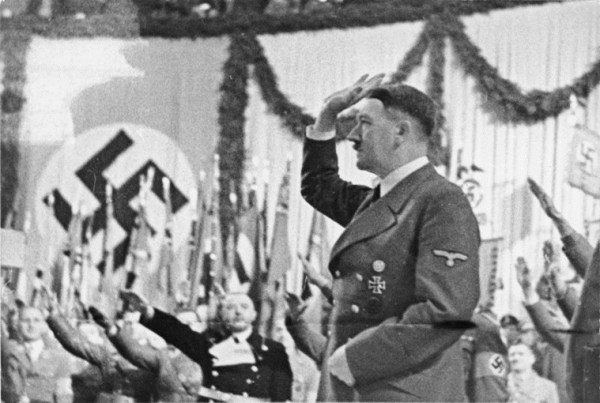 Adolf Hitler used to answer the common salute with his modified version, where his palm was parallel to the sky. (Via Wikimedia Commons)
These gestures helped add to the cult of personality around Hitler and his ethnonationalism ideology, which advocated the extermination of the Jews, homosexuals, the differently-abled, and some other minority groups in view of the so-called racial superiority of the Aryans.
Following the horrors that unfolded in Germany around the Second World War (1939-45) and the mass killings of millions of people under the Nazi regime, Germany took steps to ensure its politics does not see the rise of another Hitler-like force. Under German law, it is illegal to display symbols of unconstitutional organisations, such as the Nazi swastika.
Another DW report stated that these rules are not uniformly applied. For example, posting a picture with a swastika in it or Nazi slogans on social media is illegal in Germany. But they can be shown in certain instances related to entertainment, as was done in the Hollywood film Inglorious Bastards, set in the WW2 era.
Similarly, while displaying anti-constitutional symbols publicly is illegal, people in Germany are allowed to own goods branded with symbols associated with Nazi rule – the swastika, SS sig runes (of Hitler’s security force). This can be done as long as people ensure that only a limited number of people can see them. “It’s legal to have a cellar full of Nazi memorabilia; displaying a flag visible to passersby through a window is deemed legal by some experts and illegal by others,” DW stated.
Halemba’s lawyer has said there was “no truth” to the allegations of his client being associated with the symbols.
Founded in 2013, the AfD’s platform has included opposition to the European Union, and more recently, against immigration. Immigration has become a heightened political issue in the last decade in the country, following the entry of migrants and refugees from countries such as Afghanistan and Syria.
Under then Chancellor Angela Merkel, Germany allowed around a million refugees to apply to Germany for asylum in 2015 and 2016. Since then, several right-wing parties have criticised such policies.
DW’s report said of the AfD: “The party’s lead candidate in the 2021 elections, Alice Weidel, has said the party wants to achieve “negative immigration” to Germany. It also argues that Germany is being “Islamified” and portrays itself as a bulwark for traditional Christian values.”
Some have also argued that AfD is a modern-day party that has an ideology that is supportive of the Nazis – what is known as “neo-Nazism”. Such parties have been on the rise in Europe in the last decade. While the claim has been denied by AfD, its members have often landed in situations where members have been under the scanner for proximity to Nazism. In September, it was learnt that prominent member Björn Höcke would stand trial over charges related to using a banned Nazi phrase intentionally at a campaign rally.
At the same time, the party has seen its popularity surge in Germany amid concerns about immigration and the economy. It came third in Bavaria’s elections on October 8, with 14.6 per cent of the vote. Nationally, it is polling at around 20 per cent. With this win, it is also seen to be going beyond its traditional stronghold of eastern Germany.