6 min read


© The Indian Express Pvt Ltd



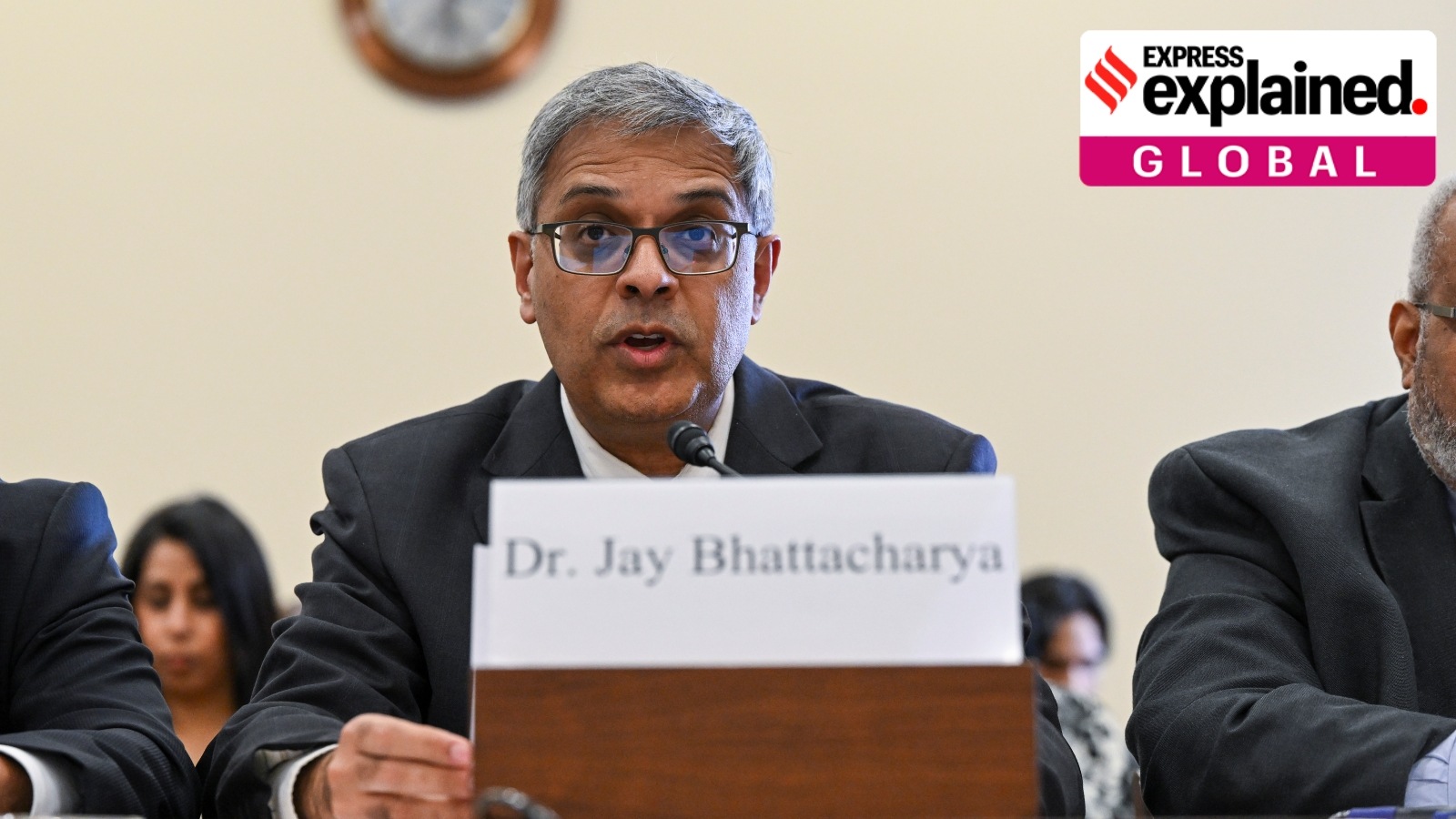 Dr Jay Bhattacharya has been a vocal critic of the Biden administration's Covid-19 policies (Kenny Holston/The New York Times)
The United States President-elect Donald Trump has nominated Indian-origin Dr Jay Bhattacharya to be the director of the National Institutes of Health (NIH), the country’s medical research agency, equivalent to but with an exponentially larger budget than the Indian Council of Medical Research (ICMR) based in New Delhi.
I am honored and humbled by President @realDonaldTrump‘s nomination of me to be the next @NIH director. We will reform American scientific institutions so that they are worthy of trust again and will deploy the fruits of excellent science to make America healthy again! https://t.co/FrLmYznhfw
— Jay Bhattacharya (@DrJBhattacharya) November 27, 2024
Bhattacharya garnered national attention for his opposition to lockdown, mask mandates, and repeated booster shots during the pandemic (despite publicly admitting that vaccines are effective). He will work with Robert F Kennedy Jr, Trump’s pick for Secretary of Health and Human Services, who is a vocal anti-vaxxer. RFK Jr’s department is the parent body of the NIH.
Bhattacharya is a professor of health policy and economics at Stanford University, also the institute from where he completed his MD and PhD. He is also the director of Stanford’s Center on the Demography and Economics of Health and Aging.
According to his Stanford profile, Bhattacharya’s research “focuses on the constraints that vulnerable populations face in making decisions that affect their health status, as well as the effects of government policies and programs designed to benefit vulnerable populations.”
He has authored a number of research papers on varied topics, from the prevalence and economic cost of dementia and frailty among the elderly in Japan, to whether reimbursements for novel drugs are linked to their performance.
In 2022, he co-authored a paper which suggested that “pre-existing immunity unique to East Asia” was likely the reason for countries like Japan and Korea seeing fewer infections and hospitalisations during the first year of the Covid-19 pandemic. (‘Understanding the exceptional pre-vaccination Era East Asian COVID-19 outcomes’.)
A 2024 paper co-authored by him looked at the “refugee crisis” in Italy in terms of impact on public health. It notably says that “as regions with higher refugee influx experienced higher healthcare expenditure in the year the refugee influx occurred, a sustained refugee influx may have an impact on healthcare costs, which may raise a problem of sustainability of the national healthcare system.” (‘Is the European refugee crisis a potential threat to public health? Evidence from Italy’.)
In 2016, Bhattacharya had co-authored a paper which concluded that the Affordable Care Act (popularly known as ‘Obamacare’) led to an increase in people with Medicare, the US federal health insurance scheme for those above the age of 65, availing screening services such as colonoscopies which help to detect colorectal cancers. (‘Colorectal Cancer Screening in the Era of the Affordable Care Act’.) Trump has previously said that he wants to end Obamacare.
Jay Bhattacharya’s claim to fame among lay persons undoubtedly is his criticism of various US government policies during the Covid-19 pandemic. Notably, he was among the three authors of the ‘Great Barrington Declaration’, an open letter published in October 2020. The declaration criticised Covid-19 lockdowns for “damaging physical and mental health”, arguing that these were leading to lower childhood vaccination rates, worsening cardiovascular disease outcomes, fewer cancer screenings, and deteriorating mental health — all of which would lead to greater excess mortality in the years to come.
Instead of lockdowns, the declaration called for what it referred to as “focused protection”, which specifically protected those at higher risk of severe disease and hospitalisation, while allowing younger people with lower risk to resume normal life. “We know that all populations will eventually reach herd immunity,” the declaration stated.
However, it has since been demonstrated that Covid-19 does not generate life-long immunity, with people repeatedly getting infections as newer variants of the virus emerged. Moreover, many individuals continue to battle what doctors refer to as “long Covid”, in which various symptoms persist or develop even after recovery from the initial infection. The Great Barrington Declaration also came before the delta wave, which killed many young people who, as per the declaration, did not need protection.
Bhattacharya was also among the people who sued the Biden administration for pressurising social media companies to censor Covid-19 skeptics.
If confirmed by the senate, Bhattacharya would be responsible for setting up policies and priorities of the NIH — a group of 27 premier research institutes in the country studying everything from nutritional supplements, behavioural and social sciences, women’s health, and various diseases like cancers and diabetes.
With an annual budget of $48 billion, the NIH is the largest public funder of biomedical research in the world. For comparison, ICMR has a budget of Rs 2,732.13 crore in 2024-25, slightly more than $323 million as per the exchange rate on November 28.
As NIH director, Bhattacharya will be the man who will interact with the US Congress to secure funding for the NIH. As former NIH director Dr Francis Collins said in an interview published in the journal Cell in 2022: “You need to be there whenever they [the Congress] want to talk about something, to explain why NIH is such a remarkable investment of government funds — both in terms of its ability to improve human health and as a great economic stimulus for the country. I probably had 1,000 meetings with members of Congress in my 12 years, and I think every one of those was worth doing.”
The NIH director also provides the administration with expert advice on certain aspects of health policy, and lends a voice to the US biomedical community in high offices in the federal government.