Premium
This is an archive article published on November 30, 2023

Loss and damage fund approved at COP28 summit: All you need to know

The fund will help developing countries that are vulnerable to the consequences of climate change. A few crucial details, however, remains unclear. The need of the hour is several trillion dollars, according to some economists.

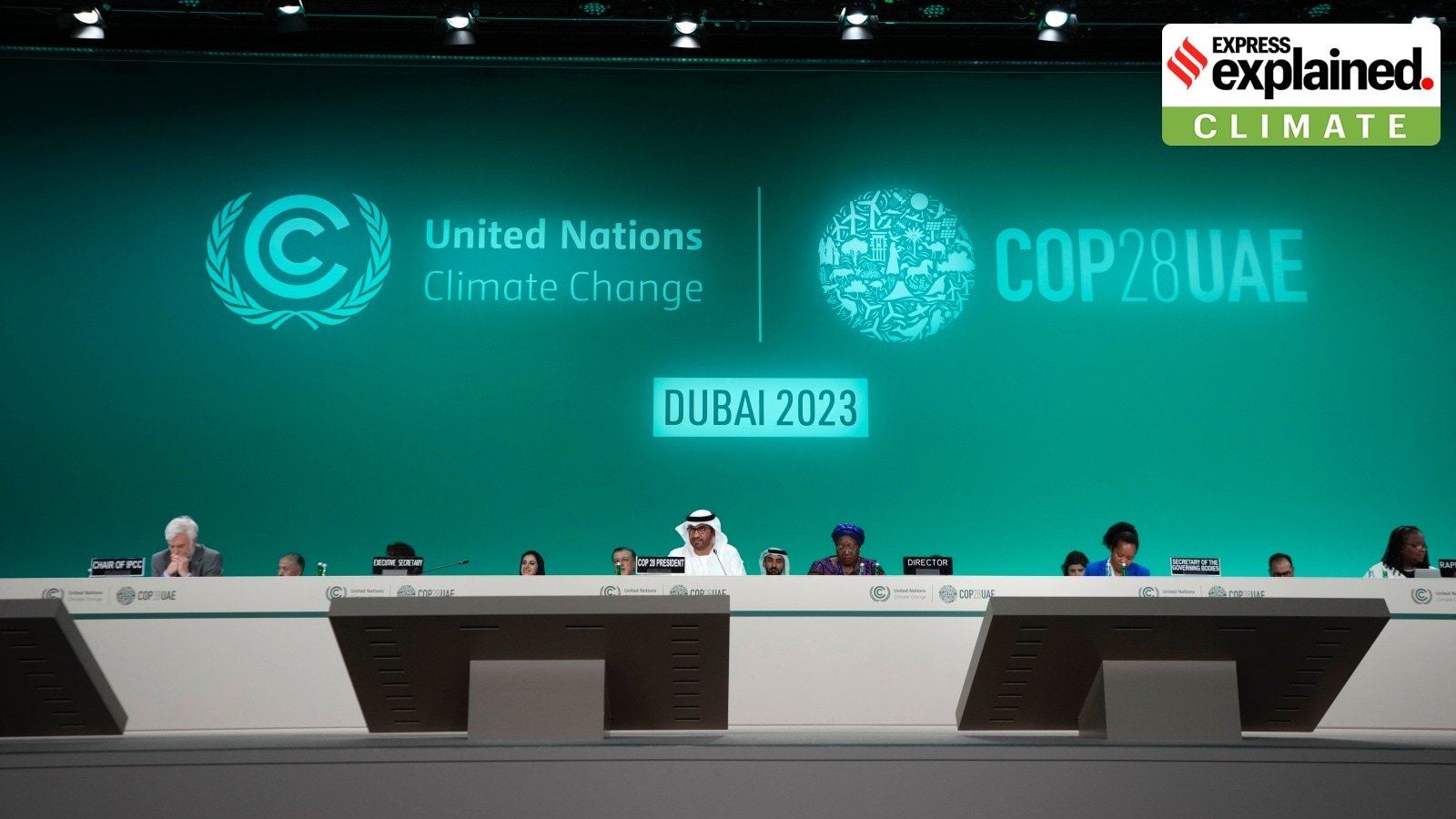
loss and damage cop28COP28 President Sultan al-Jaber, center, attends the opening session at the COP28 UN Climate Summit, Thursday, Nov 30, 2023, in Dubai, United Arab Emirates. (AP Photo/Peter Dejong)
Listen to this article
Loss and damage fund approved at COP28 summit: All you need to know
x
00:00
1x 1.5x 1.8x

On the opening day of the COP28 climate conference in Dubai, a loss and damage fund to help vulnerable countries cope with the impact of climate change has been officially launched. The initial funding is estimated to be $475  million — host UAE pledged $100 million, the European Union promised $275 million, $17.5 million from the US, and $10 million from Japan.

The loss and damage fund was first announced during COP27 in Sharm el-Sheikh, Egypt, last year. However, it was not until a few weeks before COP 28 that rich and poor countries managed to iron out some of their differences and agree on key points of the fund.

Here is a look at the fund, why it is needed by vulnerable countries, and how it will operate.

What is the loss and damage fund?

The loss and damage fund is a global financial package to ensure the rescue and rehabilitation of countries facing the cascading effects of climate change. The term refers to the compensation that rich nations, whose industrial growth has resulted in global warming and driven the planet into a climate crisis, must pay to poor nations, whose carbon footprint is low but are facing the brunt of rising sea levels, floods, crippling droughts, and intense cyclones, among others. The changing climate has impacted lives, livelihoods, biodiversity, cultural traditions, and identities.

Adelle Thomas, a lead author of the Intergovernmental Panel on Climate Change’s (IPCC) 2022 report, “Impacts, Adaptations and Vulnerability”, says that loss and damage means different things to different groups and there is no agreed upon definition within the United Nations Framework Convention on Climate Change (UNFCCC).

“Loss and damage is often categorised as either economic or non-economic. Economic loss and damage are negative impacts that we can assign a monetary value to. These are things such as the costs of rebuilding infrastructure that has been damaged due to a flood, or the loss of revenue from agricultural crops that were destroyed due to drought. Non-economic loss and damage are negative impacts where it is difficult or infeasible to assign a monetary value. These are things such as trauma from experiencing a tropical cyclone, loss of community due to displacement of people, or loss of biodiversity,” she says.

How much damage has been caused by industrialisation?

The Industrial Era started in 1850, disrupting Earth’s natural mechanism for the production and absorption of greenhouse gases. Today, the US, the UK and the EU are considered to be responsible for 50% of all emissions. Bring Russia, Canada, Japan, and Australia into the picture and it jumps to 65%, i.e. two-thirds of all emissions. Compared to them, India is responsible for only 4% of historical emissions. Meanwhile China, the world’s biggest emitter in the last 15 years, is responsible for 30% of global emissions every year.

Story continues below this ad

Greenhouse gases comprise methane, nitrous oxide, water vapour, and carbon dioxide (CO2) — with CO2 responsible for most of the global heating. Carbon particles are being released in extremely large quantities and they have the ability to linger in Earth’s atmosphere seemingly endlessly, at least for a millennium or more, and warm it.

How much loss and damage is the world facing?

Research shows that 55 vulnerable countries have suffered $ 525 billion combined climate crisis-fuelled losses in the last 20 years. The number is estimated to reach $ 580 billion per year by 2030. Global warming has changed the way the world lives, with vulnerable communities being the worst affected.

According to the IPCC, losses and damages will increase in future as global warming continues to rise. It will be unequally distributed and impact developing nations the most and, in them, the socially and financially weaker sections.

How big is the fund and how will it operate?

The World Bank will oversee the loss and damage fund in the beginning, with the source of funds being rich nations, such as the US, the UK and the EU, as well as some developing countries. The scale or the replenishment cycle of the fund remains unclear, but the need of the hour is several trillion dollars.

Story continues below this ad

Previously, the developing nations were not keen to have the World Bank manage the fund as they saw this as a means by which richer nations could have more control over the finances. They have accepted this term now.

Dipanita Nath is a Senior Assistant Editor at The Indian Express, based in Pune. She is a versatile journalist with a deep interest in the intersection of culture, sustainability, and urban life. Professional Background Experience: Before joining The Indian Express, she worked with other major news organizations including Hindustan Times, The Times of India, and Mint. Core Specializations: She is widely recognized for her coverage of the climate crisis, theatre and performing arts, heritage conservation, and the startup ecosystem (often through her "Pune Inc" series). Storytelling Focus: Her work often unearths "hidden stories" of Pune—focusing on historical institutes, local traditions, and the personal journeys of social innovators. Recent Notable Articles (December 2025) Her recent reporting highlights Pune’s cultural pulse and the environmental challenges facing the city during the winter season: 1. Climate & Environment "Pune shivers on coldest morning of the season; minimum temperature plunges to 6.9°C" (Dec 20, 2025): Reporting on the record-breaking cold wave in Pune and the IMD's forecast for the week. "How a heritage tree-mapping event at Ganeshkhind Garden highlights rising interest in Pune’s green legacy" (Dec 20, 2025): Covering a citizen-led initiative where Gen Z and millennials gathered to document and protect ancient trees at a Biodiversity Heritage Site. "Right to breathe: Landmark NGT order directs PMC to frame norms for pollution from construction sites" (Dec 8, 2025): Reporting on a significant legal victory for residents fighting dust and air pollution in urban neighborhoods like Baner. 2. "Hidden Stories" & Heritage "Inside Pune library that’s nourished minds of entrepreneurs for 17 years" (Dec 21, 2025): A feature on the Venture Center Library, detailing how a collection of 3,500 specialized books helps tech startups navigate the product life cycle. "Before he died, Ram Sutar gave Pune a lasting gift" (Dec 18, 2025): A tribute to the legendary sculptor Ram Sutar (creator of the Statue of Unity), focusing on his local works like the Chhatrapati Shivaji statue at Pune airport. "The Pune institute where MA Jinnah was once chief guest" (Dec 6, 2025): An archival exploration of the College of Agriculture, established in 1907, and its historical role in India's freedom struggle. 3. Arts, Theatre & "Pune Inc" "Satyajit Ray, Ritwik Ghatak were not rivals but close friends, says veteran filmmaker" (Dec 17, 2025): A deep-dive interview ahead of the Pune International Film Festival (PIFF) exploring the camaraderie between legends of Indian cinema. "Meet the Pune entrepreneur helping women build and scale businesses" (Dec 16, 2025): Part of her "Pune Inc" series, profiling Nikita Vora’s efforts to empower female-led startups. "How women drone pilots in rural Maharashtra are cultivating a green habit" (Dec 12, 2025): Exploring how technology is being used by women in agriculture to reduce chemical use and labor. Signature Style Dipanita Nath is known for intellectual curiosity and a narrative-driven approach. Whether she is writing about a 110-year-old eatery or the intricacies of the climate crisis, she focuses on the human element and the historical context. Her columns are often a blend of reportage and cultural commentary, making them a staple for readers interested in the "soul" of Pune. X (Twitter): @dipanitanath ... Read More


 

Latest Comment
Post Comment
Read Comments
Advertisement
Loading Taboola...
Advertisement
Advertisement
Advertisement