This marks a change from the previous policy from May 1, when the Centre had asked states to procure 25% of the doses from the open market to vaccinate the 18-44 year age group. Before that (January 16 to April 30), the Centre had procured and allocated vaccine doses to the states for free vaccination of three priority groups — healthcare workers, frontline workers, and persons above the age of 45.

Newsletter | Click to get the day’s best explainers in your inbox
I am above the age of 18. Will I be vaccinated for free?
From June 21, every citizen above the age of 18 will be vaccinated free at vaccination centres run by the Centre or a state government.
In the previous policy starting May 1, a state could administer vaccines free to the 18-44 age group at centres run by the state government. At central government centres, only the three priority groups — healthcare workers, frontline workers, and those above age 45— were vaccinated free. From June 21, both state and central centres will administer vaccines free to all age groups.
What about private vaccination centres?
People of all ages will have to pay for vaccination at private centres. However, private centres can charge only Rs 150 as service charge over and above the price of the vaccine. The maximum price that can be charged by private centres is Rs 780 for Covishield, Rs 1,410 for Covaxin; and is Rs 1,145 for Sputnik V. The total cost of vaccination will be displayed on the CoWIN portal at the time you book your slot.
Story continues below this ad
How many doses will be available free?
The Centre will directly procure 75% of the doses manufactured by vaccine companies, and distribute this among the states, to be administered free. From June 21, states will no longer have any role in procurement. Private hospitals will have exclusive access to the remaining 25%.
How many doses will be provided to which state?
These will be allocated based on three positive metrics — population, disease burden and the progress of vaccination — and one negative metric — wastage of vaccines. A state reporting good vaccination coverage will get a higher number of doses, while a state recording a higher wastage will receive a lower number.
Which groups will be given priority?
Healthcare workers and frontline workers will continue to get top priority at government centres. States will also have to prioritise the vaccination of citizens above 45 since this category accounts for 80% of Covid-related mortality. They will have also have to prioritise the vaccination of those whose second dose has become due, the revised guidelines recommend.
Story continues below this ad
Within the population group of citizens in the 18-44 age group, states may decide their own prioritisation factoring in the vaccine supply schedule.
What about foreign vaccines, once available?
No supply agreements have been finalised by the government yet with Pfizer, Moderna, or Johnson & Johnson. The government is studying the conditions these American manufacturers have set, and any decisions on procurement and availability will be announced only after the final agreements.
Does anything change for private hospitals?
Story continues below this ad
Non-transferable electronic vouchers, approved by the RBI, will be introduced. This would enable people to financially support vaccination of economically weaker sections at private centres. The voucher can be used only for the person to whom it has been issued. It can be downloaded on your mobile; it will be scanned at the vaccination site, and the amount will be credited. It will also be captured on Cowin.
The small private hospitals in my area don’t have vaccination sites. Will this change?
From June 21, the state government will aggregate the demand of private hospitals keeping in view equitable distribution and regional balance. Based on this aggregated demand, the Centre will facilitate supply to private hospitals and their payment through the National Health Authority’s electronic platform. This, indirectly, would enable the smaller and remoter private hospitals to obtain a timely supply of vaccines.
I cannot book an appointment on Cowin. What should I do?
Story continues below this ad
From June 21, all government and private vaccination centres will provide an onsite registration facility. A detailed procedure is to be finalised and published by the states.


 5 min read



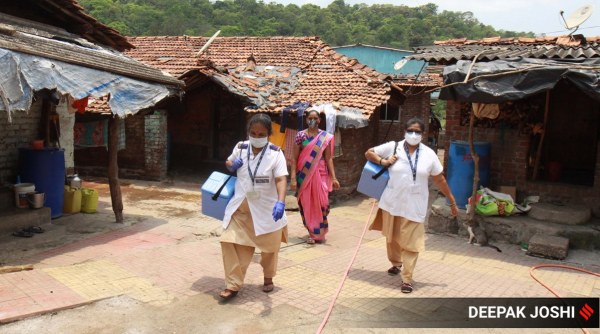 A vaccination drive by the Thane Municipal Corporation in the Yeoor forest range. (Express Photo: Deepak Joshi)