This is an archive article published on February 1, 2022
Explained: Why Andhra Pradesh HC warned Twitter to either follow the law of the land or face action
The Andhra Pradesh High Court on Monday asked Twitter to either follow the law of the land or face action. What angered the court? What did Twitter have to say in its defence?
Written by Sreenivas Janyala
, Edited by Explained Desk
Hyderabad | February 1, 2022 10:49 AM IST
4 min read
Whatsapp
twitter
Facebook
Reddit
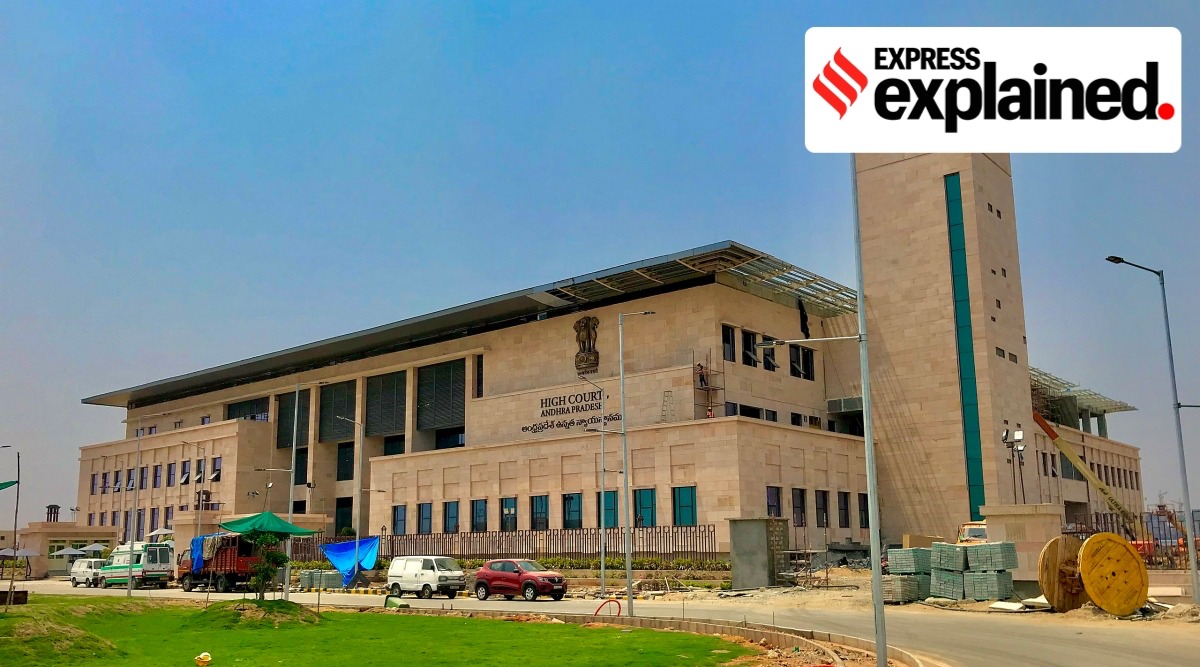
Andhra Pradesh High Court (Wikimedia Commons)
Twitter was at the receiving end of the ire of the Andhra Pradesh High Court on Monday (January 31), which asked the social media platform to either follow the law of the land or face action.
What angered the Andhra Pradesh High Court?
A division bench comprising Chief Justice Prashant Kumar Mishra and Justice M Satyanarayana Murthy were upset that Twitter did not remove several comments posted against the judiciary and some High Court judges, which they said were abusive and defamatory.
The bench warned Twitter that it was in contempt of court by not taking any action to remove the content it had been directed to pull down, and action could be taken against the company.
In October 2020, the HC had directed the CBI to investigate some comments allegedly made by supporters and leaders of the ruling YSR Congress Party on social media against the court and some judges following a few judgments, stays, and orders that were seen as a setback to the government.
These orders or judgments included a stay on the government’s decision on decentralisation and creating three separate capitals for the state; reinstating then State Election Commissioner N Ramesh Kumar who was removed by the state government for postponing municipal polls in March 2020 over Covid-19 protocols; and a stay on introducing English as medium of instruction in all schools.
While directing the CBI to investigate, the HC observed that it had been aware of these derogatory posts since April 2020. It had directed the Registrar to lodge a complaint with the CID to investigate the comments. However, when the CID failed to file a case, the HC handed over the case to the CBI.
What happened after the case was taken over by the CBI?
The CBI gave a list of URLs to Twitter, requesting that they be removed. The agency also arrested at least five persons who were allegedly behind the posts and comments on Twitter, and questioned one ruling party MLA and MP seeking information about their supporters who may have posted some of the comments.
Story continues below this ad
What does Twitter have to say in its defence?
The CBI stated in the court that Twitter did not properly comply. It stated that while the objectionable posts were not visible to a Twitter user in India, they could still be seen by anyone who logged on from outside the country.
Counsel for Twitter submitted that the platform had abided by the directions of the court and CBI, and had removed all the content deemed objectionable. As for the posts being visible outside the country, Twitter stated that the platform was built in that way, just like all the other social media platforms.
However, the judges pointed out that YouTube took down all the URLs given by CBI regarding the offensive posts, and they were no longer visible in other countries. The bench warned Twitter that it would initiate action if the URLs continued to be visible outside India. The court directed the CBI to submit a report on the progress of investigation and posted the matter for February 7.
Sreenivas Janyala is a Deputy Associate Editor at The Indian Express, where he serves as one of the most authoritative voices on the socio-political and economic landscape of Telangana and Andhra Pradesh. With a career spanning over two decades in mainstream journalism, he provides deep-dive analysis and frontline reporting on the intricate dynamics of South Indian governance.
Expertise and Experience
Regional Specialization: Based in Hyderabad, Sreenivas has spent more than 20 years documenting the evolution of the Telugu-speaking states. His reporting was foundational during the historic Telangana statehood movement and continues to track the post-bifurcation development of both Telangana and Andhra Pradesh.
Key Coverage Beats: His extensive portfolio covers a vast spectrum of critical issues:
High-Stakes Politics: Comprehensive tracking of regional powerhouses (BRS, TDP, YSRCP, and Congress), electoral shifts, and the political careers of figures like K. Chandrashekar Rao, Chandrababu Naidu, and Jagan Mohan Reddy.
Internal Security & Conflict: Authoritative reporting on Left-Wing Extremism (LWE), the decline of the Maoist movement in former hotbeds, and intelligence-led investigations into regional security modules.
Governance & Infrastructure: Detailed analysis of massive irrigation projects (like Kaleshwaram and Polavaram), capital city developments (Amaravati), and the implementation of state welfare schemes.
Crisis & Health Reporting: Led the publication's ground-level coverage of the Covid-19 pandemic in South India and major industrial incidents, such as the Vizag gas leak.
Analytical Depth: Beyond daily news, Sreenivas is known for his "Explained" pieces that demystify complex regional disputes, such as river water sharing and judicial allocations between the sister states. ... Read More


 4 min read














![Kokrajhar [Assam], Jan 20 (ANI): Police deployed during a protest between two groups at National Highway, in Kokrajhar on Tuesday. (ANI Video Grab)](https://images.indianexpress.com/2026/01/kokrajhar.jpg?w=300)