


Click here to follow Screen Digital on YouTube and stay updated with the latest from the world of cinema.
Premium
This is an archive article published on June 13, 2014
Where mean Girls rule
On TV, Washington is the one place where it’s safe to say that women are as bad as men
Mumbai | June 13, 2014 01:00 AM IST 5 min read
5 min read


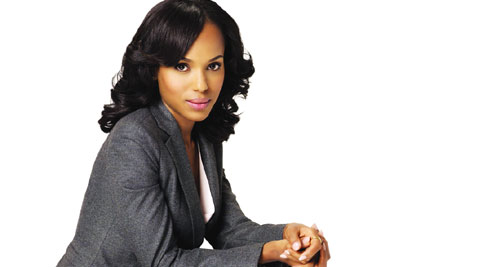 Kerry Washington
There isn’t a woman in Washington who doesn’t traffic in at least five of the seven deadly sins. Greed, lust, envy, wrath and pride are the currencies of power in the US capital, and some of its most dangerous brokers are women on television.
On House of Cards, the icily conniving Claire Underwood, played by Robin Wright, helped her husband, and herself, take over the White House. And television offers so many others, including Olivia Pope (Kerry Washington), the home-wrecking political fixer on Scandal, as well as pretty much every other prominent female on that amped-up melodrama.
Then of course there is Selina Meyer, the vice-president played by Julia Louis-Dreyfus on Veep, who has all seven Capitol vices, including sloth and a bit of gluttony. It’s not hard to understand why so many series are based in the nation’s capital. In a post-9/11 age, it’s convenient to set tales of conspiracy and global evil-doing in Senate cloakrooms and ballrooms.
But most of all, everybody hates politicians, so much so that contempt for them trumps even the most ingrained taboos about the portrayal of women on network television. Nobody expects a virtuous heroine in Congress or the White House.
Feminism hasn’t won every battle, but it did at least teach media executives to worry about charges of sexism or misogyny. On most network dramas, it is almost unthinkable to portray lead female characters as selfish, craven or incompetent, especially when they are serving the public good as detectives, firefighters and doctors. Heroines on series like NCIS: Los Angeles or The Blacklist are strikingly the same: strong, beautiful, dedicated and boring. Even shows with more complex heroines, like Alicia (Julianna Margulies), the governor’s mate-turned-lawyer in The Good Wife, don’t veer far from the norm. That’s what makes Girls so distinctive: Lena Dunham’s shallow slackers are not nice or noble.
The more glaring exception is Washington, where there is apparently nothing sexist or old school about painting women as venal, self-serving and manipulative.
Scandal is a night-time soap, and while the plot lines have grown ever more absurd, what doesn’t get old is the bad behaviour of its lead women. Olivia is ostensibly the heroine, and she is sleeping with the president as well as his old friend and top-secret intelligence enforcer.
It’s not just elected officials who are pilloried; female government servants of all kinds are suspect. The joke of Parks and Recreation is that its heroine, Leslie Knope (Amy Poehler), is a public servant who is actually dedicated and idealistic.
Selina (Veep), now running for president, is told she has to explain her position on abortion, and one aide suggests she give her perspective as a woman. “No, no, no,” Selina hisses, horrified. “I can’t identify myself as a woman. People can’t know that. Men hate that, and women who hate women hate that — which I believe is most women.”
Television is so drawn to Washington villainesses in part because it is still dangerous in real life to attack female politicians. This makes it all the more tempting to create fictional versions who are as conniving in public office as their male counterparts. On television, Washington is the one place where it’s safe to say that women are as bad as men.
Alessandra Stanley /NYT
U.S. considers drone licenses for film and TV producers
U.S. aviation authorities said on Monday they would consider allowing the film and television industry to use unmanned aircraft, or drones, for the first time. Seven aerial photo and video production companies have asked for regulatory exemptions, facilitated by the Motion Picture Association of America, the Federal Aviation Administration said in a release. The agency cited, “tangible economic benefits” that could result from the move, but said it would act to make sure safety issues associated with drone use were mitigated.
Media companies are among the commercial groups not allowed under current FAA rules, but tens of thousands of drones are already in use in the United States, often flouting federal restrictions, for a wide range of tasks from farming to film making. Their use has raised privacy and safety concerns. The FAA last month highlighted a case where a drone nearly collided with a passenger plane near a Florida airport.
The FAA has issued a number of exemptions, to law enforcement, and has said it is “working aggressively to ensure the safe integration of unmanned aircraft systems into the national airspace.”
— Reuters
Advertisement
Loading Taboola...

More Entertainment




Advertisement
PHOTOS



PHOTOS





Top Stories









Must Read







Advertisement
- 01
- 02
- 03
- 04
- 05
Advertisement
