4 min read


Click here to follow Screen Digital on YouTube and stay updated with the latest from the world of cinema.
© IE Online Media Services Pvt Ltd



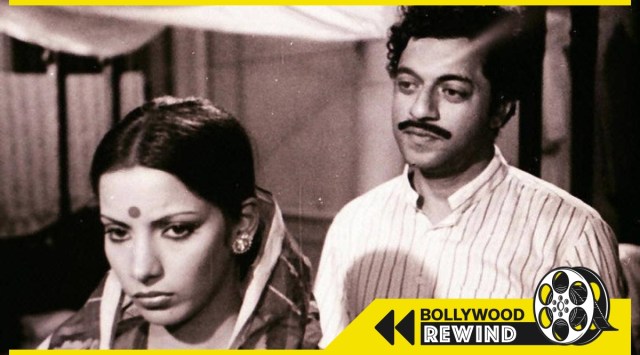 Shabana Azmi and Girish Karnad in Basu Chatterjee's Swami.
In the opening minutes of Basu Chatterjee’s Swami, Shabana Azmi’s Saudamini says that marriage is a commitment and once you agree to that commitment, you give up the right to love someone else. She believes that this restriction is necessary for the institution to work but soon realises that social directives don’t organically find a place in one’s life as she still longs for the man she once loved. Swami, starring Shabana along with Girish Karnad, Vikram Makandar and Utpal Dutt, is the story of this longing. It was perhaps this story that inspired films like Hum Dil De Chuke Sanam and Manmarziyan where the storyteller insists that a woman’s right to choose who she loves ceases to exist once she is married, and then makes her falsely believe that she has chosen her husband. The film is based on a short story by Sarat Chandra Chattopadhayay adapted for the screen by the director himself.
Much like Aishwarya Rai’s Nandini in Hum Dil De Chuke Sanam, Swami’s Saudamini falls in love with someone but circumstances hinder her from getting married to him. A poignant letter to her lover has her almost begging to be rescued, but she does nothing to help her own circumstances. She refuses to sleep in the same bed as her husband but keeping in line with what is expected of her, she is eventually ‘won over’ by his kind nature. A chance meeting with her ex-lover has such an effect on Saudamini that she packs up her bags and leaves her home to be with him, but social rules stop her from acting like a rebel.
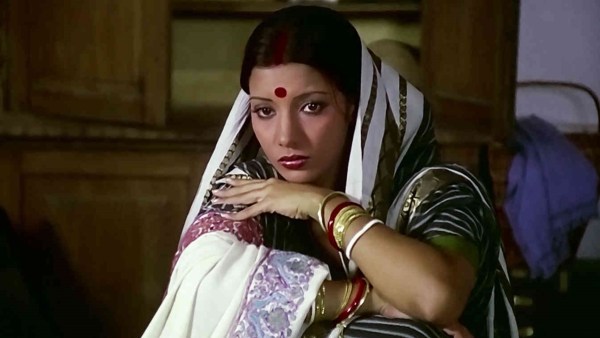 Shabana Azmi in 1977’s Swami.
The film’s title, Swami, sets the tone of the film. We are repeatedly told that for Saudamini, her husband is her ‘swami’ (god). She is expected to follow what he says and abide by his directives. His word is final and even though he lets her believe that she has some say in the relationship, he is the one with the power. Chatterjee insists that it is Saudamini who has made the choice to stay with her husband, but it is obvious that it is her patriarchal conditioning that makes her feel like she has sinned. To add insult to injury, we are eventually told that her ‘swami’ knew of her love story all along but was accepting of her anyway.
The first act of Swami presents her as the woman who can afford to be her own person because her uncle is a progressive, forward-thinking man. The farce created here lets us believe that Saudamini has some agency but soon after her uncle’s death, and her forced marriage, we learn that the woman was never empowered enough to stand up for herself.
Hum Dil De Chuke Sanam’s Nandini chooses her husband for the goodness of his heart, even though her lover has done nothing wrong, and same is the case with Saudamini, which makes you think that these women were made to believe that they were making a choice, when in fact, a choice had already been made for them, and now, they just have to live with it.
Click here to follow Screen Digital on YouTube and stay updated with the latest from the world of cinema.