6 min read

Journalism of Courage



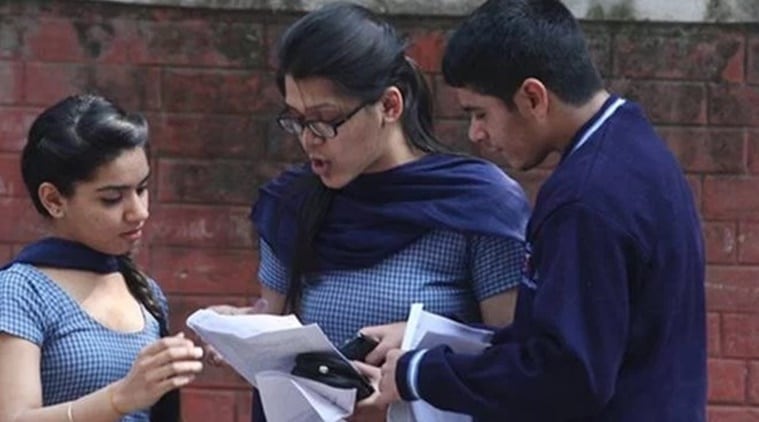 The option for choosing to write a basic-level math exam has been introduced by the Central Board of Secondary Education for the first time in the academic session 2019-2020. (Representational Image)
AS THE 10th board exams come closer, most students from government schools have opted for the basic-level math exam while a majority of private school students have opted for the standard-level math exam in Chandigarh.
Although the UT government is yet to release figures, data procured by Newsline from individual schools reveal about 80 per cent children in government schools in Chandigarh opted for the basic-level math exam and 20 per cent for the standard-level math exam. The data for private schools display an opposing trend, where approximately 80 per cent children have opted for the standard-level examination and 20 per cent for the basic-level examination.
New initiative by CBSE
The option for choosing to write a basic-level math exam has been introduced by the Central Board of Secondary Education for the first time in the academic session 2019-2020. Students who will take the 10th board examination in 2020 from across the city have already chosen the level at which they wish to write their math examination.
“This has been done to allow students to make an informed choice and unburden themselves of the stress that often accompanies taking a math examination,” says Alka Mehta, the District Education Officer for the Chandigarh Administration. “Only the difficulty level of questions in the examinations will be different, but students from both the categories will have to learn the same syllabus.”
According to CBSE guidelines, the exams will indeed be based on the same syllabus, but the standard level mathematics exam will assess higher mathematical abilities than the basic-level mathematics examination. Students who wish to pursue mathematics after 10th class are mandated to opt for the standard-level exam. Further, CBSE claims that this will not dilute mathematics education imparted to students, but will only provide a student-centric approach reducing the pressure on those who do not wish to pursue math further.
Upholding an educational standard
Parveena John Singh, principal of Mount Camel School, claims that more than 80 per cent students from her school have opted for the standard level math exam. “More than what they wish to pursue in higher education and later in their career, it is about just upholding a standard of education in my school. That is why I think most children have opted for the standard test,” Singh says. “Though we haven’t coerced any students and parents to opt for any particular level of examination, I think they themselves believe in going through that academic rigour.”
Niyati Chitkara, principal of Chitkara International School in Sector 25, says 24 students from a batch of 107 students in the 10th grade opted for the basic level examination in her school. “Students are just used to a standard of math and they are prepared to do that. Maybe in a few years that might change, but for now very few students are interested in taking the basic level examination,” says Chitkara.
However, Chitkara believes the student’s choice also comes as a result of parents’ pressuring their children to pursue a STEM (science, technology, engineering and mathematics) education. “If the students take the basic exam, they will not be able to sit for many competitive examinations where math is a necessary component. This is why many parents, who send their children to private schools hoping to secure a bright future for their children, are hesitant to shut those career options for their children,” claims Chitkara.
Promoting problem-solving and analytical thinking
Mathematician and Professor Emeritus from Panjab University I B S Passi, who is currently teaching at Ashoka University, says that a rigorous mathematics education is essential not only for those who wish to pursue a STEM education, but for all students who wish to inculcate analytical thinking and problem solving skills in their life. “You see maths is not just the means to an end in terms of achieving a particular career goal, but it is an essential practice that allows students to apply logic and problem solving abilities to all kinds of challenges in life,” Passi says.
Learning analytical thinking, problem solving skills, and application of logic is especially necessary for government school students in Chandigarh, who are gearing up to take the Programme for International Students Assessment (PISA) test in the year 2021. According to the results from the last time India participated in the test in 2009, India’s performance was particularly dismal in the mathematics section of the test. Hence, the Chandigarh Administration had earlier announced that they will introduce additional segments in the mathematics syllabus to prepare students for PISA.
While on the one hand, government schools are providing extra classes to prepare students for the PISA exam, with a particular concentration on analytical thinking and mathematic problem solving, on the other hand most students have opted to take the basic-level math exam in these schools. “In my school only around 15 students out of 190 have opted for the standard-level examination. Most students here chose an arts education. A science or commerce education is seen as more strenuous and to avoid failing, they opt for the easier subjects,” says Ravinder Kaur, principal of Government Model School, Dhanas.
“From the point of view of the CBSE, this is a good decision. There is no point in burdening students with the stress of math when they don’t wish to pursue it. As long as their basics are clear, there are things more important than math in the world as well,” claims B L Sharma, the former education secretary of UT Chandigarh.
DEO Mehta echoes Sharma’s opinion: “This is in the students’ interest, why make them fail again and again at something they don’t want to pursue at all?”