

Journalism of Courage

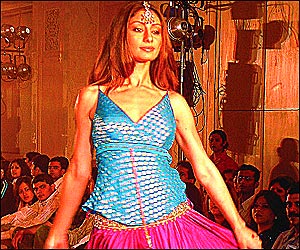
This festive season,the traditional styles and designs of fashion,it seems are back in fashion. As the fairer sex is thronging the market for the ethnic wear to embellish their looks,our very own traditional styles,like Phulkari,Kalamkari and Ikat are high on demand. A comprehensive survey of the shops and boutiques around the city gives us the exact picture of the fashion scene for the coming festivals.
Indian embroidery styles like the Phulkari,Jamdani,Bagh and Ikat are famous since ancient times. These styles not only lend style to the apparel but when used with a little creativity,provide elegance and splendor to the entire look. Like Fatema Parwani,the owner of Nusrat ethnic womens wear boutique,puts it,The Zardozi work is an all-time favorite for the festive seasons. With that,the delicate crochet work is also gaining popularity. We use crochet designs on chiffon saris as well as kurtis and salwars,which gives the entire dress a gorgeous ethnic look. The gota and patti traditionally used in Kashida styles are used for heavy ghagras and lehengas with stones and diamonds to further elaborate the traditional look. Fatema has seen a rise in demand for Phulkari works as well.


Traditionally used as just a style of cloth-print,the Kalamkari designs are being used in wedding sarees and lehengas also. Designers are even incorporating the Kalamkari print in mens traditional attires to give them that rich look. Most of the styles of embroidery and textiles have evolved with the times and people are combining and designing dresses,sarees and even ghagraas according to the body and looks of the customer. Even our very own Paithani Pallu style has been incorporated in ghagras and lehengas. Though traditionally considered as heavy and flashy,people today are experimenting with these styles to be fashionable but at the same time retain the essence of our culture. Monika Talreja,Owner of Glamour Studio,M G Road sums it up,We have been really lucky to have all these attractive styles of designing. With the variety in designs and the scope of flexibility these designs offer,its no surprise that they are all back in fashion.
Looming large
Kalamkari: Coming from the Persian words kalam(pen) and kari(drawing with pen),it is one of the hardest hand-painted or block-printed cotton textiles
Paithani Saree: It originated near Paithan in Maharashtra famous for the peacock and oblique square designs
Jamdani: A fabric of fine cotton muslin with colored strips and patterns,which originated in West Bengal
Phulkari: The embroidery style from Punjab,famous for delicate floral designs with sparsely embroidered odhni
Kashidakari: Originally from Kashmir,this famous style of embroidery emphasizes on dark and heavy floral designs with a contrasting background cloth
Zardozi: Famous for heavy diamond and Zari works,it is an Indian embroidery style since the times of Rig-Veda
Ikat: Originated in Orissa,this is a style of weaving that uses resist dying process to create pattern or design


