Premium
This is an archive article published on July 5, 2024

Denmark’s ashwagandha ban based on report that lacks ‘scientific rigor’, claims Ayush ministry

Report flawed, new body of evidence shows DTU conclusions irrational: J-AIM

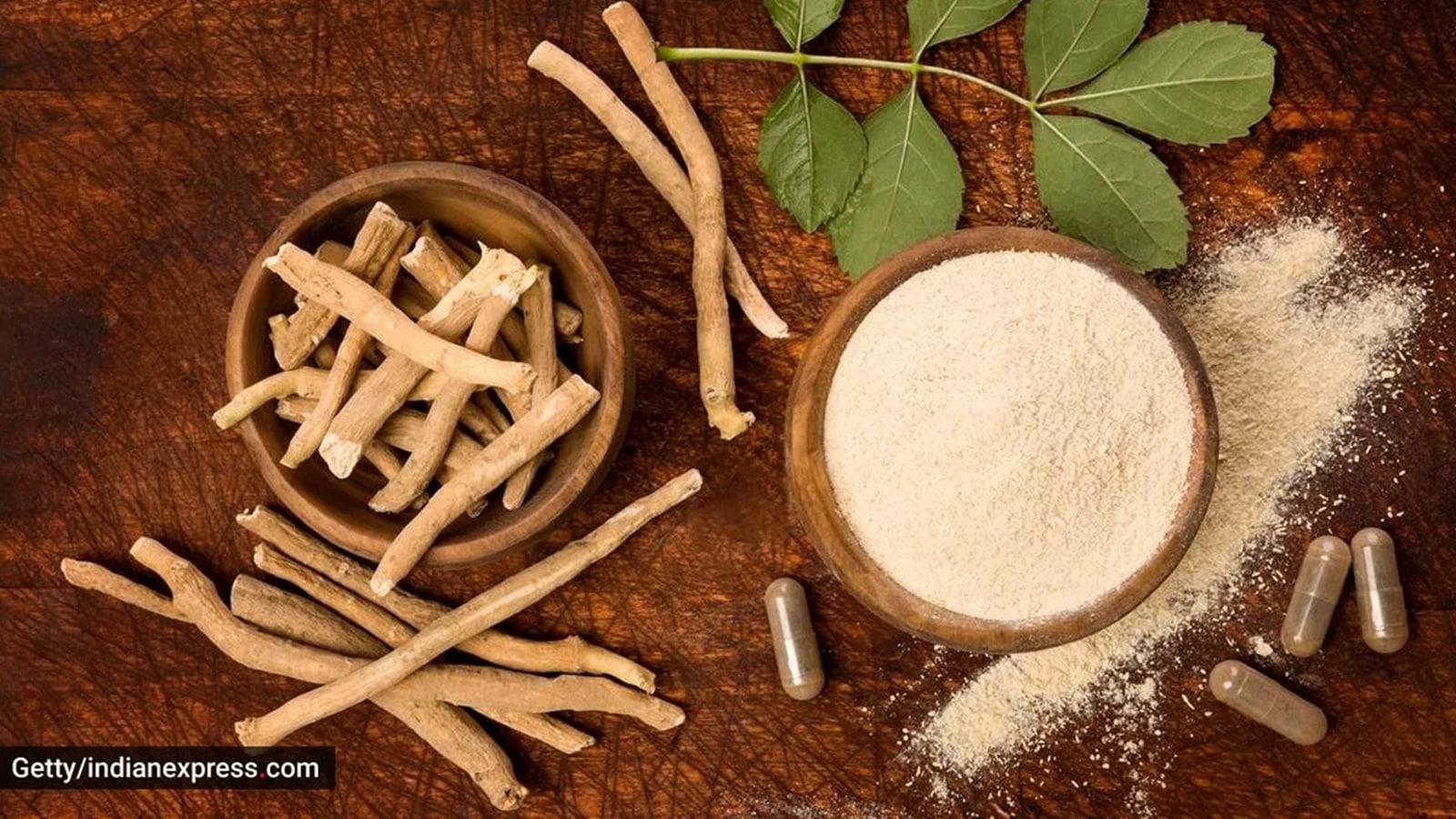
AshwagandaAs per data from the Ayush Ministry, India is the world's largest producer of ashwagandha, with an estimated annual production of 4,000 tonnes of roots.(Image source: Getty Images/Thinkstock)

The Ministry of AYUSH has expressed serious concern over a May 2020 report by Technology University of Denmark (DTU) based on which Denmark has banned ashwagandha, also known as the Indian ginseng or winter cherry that has been used for centuries in Asian cultures and Indian traditional medicine systems.

Withania somnifera (ashwagandha) faces safety concerns as per the DTU report which highlights potential issues such as its possible abortifacient effect, stimulation of thyroid gland and immune system, effect on sex hormones and adverse liver reactions. The same report has also raised concerns in Sweden, Finland, Australia, the Netherlands, France, Turkey and the European Union.

When contacted Rajesh Kotecha, secretary, Ministry of Ayush, Government of India said the report requires reconsideration. “It lacks comprehensive evaluation of ashwagandha’s diverse properties related to function and safety, and there has been substantial new evidence on ashwagandha’s safety and efficacy published since 2020 (over 400 papers and safety dossiers). Considering the lack of scientific rigor of the report and how it is taken up for subsequent banning and concerns are being raised in different countries, it is perceived as a non-tariff barrier,” Kotecha told The Indian Express.

On Friday (July 5) a scientific Journal of Ayurveda and Integrative Medicine has also published a report raising questions about the credibility of the report by DTU Food Institute which experts claim has ‘several technical, scientific, and ethical pitfalls’,

Dr Bhushan Patwardhan, National Research Professor, AYUSH, and lead author of the report told The Indian Express. As per the authors, the report is not peer-reviewed; the authors’ credentials, funding sources and conflicts of interest are not disclosed.

“The DTU report on Ashwagandha discusses its ingredients, general toxicity, effects on sex hormones and reproduction, metabolism, immune system, and central nervous system. Unfortunately, the report refers to a few articles from predatory journals in its sketchy literature review. Although the mandate from DVFA is on ashwagandha roots, it draws conclusions from studies on whole plants, stems, leaves, fruits/berries clearly irrelevant to this case,” Dr Patwardhan said. “This is a flawed report as new body of evidence shows that DTU conclusions are irrational,” he added.

“The DTU report entirely ignores the ‘benefit’ component, raising serious questions about its conclusions. Most drugs have some adverse effects but are used based on risk-benefit assessments. Banning Ashwagandha roots based on the data on the toxicity of leaves or berries is akin to banning apples because their seeds contain amygdalin which is a precursor to cyanide,”the authors said.

Story continues below this ad

Meanwhile, the Ministry has also assembled a panel of experts led BY Padmabhushan Prof Dr Shiv Kumar Sarin, Dr Rajesh Khadgawat, Dr Bhushan Patwardhan and others to look into the scientificity of the report. “The expert committee is updating a detailed safety dossier of Ashwagandha based on credible scientific evidence. The DTU/ report lacks scientific rigor, contains references from predatory journals and misquotations from American Herbal Pharmacopoeia,” Kotecha said.

Scientists from University of Mississippi, USA, and from India have also published rebuttals on the flawed DTU report, Kotecha pointed out. He also said that research affirms ashwagandha’s traditional aphrodisiac properties and shows that it can increase testosterone levels within normal ranges. Regarding thyroid health, while sporadic reports mention thyroid hormone fluctuations, overall evidence suggests safety, with potential benefits for hypothyroidism. Additionally, long-term exposure to varied doses of ashwagandha has shown no adverse effects.

India leads in exports

As per data from the Ayush Ministry, India is the world’s largest producer of ashwagandha, with an estimated annual production of 4,000 tonnes of roots. India holds a dominant position, contributing 42% of the world’s supply, Kotecha said, quoting studies that show India leads ashwagandha exports with 25,608 shipments (92%), followed by the US with 498 shipments and the EU in third place with 401 shipments. The herb jumped from 34th on the list of top-selling herbs in 2018, to 7 th in 2021; and sales increased an unprecedented 225% in 2021 to reach more than $92 million in the US alone, as per data from the American Botanical Council’s (ABC’s) annual Herb Market Report.

“The safety of Ashwagandha is well-proven in various conditions through pre-clinical and clinical studies,” Kotecha said, adding that during the Covid-19 pandemic, research was conducted on ashwagandha’s potential as a prophylactic measure against long Covid-19, yielding promising outcomes. Consequently, Ministry of Ayush initiated collaboration with the London School of Hygiene and Tropical Medicine (LSHTM) to investigate ashwagandha’s effectiveness in aiding the recovery of over 2,000 individuals in the UK experiencing prolonged Covid-19 symptoms.

Anuradha Mascarenhas is a Senior Editor at The Indian Express, based in Pune. With a career spanning three decades, she is one of the most respected voices in Indian journalism regarding healthcare, science and environment and research developments. She also takes a keen interest in covering women's issues . Professional Background Education: A gold medalist in Communication and Journalism from Savitribai Phule Pune University and a Master’s degree in Literature. Author: She authored the biography At The Wheel Of Research, which chronicles the life and work of Dr. Soumya Swaminathan, the former Chief Scientist at the WHO. Key Focus: She combines scientific accuracy with storytelling, translating complex medical research into compelling public and human-interest narratives. Awards and Recognition Anuradha has won several awards including the Press Council of India's national award for excellence in journalism under the gender based reporting category in 2019 and the Laadli Media award (gender sensitivity -2024). A recipient of the Lokmat journalism award (gender category-2022), she was also shortlisted for the RedInk awards for excellence in journalism-2021. Her debut book At The Wheel Of Research, an exclusive biography of Dr Soumya Swaminathan the inaugural chief scientist of World Health Organisation was also nominated in the Popular Choice Category of JK Paper AUTHER awards. She has also secured competitive fellowships including the Laadli Media Fellowship (2022), the Survivors Against TB – New Research in TB Media Fellowship (2023) and is part of the prestigious 2025 India Cohort of the WomenLift Health Leadership Journey.” Recent Notable Articles (Late 2025) 1. Cancer & Specialized Medical Care "Tata Memorial finds way to kill drug-resistant cancer cells" (Nov 26, 2025): Reporting on a breakthrough for triple-negative breast cancer, one of the most aggressive forms of the disease. ``Discipline, diet and purpose; How a 97-year-old professor defies ageing'' (Nov 15, 2025) Report about Prof Gururaj Mutalik, the first Head of Department at Pune's B J Government Medical College who at 97 credits his longevity to healthy habits and a strong sense of purpose. 2. Environmental Health (The "Breathless Pune" Series) "Long-term exposure even to 'moderate' air leads to chronic heart, lung, kidney issues" (Nov 26, 2025): Part of an investigative series highlighting that even "safe" pollution levels are damaging to vital organs. "For every 10 µg/m3 increase in PM2.5 level, there was 6-8% jump in medicine sales" (Nov 23, 2025): Using commercial data to prove the direct link between air quality and respiratory illnesses in Pune. 3. Lifestyle & Wellness News "They didn't let cancer, diabetes and heart disease stop them from travelling" (Dec 22, 2025): A collaborative piece featuring survivors who share practical tips for traveling with chronic conditions. ``At 17, his BP shot up to 200/120 mmHG; Lancet study flags why child and teen hypertension doubled between 2000 and 2020'' (Nov 12,2025)--A report that focusses on 17-year-old-boy's hypertensive crisis and reflects the rising global trend of high blood pressure among children and adolescents. 4. Scientific Recognition & Infrastructure "For promoting sci-comm, gender diversity: IUCAA woman prof highlighted in Nature" (Nov 25, 2025): Covering the global recognition of Indian women scientists in gender studies and physics. ``Pune researchers find a spiral galaxy like the Milky Way from early universe'' (December 3, 2025)- A report on how Indian researchers discovered a massive galaxy that existed when the universe was just 1.5 billion years old , one of the earliest to have been observed so far. Signature Beat: Health, Science & Women in Leadership Anuradha is known for her COVID-19 reportage, where she was one of the first journalists to provide detailed insights into the Covishield and Covaxin trials. She has a dedicated interest in gender diversity in health and science, often profiling women researchers who are breaking the "leaky pipeline" in STEM fields. Her writing style is scrupulous, often featuring interviews with top-tier scientists and health experts from various institutions. X (Twitter): @runaanu   ... Read More


Click here to join Express Pune WhatsApp channel and get a curated list of our stories

Latest Comment
Post Comment
Read Comments
Advertisement
Loading Taboola...
Advertisement