6 min read


Stay updated with the latest - Click here to follow us on Instagram
© IE Online Media Services Pvt Ltd



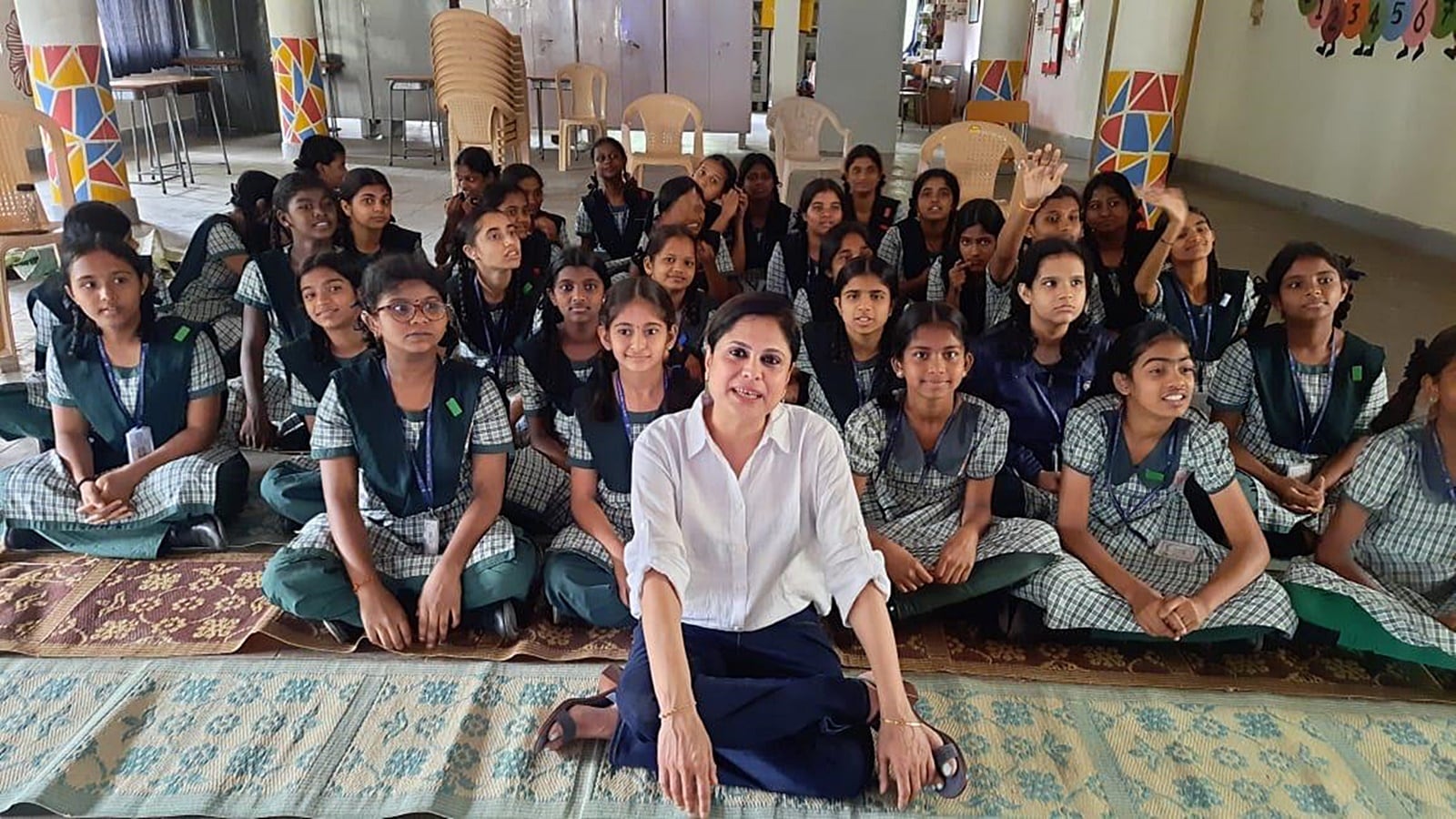 Anitha Rao is a social entrepreneur based in Bengaluru.
Have you ever heard of menstrual hygiene awareness being conducted in a cemetery or a prison? Or have you heard about a former air hostess conducting menstrual hygiene awareness programmes for children from Kashmir to Kanyakumari? This is precisely what Anitha Rao, a social entrepreneur based in Bengaluru, has been doing for the past eight years.
Rao, who is in her forties, calls herself the ‘Bengaluru hudugi (girl)’ and has set out to ‘give it back to the society’. She is the founder of Sakriya Charitable Trust, which conducts menstrual hygiene sessions for underprivileged women. From conducting awareness programmes in cemeteries to Bengaluru Central Jail and in public transport to police department offices, Rao is keen on spreading the message in the most ‘untouched’ part of society.
Rao hails from a simple middle-class Brahmin family in Bengaluru. Just like others, she too grew up with different dreams for life and wanted to do so much in life. But life had different plans for her. After pursuing science in her higher studies, she wanted to become a doctor until she stumbled upon a job advertisement seeking a ‘cabin crew’. Little did she know about the meaning of cabin crew. However, by age 21, she had flown to 63 countries. She worked as an air hostess for Gulf Air, followed by a stint with Etihad Airways in Bahrain for seven years between 1998 and 2005.
“Landing a job as a cabin crew was a significant turning point in my life. I set out to work at an early age of 19 to support my family. I became financially independent, and I was shouldering the responsibility of taking care of my family. When I was out in Bahrain, I learned about life. I was exposed to different cultures, to people of 59 different nationalities, and that is when I gained confidence and to speak up with courage,” said Rao, who later quit the aviation career and went on to spend time with family after her marriage in 2005.
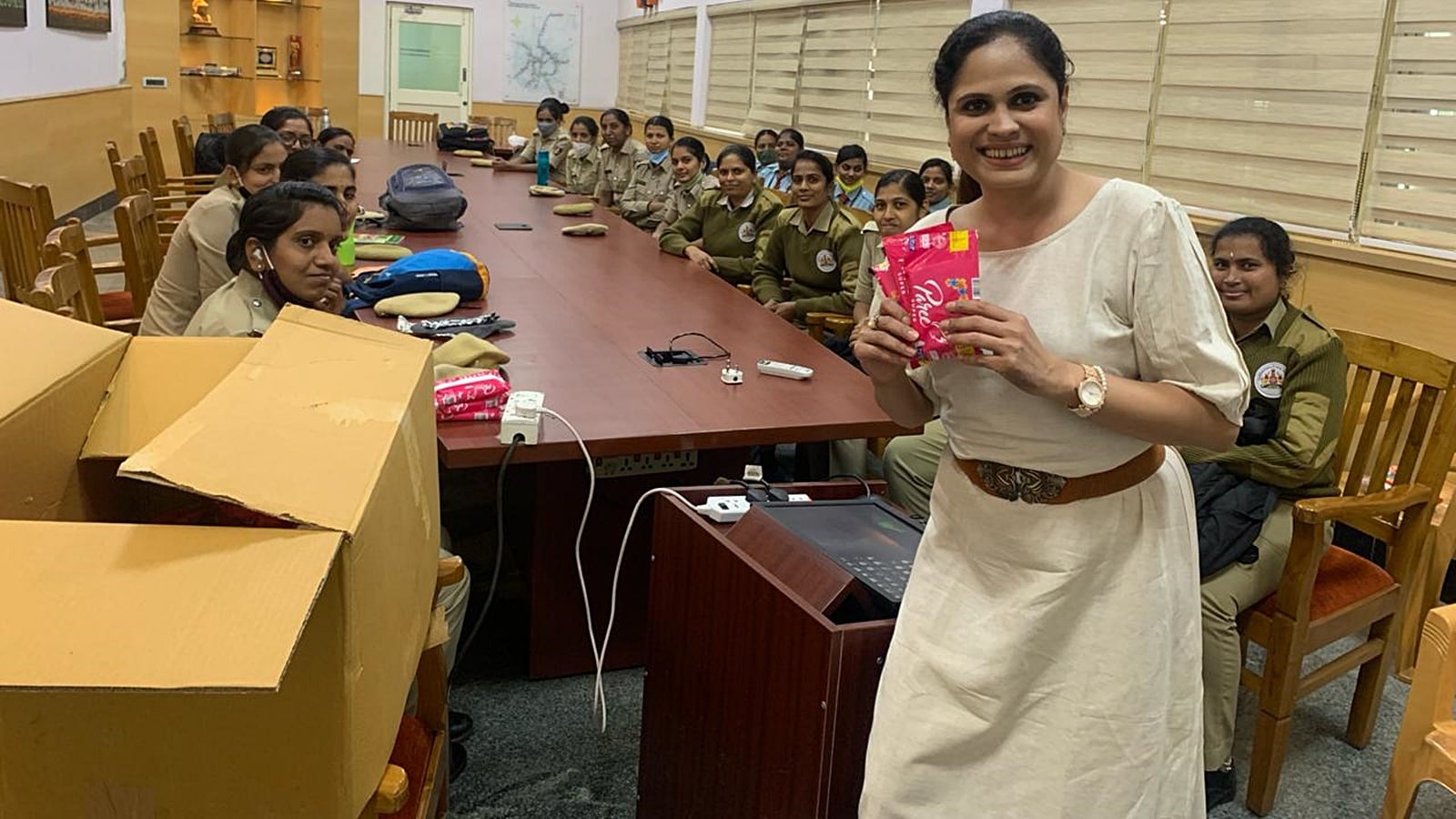 Anitha Rao, who is in her forties, calls herself the ‘Bengaluru hudugi (girl)’ and has set out to ‘give it back to the society’.
Rao was consistently bothered by the lack of attention given to cleanliness and hygiene standards in India. She was especially concerned about the inadequate menstrual hygiene practices in government schools, prompting her to conduct further research.
In 2019, Rao registered her trust that is involved not just in conducting menstrual hygiene sessions for underprivileged women but also in awareness of personal and dental hygiene, the importance of dressing up, teaching English to students in government schools, organising events such as educational competitions, fashion shows among others for blind/special kids. In addition, Rao also conducts visits for children from orphanages to science museums, universities, and art galleries, among other places, to expose them to subjects like science, hotel management, art, etc.
In 2020, during the Covid-19 pandemic, Rao produced videos on menstrual hygiene in Kannada, Hindi, and English and translated them into other major Indian languages. She also made the videos available to the dumb, deaf, and other differently abled individuals to make awareness of menstrual hygiene more inclusive.
“In December 2020, I collaborated with local NGOs and volunteers from Kashmir to Kanyakumari to launch Sakriya Period Part Abhiyan. The aim was to screen the video on menstrual hygiene in their respective orphanages or public spaces on the same day and at the same time across all states. During this one-hour programme in 2021, nearly 17,000 children benefitted,” said Rao, who launched a similar campaign in all the union territories, including Andaman and Nicobar, Puducherry, and Kargil.
Rao created menstrual awareness sessions in police department offices in Bengaluru, Kalaburgi and other cities. Later, she ventured into an uncharted territory to create awareness of menstrual hygiene- prisons. “Not many people would choose to create menstrual health awareness in prisons. It is usually an uncharted territory. As part of this awareness efforts, we also screen women prisoners for breast, cervical and oral cancer. We also donate sanitary pads to women prisoners regularly,” said Rao.
She has also launched a social media campaign titled ‘How much HE knows about period’, highlighting the importance of a man knowing and empathising with the thoughts of his wife, mother or girlfriend during periods. “The reason for launching menstrual health awareness campaigns for men is to bring gender equality. A woman should feel free to open up about periods to a man in a workspace,” adds Rao.
Rao, who is currently self-funding her organisation, believes that identifying donors and pooling funds have been challenging. Moreover, getting the rural women to open up about the menstrual process in the rural set-up has always been a task.
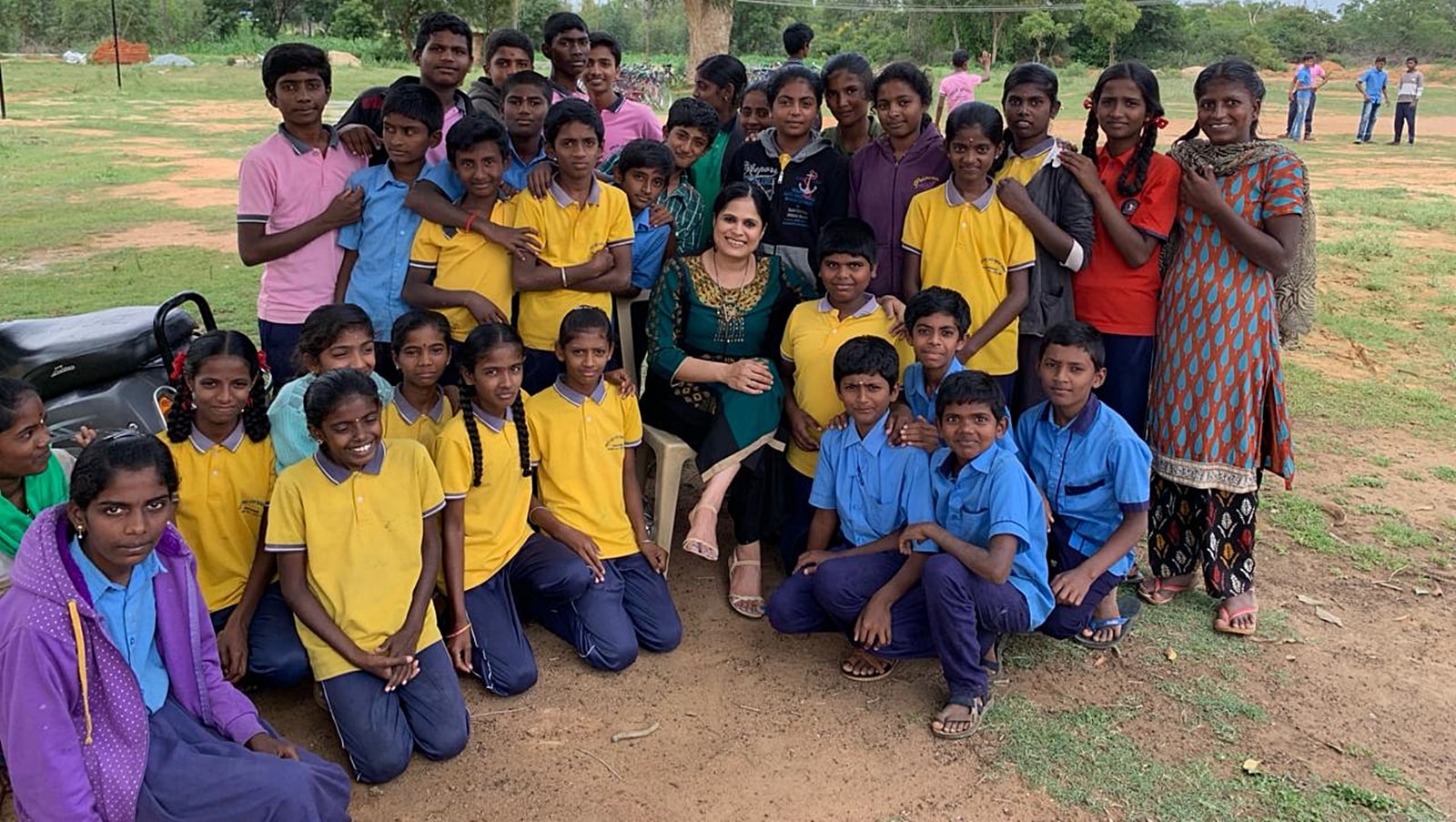 In 2020, during the Covid-19 pandemic, Rao produced videos on menstrual hygiene in Kannada, Hindi, and English and translated them into other major Indian languages.
“It is mindboggling that out of the 355 million women who undergo the menstrual process, only 8 per cent know about menstrual hygiene. The primary challenge has always been getting rural women to speak about menstrual hygiene. It takes hours to win their trust and get them to open up to me,” said Rao.
Recently, she also set up an artwork at Nadaprabhu Kempegowda Metro station (Majestic) that explains the menstrual process comprehensively, including the colour of blood in detail. She plans to set up the artwork in other major metro stations in Bengaluru and conduct menstrual hygiene sessions in prisons in Mysuru and Mandya.
“I believe that if women don’t open up about menstrual hygiene, they will suffer. For men to have a better personal life, they need to know about their personal health, especially after the age of 45 years,” said Rao.
Stay updated with the latest - Click here to follow us on Instagram