5 min read


© The Indian Express Pvt Ltd



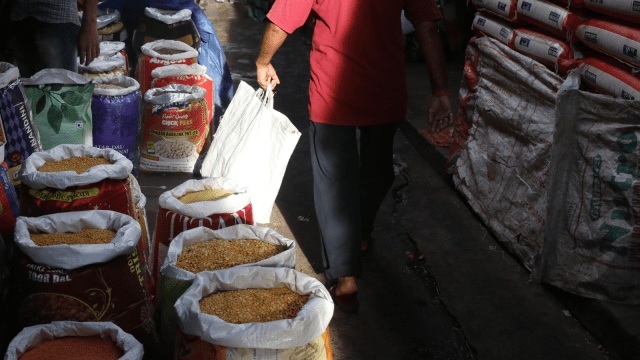 Buoyant Q2 GDP data has pushed economists to lift India’s FY26 growth forecasts to as high as 7.6%. (Express photo by Partha Paul)
 India’s stronger-than-expected GDP growth data for the second quarter running has pushed economists to revise upwards their forecasts for 2025-26 as a whole to almost 7.5 per cent, significantly higher than the 6.5-6.6 per cent predicted most recently by multilateral agencies such as the World Bank and International Monetary Fund.
At 7.4 per cent, the median of forecasts of 12 economists is more than half a percentage point higher than their previous estimates.
Terming the 8.2 per cent GDP growth rate in July-September as “too hot to ignore”, Barclays’ economists Aastha Gudwani and Amruta Ghare raised their projection for 2025-26 by 40 basis points (bps) to 7.2 per cent on account of strong momentum so far in October-December due to festival demand and Goods and Services Tax (GST) rate cuts pushing consumption higher.
Other economists announced even larger upgrades, with Gaura Sen Gupta of IDFC First Bank and Soumya Kanti Ghosh of State Bank of India now expecting GDP growth to print at 7.6 per cent in the current fiscal. This is significantly higher than the Reserve Bank of India’s (RBI) current projection of 6.8 per cent and Chief Economic Advisor V Anantha Nageswaran’s revised upgrade of at least 7 per cent.
“In case India gets a trade deal with the US by December 2025, this would result in upward revision in Q4 FY26 growth. Full year GDP growth would be closer to 8 per cent in such a scenario,” noted Sen Gupta of IDFC First Bank.
India’s trade relations with the US continue to be the biggest challenge in front of the economy. While growth has not slowed down as was expected after a cumulative tariff of 50 per cent came into effect in late August, economists continue to warn that outbound shipments and their contribution to domestic growth is set to weaken in the second half of the year.
As per the data released by the Ministry of Statistics and Programme Implementation (MoSPI) on November 28, exports of goods and services in July-September were 11 per cent higher on a year-on-year basis without adjusting for inflation – or in nominal terms. This was the fastest rate of growth in three quarters and seemed to reflect the frontloading of exports ahead of the late August deadline for the 25 per cent penal tariff. Since then, data for October has already shown a 12 per cent year-on-year decline in goods exports in October, while services exports were up only 2 per cent as per provisional data.
GDP growth is also likely to slow down in the last two quarters of 2025-26 due to the fading of a favourable base effect and government spending rising at a slower pace. While total expenditure of the Centre was up 26 per cent year-on-year in April-June, it was down 5 per cent in the second quarter.
It is worth noting that economists are making their forecast upgrades on the basis of current GDP data, which is set to undergo a major overhaul in the next few months as the statistics ministry revises the series to include new and additional sources of data and makes meaningful changes to the methodology used to calculate the GDP.
The next set of GDP data, for the October-December quarter, will be released on February 27, 2026 as per the new series, which will have 2022-23 as the base year compared to 2011-12 now. Revisions are also expected to be made to GDP growth rates for the last three years.
“It is difficult to judge how much growth for new series will be different from old series given updated coverage, availability of new data sets and shifts in methodology,” ICICI Securities Primary Dealership’s economists led by A Prasanna said in a note on Sunday, adding that revisions to old number “complicates forecasting”.
The last time the government updated the GDP series was in January 2015. The launch of the 2011-12 series caused plenty of confusion among economists and even policymakers who had to contend with higher growth rates in general, with the then RBI Governor Raghuram Rajan commenting that the central bank found it “hard to see the economy as rollicking” in 2013-14 after the new series upgraded the GDP growth for that year to 6.9 per cent initially (later revised to 6.4 per cent) from 4.7 per cent under the old series which had 2004-05 as the base year.