© The Indian Express Pvt Ltd
 8 min read


 Climate change is exacerbating water scarcity, causing unpredictable water availability, more frequent droughts, and intense floods, particularly in agricultural regions. (Photo Credit: Pixabay)
India, with 18 per cent of the world’s population, has only 4 per cent of global freshwater resources, making access to clean drinking water both a social and economic necessity. It ranks 133rd in water availability per capita and is the second-largest consumer of water, using 20.1 per cent of global water resources. While per capita available water is projected to decrease or remain the same, per capita water use is projected to increase from 85 litres per capita per day (lpcd) in 2000 to 125 lpcd by 2025 and 170 lpcd by 2050.
Due to economic growth, population increase, and urbanisation, water demand is outpacing supply. Available water is limited, especially in densely populated areas, and groundwater levels are depleting while surface water is increasingly polluted — 70 per cent of India’s surface water is contaminated. A major contributing factor to water pollution is wastewater from different sources. According to the WHO, half of India’s morbidity is due to water-related issues.
Climate change is exacerbating water scarcity, causing unpredictable water availability, more frequent droughts, and intense floods, particularly in agricultural regions. Trends indicate that dry seasons are becoming drier, while wet seasons are getting wetter. Reduced precipitation is affecting groundwater recharge, and increasing precipitation intensity leads to more floods, further polluting water sources.
India is also prone to water-related disasters, with over 12 per cent of its land area being flood-prone and 28 per cent vulnerable to drought during different seasons. Floods account for 47 per cent of all disasters that have occurred in India in the last 100 years, and droughts occur every summer.
Current landscape and initiatives
India has embarked on several missions, including the Atal Mission for Rejuvenation and Urban Transformation (AMRUT 1.0 & 2.0) and the Jal Jeevan Mission (JJM), targeting safe drinking water for urban and rural households.
| No. | Mission | Launch Year | Aim | Progress |
|---|---|---|---|---|
| 1 | Atal Mission for Rejuvenation and Urban Transformation (AMRUT) | 2015 | Ensure universal Water supply in 500 cities, focus on water infrastructure and smart management systems. | Urban-focused programme. Over 80% of water supply projects completed, benefiting about 4 crore urban residents. |
| 2 | Jal Jeevan Mission (JJM) | 2019 | Provide functional household tap connections (FHTCs) to every rural household by 2024. | In 2019, 3 crore (17%) had tap water.
By Dec 2024, 15 crore (80%) have tap water. Some states achieved 100% coverage, some lag. |
Source: Ministry of Jal Shakti
Prospects for sustainable water management in India
Currently, all schemes for providing clean drinking water are standalone. This causes excessive reliance on ground and surface water to meet the increasing demand. It also poses a challenge of depletion of groundwater table and causes drought-like situations in rural and urban areas.We are already seeing these situations in some metro cities like Chennai and Bengaluru.
India uses about 230 cubic kilometres of groundwater annually, which is more than 25 per cent of the global usage, making it the world’s largest user of groundwater. In India, about 90 per cent of groundwater extracted is used for irrigating over 60 per cent of the irrigated land with 20 million tubewells installed.
As India strives to become a $30 trillion economy with its vision of Viksit Bharat @ 2047, the upcoming budget presents an opportunity to address the challenge in sustainability of water supply to rural and urban population.
Now, it is the time to look for sustainable water resources to meet the future demand of water and preventing the exploitation of limited natural resources.
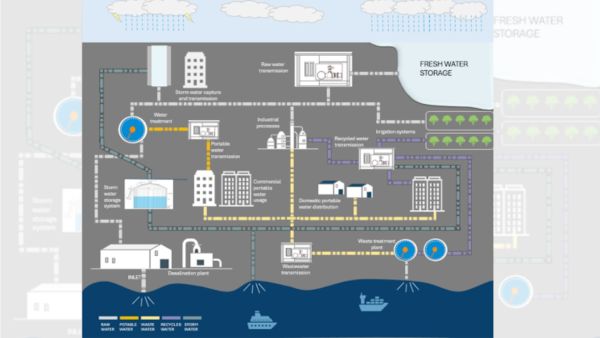 As India strives to become a trillion economy with its vision of Viksit Bharat @ 2047, the upcoming budget presents an opportunity to address the challenge in sustainability of water supply to rural and urban populations. (Credit: EY India)
In the upcoming budget, the government is expected to make substantial provisions to support growth, modernisation, and sustainability of India’s water sector. The key initiatives that can be adopted for sustainable water management are as follows:
Enhanced reforms for WTP: A significant contributor to water pollution is wastewater, with poor waste management in urban areas — only 29 per cent of municipal wastewater is treated. Domestic effluents make up a large portion of water contamination, with more than 71 per cent remaining untreated and disposed of in the environment. The lack of adequate water infrastructure has led to serious issues such as waterlogging and contamination.
The budget should prioritise the establishment of a comprehensive programme for the development of drainage, sanitation facilities, and wastewater treatment plants (WTP) at the rural level. For urban areas, large-scale sewage treatment plants (STP) and WTP facilities should be developed to treat wastewater, enabling the use of non-potable water or greywater for irrigation, agriculture, and industrial processes.
Urban rainwater harvesting systems: India currently stores only 30 days of rainfall, compared to 900 days in developed countries.
The budget should mandate the installation of rainwater harvesting systems in new buildings and retrofit existing structures. Implementing green roofs to capture and retain rainwater can help replenish groundwater and reduce stormwater runoff. Recent initiatives, such as installing about 900 rainwater harvesting pits in the National Capital Region as part of the Regional Rapid Transit System (RRTS), should be further expanded to other areas to promote sustainable water availability.
Smart water grids: Non-revenue water (NRW), which refers to water lost during distribution, is a significant issue in India, with an average NRW level of about 40 per cent. Several factors contribute to high NRW levels, the majority being pipeline leakages and inadequate maintenance of existing infrastructure. The government should prioritise schemes and programmes that invest in smart water grids incorporating sensors and real-time monitoring to detect leakages, manage pressure, and optimise water distribution. This will allow early detection of leakages and improve overall water supply.
National River Linking Project: This ambitious project aims to transfer water from surplus river basins to deficit ones, addressing regional imbalances in water availability — i.e., abundant monsoon water in one location versus water scarcity in another. Due to these imbalances, many parts of the country experience droughts, while others face floods annually. The budget should focus on promoting river linkage projects of national importance, such as the Ken-Betwa river link, to transfer water from surplus to deficit areas and ensure long-term sustainability.
Promoting drip irrigation: Drip irrigation is a system that has the potential to conserve water and nutrients by allowing water to drip slowly to the roots of plants, either from above the soil surface or below it. Drip irrigation systems distribute water through a network of valves, pipes, and emitters.
The budget should encourage the widespread adoption of drip irrigation systems that deliver water directly to plant roots, minimising evaporation losses.
Zero liquid discharge for industries: The government should mandate the adoption of zero liquid discharge (ZLD) systems for water-intensive industries, ensuring that wastewater is treated and recycled for reuse. Encouraging the development of eco-industrial parks, where industries share and reuse water resources, can significantly reduce freshwater demand and pollution.
Desalination: The government should invest in large-scale desalination plants powered by a combination of renewable energy sources and waste-to-energy technology. Desalination plants not only generate clean water but also transform waste into a valuable resource, creating a sustainable and self-sufficient water production system.
A comprehensive action plan with clear goals, deadlines, and accountability is essential. Enhancing water quality monitoring, expanding clean water programme coverage, and encouraging community involvement are vital steps. Public awareness campaigns can also significantly influence water conservation practices.
The goal of universal access to clean drinking water in India is not just a policy objective but an ethical obligation. The upcoming budget can set a definitive course toward ensuring sustainable clean water for all. With collaboration from the government, civil society, and the private sector, India can look forward to a future where clean water is the norm and waterborne diseases are eradicated. The vision of “Water for All” is within reach.
Shailesh Agarwal is partner – risk consulting at EY India. Punit Kapoor, director – consulting, and Ajay Jindal, senior consultant, EY India also contributed to the article.