Premium

Breakneck by Dan Wang: What the US can learn from China to maintain its supremacy

Dan Wang’s Breakneck argues that China’s engineer-led culture builds rapidly while America’s lawyerly elite obstructs progress.

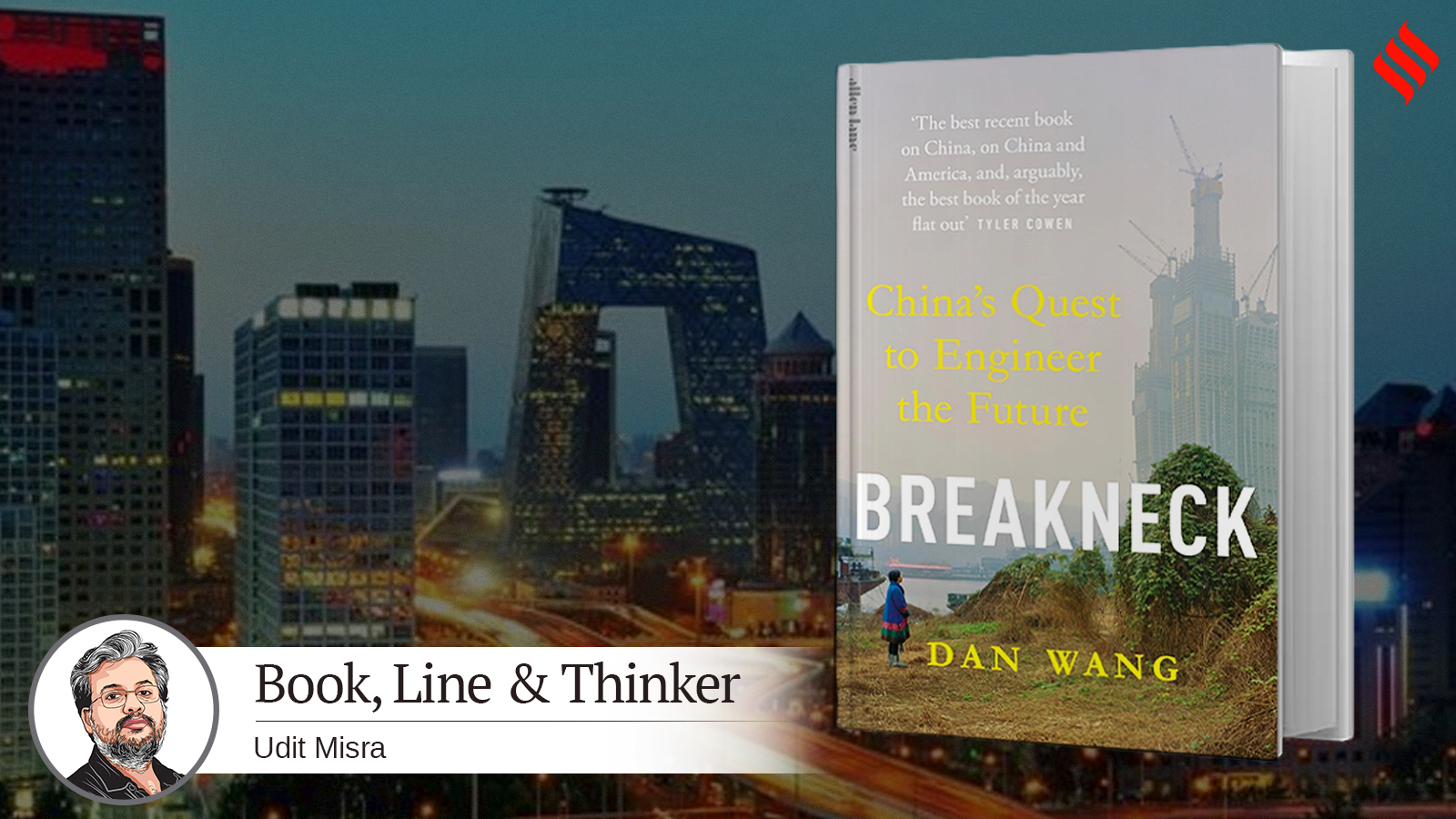
Cover of Breakneck: China’s Quest to Engineer the Future by Dan Wang, an examination of how China’s engineer-driven rise offers lessons for America’s own struggle to rebuild and innovate. (Express File Photo/Amazon)Breakneck: China’s Quest to Engineer the Future by Dan Wang is an examination of China’s engineer-driven rise. (Express File Photo/Amazon)

Looking at Breakneck: China’s Quest to Engineer the Future — the cover, the title, the author’s name —one would be quite justified to think this book has been written by a Chinese and is about China and its desire to dominate the world. Well, one would be completely wrong.

The author Dan Wang is a Canadian technology analyst who left China with his parents when he was seven, and is currently a research fellow at the Hoover History Lab of Stanford University. But as an analyst he has closely tracked China while he worked in Hong Kong, Beijing and Shanghai.

A letter to America

The book is less about China’s quest but more about what the US can learn from China (and its quest) in order to maintain America’s lead even as China continues to aggressively bid for the top slot. It should not surprise then that the book is written not so much for the global audience but more like a direct letter to the Americans.

A letter that the Americans, both citizens and politicians, should take seriously. Of course, there are huge lessons here for India and Indians, just that they are not laid out as clearly.

So what’s the big idea of the book?

There is an all out conflict between the world’s top two economies and military powers. Wang says that the best hedge against heightening tensions between the two superpowers is “mutual curiosity”. The more informed Americans are about Chinese and vice versa, the more likely “we” are to stay out of trouble.

And here’s the most important bit that the Americans need to know:

“The starkest contrast between the two countries is the competition that will define the twenty-first century: an American elite, made up of mostly lawyers, excelling at obstruction, versus a Chinese technocratic class, made up of mostly engineers, that excels at construction.”

Story continues below this ad

Simply put, China is an engineering state building at breakneck speed, in contrast to the US’ lawyerly society, blocking everything it can, good and bad.

As a lay reader will be able to immediately deduce: That’s not much of a fight. China will win because it can build at furious pace while the US is drowning under the weight of its inefficient and inadequate public infrastructure. The US can make a stunning argument but China is not wasting its time looking for a rebuttal: It wants to build and take over the world.

Since 1980, China has built an expanse of highways twice the size of the US systems, a high speed rail network twenty times more extensive than Japan’s and almost as much solar and wind capacity as the rest of the world put together. Wang points out that such is the Chinese dominance that today a rough rule of thumb is that China produces one-third to one-half of nearly any manufactured product on the planet.

As China has grown at this breakneck speed over the past 45 odd years, the US has steadily stopped producing things, and allowed public infrastructure to erode and with it the ability to build as well. Among many others, Wang provides a very striking example (and from an American perspective, an deeply embarrassing one) of the gap between the execution abilities of the two countries.

Story continues below this ad
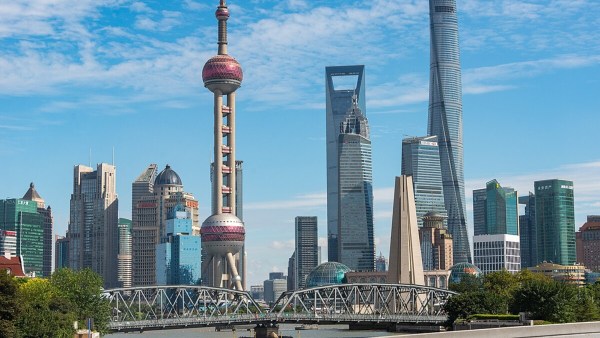
Lujiazui from Zhapulu Bridge with the Oriental Pearl Tower (left) and Shanghai Tower (Wikimedia Commons) Lujiazui from Zhapulu Bridge with the Oriental Pearl Tower (left) and Shanghai Tower (Wikimedia Commons)

In 2008, California voters approved the building of a high-speed rail link between San Francisco and Los Angeles. This was also the time when China began the construction of a high-speed rail line between Beijing and Shanghai, roughly the same distance of around 800 miles (around 1300 km). China completed the line in 2011 at the cost of $36 billion. In its first decade of operation, it completed 1.35 billion passenger trips. California hasn’t built the full project yet. The latest cost estimate is $128 billion and it is expected that the first segment will start operating sometime between 2030 and 2033.

Of engineers and lawyers

Wang points out that while China’s leadership is dominated by engineers, US leadership is dominated by lawyers. Deng Xiaoping promoted engineers through the 1980s and 90s. By 2002, all nine members of the Politburo’s standing committee were engineers.

In his third term, Xi (who is also a chemical engineer) further reinforced this trend. US leadership is, in contrast, led by lawyers and stuck in procedures and arguments. From 1984 to 2020, every single democratic presidential and vice-presidential nominee went to a law school. Lawyers also make the elites in the Republican Party. Only two American presidents (Herbert Hoover Jimmy Carter) and have been engineers by training.

The book details both the good bits of China’s obsession with engineering as well as the horror stories — one-child and zero-Covid etc. — of leaders trying to employ engineering principles on society. Clearly, those are not the excesses Wang wants the US to learn but he does repeatedly make the point that the US could reignite its enthusiasm for building and give up its obsession with procedures and its belief that government is the problem and fiscal constraints are binding.

Story continues below this ad

In Wang’s worldview every time the US and China clash it is not just tragic but also “comical” since “no two peoples are more alike”. That, however, seems like a stretch. The fact is: the US doesn’t need to learn from China’s excesses. It can, instead, simply look back on its own glorious past of engineering and building world class infrastructure without subjugating its peoples freedoms. Dare I say, that is the path that its leaders are choosing in their own way — be it Donald Trump or Zohran Mamdani.

Udit Misra is Senior Associate Editor at The Indian Express. Misra has reported on the Indian economy and policy landscape for the past two decades. He holds a Master’s degree in Economics from the Delhi School of Economics and is a Chevening South Asia Journalism Fellow from the University of Westminster. Misra is known for explanatory journalism and is a trusted voice among readers not just for simplifying complex economic concepts but also making sense of economic news both in India and abroad. Professional Focus He writes three regular columns for the publication. ExplainSpeaking: A weekly explanatory column that answers the most important questions surrounding the economic and policy developments. GDP (Graphs, Data, Perspectives): Another weekly column that uses interesting charts and data to provide perspective on an issue dominating the news during the week. Book, Line & Thinker: A fortnightly column that for reviewing books, both new and old. Recent Notable Articles (Late 2025) His recent work focuses heavily on the weakening Indian Rupee, the global impact of U.S. economic policy under Donald Trump, and long-term domestic growth projections: Currency and Macroeconomics: "GDP: Anatomy of rupee weakness against the dollar" (Dec 19, 2025) — Investigating why the Rupee remains weak despite India's status as a fast-growing economy. "GDP: Amid the rupee's fall, how investors are shunning the Indian economy" (Dec 5, 2025). "Nobel Prize in Economic Sciences 2025: How the winners explained economic growth" (Oct 13, 2025). Global Geopolitics and Trade: "Has the US already lost to China? Trump's policies and the shifting global order" (Dec 8, 2025). "The Great Sanctions Hack: Why economic sanctions don't work the way we expect" (Nov 23, 2025) — Based on former RBI Governor Urjit Patel's new book. "ExplainSpeaking: How Trump's tariffs have run into an affordability crisis" (Nov 20, 2025). Domestic Policy and Data: "GDP: New labour codes and opportunity for India's weakest states" (Nov 28, 2025). "ExplainSpeaking | Piyush Goyal says India will be a $30 trillion economy in 25 years: Decoding the projections" (Oct 30, 2025) — A critical look at the feasibility of high-growth targets. "GDP: Examining latest GST collections, and where different states stand" (Nov 7, 2025). International Economic Comparisons: "GDP: What ails Germany, world's third-largest economy, and how it could grow" (Nov 14, 2025). "On the loss of Europe's competitive edge" (Oct 17, 2025). Signature Style Udit Misra is known his calm, data-driven, explanation-first economics journalism. He avoids ideological posturing, and writes with the aim of raising the standard of public discourse by providing readers with clarity and understanding of the ground realities. You can follow him on X (formerly Twitter) at @ieuditmisra           ... Read More


Latest Comment
Post Comment
Read Comments
Advertisement
Advertisement
Advertisement
Advertisement