
Opinion Act Near-East
Realising the economic potential of the eastern region is key to solving India’s poverty problem
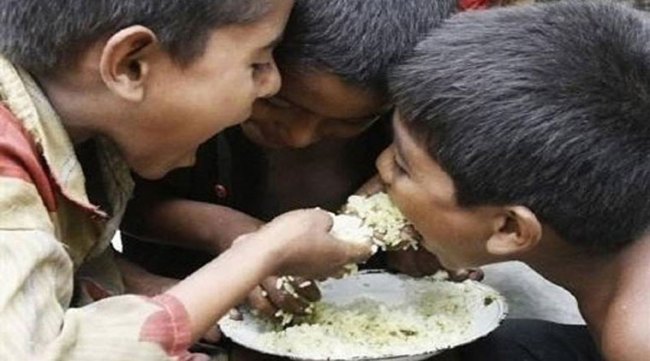 The report, however, stated that India still has the largest number of people living in multidimensional poverty in the world, pegging the figures around 364 million people. (File)



A report by Smera Ratings suggests that West Bengal, Odisha, Bihar, Jharkhand, Chhattisgarh, Assam and the other northeastern states could contribute a quarter of India’s GDP within the next 20 years, as against their current combined share of 16.5 per cent. Home to 27 per cent of the country’s population, this region also houses a disproportionate section of its poor. This, despite the rich mineral resources with some of these states: At the time of Independence, West Bengal and Bihar (which included Jharkhand) had actually a reasonable industrial base. A big part of the decline of eastern India can be attributed to the post-Independence policy of “freight equalisation”. This, through a perverse subsidisation of transport to make iron ore or coal available at more or less the same price across the country, killed the natural comparative advantage these states had in the setting up of industries. Although the policy was scrapped in the early 1990s, the damage from it was long-lasting. So, what can be done to revive the growth potential of eastern India? Two broad strategies — one external and one internal — may work. One, as the Smera Ratings report points out, is to look at the region as the gateway to eastern Asia. The Indo-Asean trade is already valued at over $80 billion. Developing eastern states as a conduit to Southeast Asia, by investments in the supply chain infrastructure with these states, will further enhance the region’s growth potential through backward and forward linkages. Two, the Centre should put equal emphasis on developing an industrial corridor connecting the eastern states, similar to those for Mumbai-Delhi and Chennai-Bangalore. The Kolkata Metropolitan Region, too, can act as a magnet for attracting investments to the region. But that requires equal initiative and enterprise from the concerned state governments.

 Share
Share


