4 min read
Stay updated with the latest - Click here to follow us on Instagram

Journalism of Courage



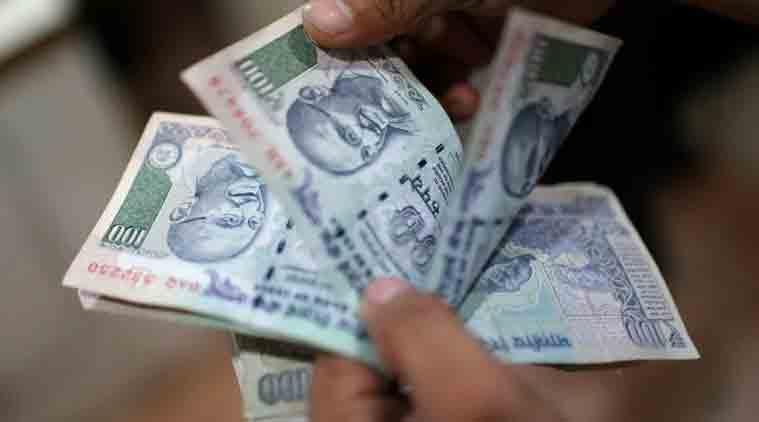 The CBI said the contractor had entered into a criminal conspiracy with bank officials to obtain large amounts of new currency, since RBI guidelines state that banks should disburse a limited amount of new notes to each individual. (Representational image)
AMID SEIZURES of new currency notes from across the country, the Karnataka High Court has asked the CBI how keeping cash at home amounts to a crime. A special CBI court has also said that “possessing cash in hand in itself is not an offence’’. On December 9, the high court asked the CBI not to arrest a contractor, Ibrahim Sheriff, who was found to be in possession of Rs 4.8 crore in new notes during an Income Tax raid on his flat on December 1.
Watch what else is making news:
The contractor’s lawyer, C H Jadhav, said his client could only be proceeded against under the Income Tax Act for possession of unaccounted money, but he had time till March 2017 to declare his income. The role of the CBI in the matter was also questioned.
The CBI said the contractor had entered into a criminal conspiracy with bank officials to obtain large amounts of new currency, since RBI guidelines state that banks should disburse a limited amount of new notes to each individual. The CBI also said it could probe the matter under the Banking Regulations Act.
Karnataka High Court Judge Anand Byrareddy initially said the CBI proceedings in the case would have to be stayed since the basis of the case itself was under question. The court, however, did not stay the matter after the CBI gave its assurance that Sheriff would not be arrested.
On December 17, a special CBI court hearing a bail plea filed by one Nazeer Ahmed, who was also raided by the I-T department on December 1 and found to be in possession of Rs 32.7 lakh in Rs 2,000 notes, posed a similar question and stated that “possessing cash in hand in itself is not an offence’’.
Sheriff and Ahmed were among seven persons named by the CBI in a case of criminal conspiracy, cheating, criminal breach of trust, forgery, falsification of accounts and corruption on December 3, after I-T raids unearthed over Rs 6 crore in new currency.
The CBI named a chief manager of a Karnataka Bank branch, Suryanarayan Bairy, a Dhanalaxmi Bank branch manager, Umashankar Renuka, and cash logistics firm Secure Value India Ltd as being facilitators of an illegal cash exchange that enabled Sheriff, a government engineer, S C Jayachandra, chief project officer for Karnataka State Highway Development Scheme, businessmen Nazeer Ahmed and Chandrakanth Ramalingam to collect up to Rs 6 crore in new currency 21 days after demonetisation. The CBI has arrested Ramalingam, Ahmed and Jayachandra.
The CBI special court, while accepting the fact that possession of large amounts of new notes per se is not a crime, pointed out that it has made out a prima facie case of conspiracy involving Ahmed and bank officials.
“In the present circumstances of demonetisation… and restriction on withdrawal of new currency notes to the extent of Rs 24,000 per week, it is irreconcilable as to how the accused No. 5 managed to collect Rs 32.7 lakh in new notes. It could not have been done without conspiring with the manager of the bank,’’ the court observed.
The CBI court granted bail to Ahmed in view of his poor health condition.
Since the demonetisation, law enforcement agencies have been trying to figure out legal provisions under which the illegal exchange of old currency for new ones can be prosecuted.
Bengaluru police, after detecting nearly a dozen cases of illegal exchange, merely carried out seizures before handing the cases to the I-T department. However, since the CBI began taking over cases unearthed by the I-T department, the agency has filed cases of conspiracy, cheating, criminal breach of trust, forgery, falsification of accounts and corruption.
Stay updated with the latest - Click here to follow us on Instagram