Journalism of Courage
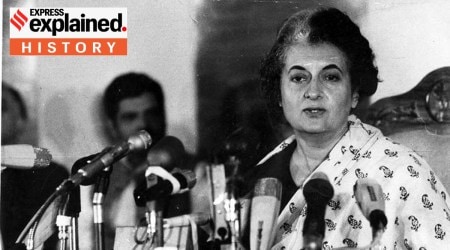
Between 1975 and 1977, India saw the imposition of Emergency, a period in which civil liberties were suspended, the media was censored, political opponents were persecuted and numerous human rights violations were carried out. Here is a quick primer on it, with a timeline.
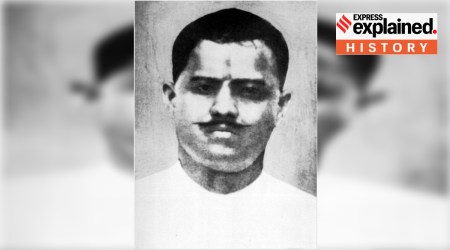
Born on June 11, 1897, Bismil was a revolutionary freedom fighter with a poet’s heart. He was hanged by British authorities for his involvement in the Kakori Train Action. Today, he is a revered symbol of patriotism and Hindu-Muslim unity.
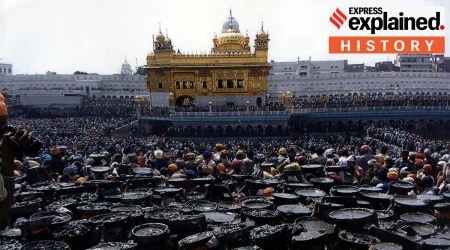
Today marks 39 years of Operation Bluestar, in which the Indian army stormed the Golden Temple in Amritsar to flush out militant leader Jarnail Singh Bhindranwale and his followers.
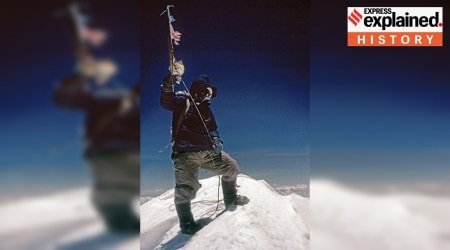
On the 70th anniversary of the duo’s historic climb, we answer one of the biggest mysteries in mountaineering – were Edmund Hillary and Tenzing Norgay the first human beings to summit Mount Everest in 1953? Or had the mountain already been conquered by the legendary George Mallory, nearly 30 years before?
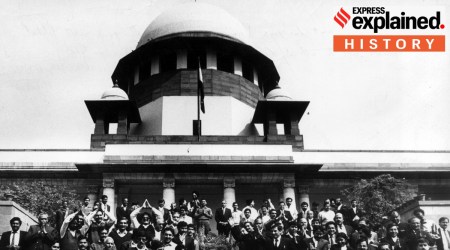
After its inauguration on January 28, 1950, the Supreme Court commenced its sittings in a part of the Parliament House. The Court moved into the present building on Tilak Marg in 1958. We take a look at its history.
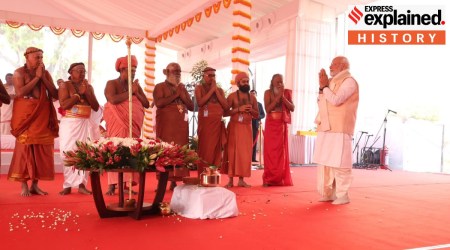
In an interview with The Indian Express, Pillai told Alind Chauhan that the Prime Minister is appealing to a cultural — or some might say, a civilisational — legitimacy. The placement of the senkol near the Speaker's chair is to give that chair — which derived meaning so far via Western parliamentary conventions that we adopted and adapted — a more visibly Hindu quality and casing.
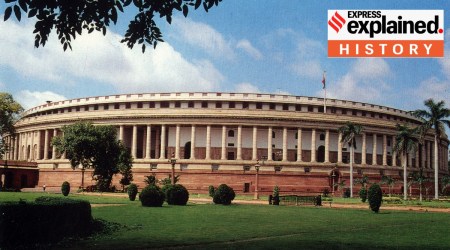
The parliament building’s construction took six years, from 1921 to 1927, and it was originally called the Council House and housed the Imperial Legislative Council, the legislature of British India.
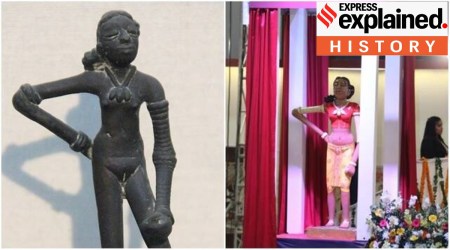
The degree of sophistication of art indicates a society’s advancement, and the existence of a figurine such as the Dancing Girl indicates the presence of high art in Harappan society. Here is how it was discovered.
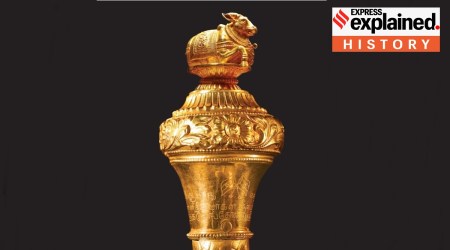
The Sengol gets its name from the Tamil word 'semmai', meaning righteousness. The sceptre is a historical symbol of Independence as it signifies the transfer of power from the British to the Indians.
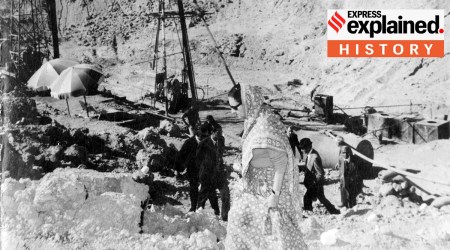
A nuclear device was detonated, with a yield of 12-13 kiloton of TNT, on May 18, 1974. Pokhran, an army test range located in the desert of western Rajasthan, was chosen. Here's what happened in the quest for India's first nuclear test.
More than three decades ago, Sitiveni Rabuka, then the third highest ranking army official, overthrew the Indo-Fijian dominated government of Prime Minister Timoci Bavadra. Street violence against Indo-Fijians followed, and tens of thousands fled the islands.
What was the position of Sikkim before it joined India in 1975, and what role did Prime Ministers Jawaharlal Nehru and Indira Gandhi play? We explain.
The Paralakhemundi Light Railway was built by the Maharaja of Paralakhemundi and has stood for 124 years. With the Railways planning to renovate the station, INTACH has demanded heritage status for it.
India successfully conducted three nuclear bomb test explosions at the testing site in Pokhran on May 11, 1998. While these tests caused an international outcry at the time, they cemented India’s status as a nuclear power.
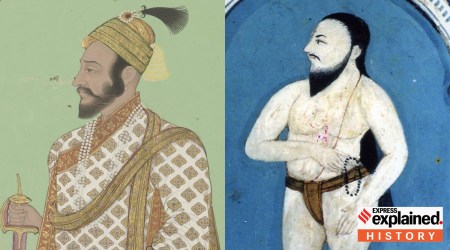
Jaggi Vasudev is the latest figure to have found himself at the centre of controversy by claiming that Saint Samarth Ramdas was Chhatrapati Shivaji Maharaj's "guru".
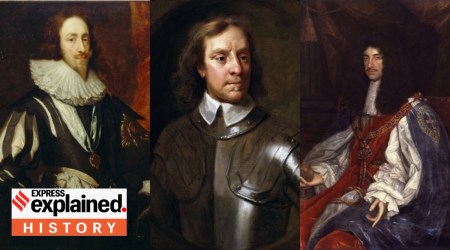
Charles III is going to be the third king of Britain to be named Charles. We tell the story of the English Civil War and the two King Charles who lived (and died) through it.
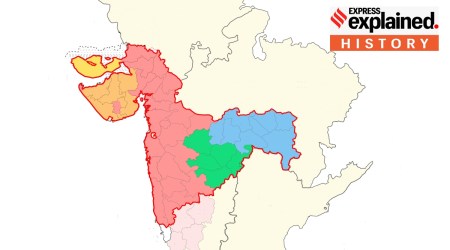
Today (May 1), both Gujarat and Maharashtra celebrate their states’ creation. They were born out of the bilingual Bombay State, which failed to settle the tug-of-war between Gujaratis and Marathis over the city of Bombay.
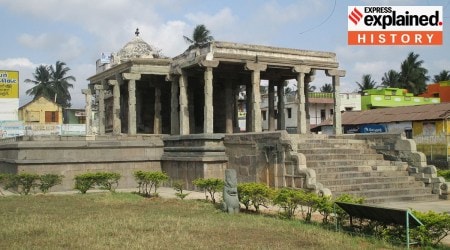
An 1,100 years old inscription from Tamil Nadu, built during the reign of Chola king Parantaka I, describes processes of village self-governance.
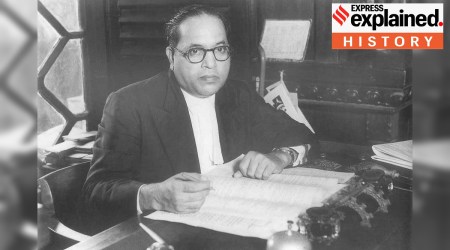
The issue of separate electorates reveals fundamental differences between Ambedkar and Gandhi when it came to the issue of caste and their respective ideas of political representation for untouchables.
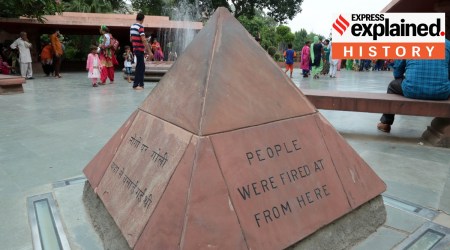
While British rule in India led to numerous atrocities before and after Jallianwala Bagh, the nature of the violence that unfolded on unarmed civilians led to widespread condemnation. Winston Churchill described the day as “monstrous”.
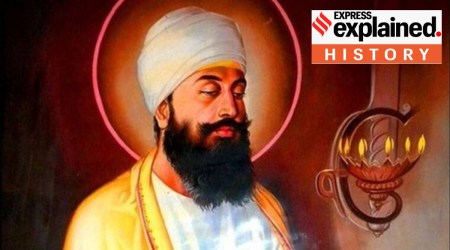
At the age of 13, Tegh Bahadur distinguished himself in a battle against a Mughal chieftain. His bravery and heroic swordsmanship in the battle earned him the name of Tegh Bahadur. (“Tegh” is 'sword' in Punjabi.)
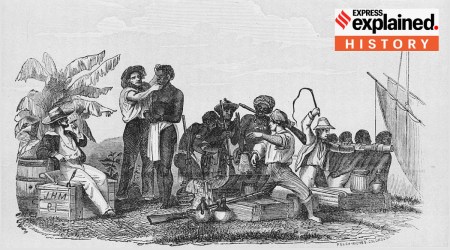
Buckingham Palace has announced that it is collaborating with a study exploring the relationship the British monarchy had with the slave trade. Here is what available historical evidence tells us.
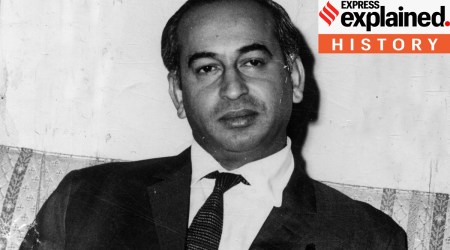
Bhutto was the brain behind Operation Gibraltar and Operation Grand Slam, triggering the 1965 India-Pakistan war. He made vitriolic speeches against India at the UN, and in 1971, stormed out of a UN Security Council session, 'in tears'.
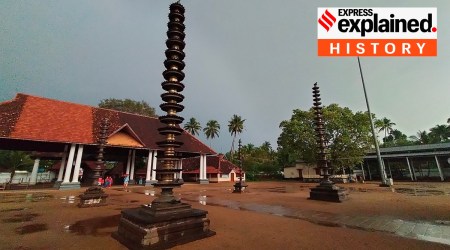
Kerala Chief Minister Pinarayi Vijayan and Tamil Nadu Chief Minister MK Stalin will jointly inaugurate the centenary celebrations of the historic anti-untouchability movement at a ceremony in Vaikom later today.

Every year, March 30 is celebrated as Rajasthan Day, marking the state’s foundation in 1949. However, what we know today as Rajasthan was created in phases, with the final modifications occurring in 1956.