Journalism of Courage

Many investors have ruled out the Fed raising rates this month, sending the dollar to its lowest in more than three weeks.

The New York arm of the US central bank approved 4 out of 35 illicit requests from cyber thieves to send $81 million from a Bangladesh Bank account.

The West Texas Intermediate lost 55 cents while Brent crude for August delivery decreased 40 cents.

The Loan provides an important opportunity to re-set macroeconomic policies, address key vulnerabilities, boost reserves, and support stability and resilience, says IMF deputy managing director and acting chair Zhu Min.

A downward pressure is likely to build as China's steel demand slows and iron ore supply rises, as iron ore was headed for its fifth weekly drop.

Strong demand in Asia was also reflected by a jump in refining margins especially for diesel and jet fuel.

The euro stood near a three-year low early on Friday, having been underwhelmed by the ECB, which held back from making material changes after its policy review.

Rebar and iron ore futures suffered their deepest such decline since their launch.

The dollar index was last at 95.324, little changed from where it closed in New York on Friday and not far from Thursday's high of 95.520. It rose 0.8 percent last week, climbing for a third week.

The dollar notched its session high of 109.27 yen just ahead of the GDP release, and subsequently fell as low as 108.73.

Poland has been one of Europe's most dynamic economies for years

Banks made 555.6 billion yuan ($85.21 billion) in net new yuan loans in April, much lower than expected and less than half the 1.37 trillion yuan seen in March.
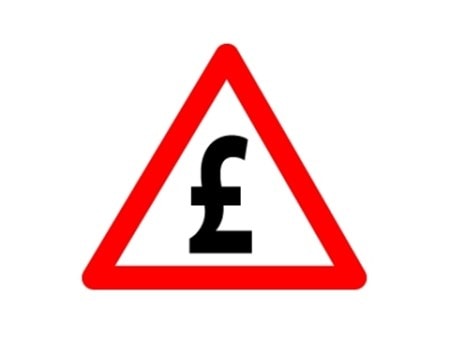
The International Monetary Fund said Britain risks falling into a self-reinforcing cycle of weaker economic growth and lower house and share prices if voters opt to leave the European Union next month.

The Shanghai Composite Index lost 0.3 per cent to 2,827.11 points, its lowest close since March 11.

Australia's S&P/ASX 200 retreated 0.5 per cent to 5,332.40. Benchmarks in Taiwan, New Zealand and Southeast Asia also lost ground.

The Australian dollar has tumbled more than five cents since its April 21 peak, setting the stage for a fourth consecutive week of losses.
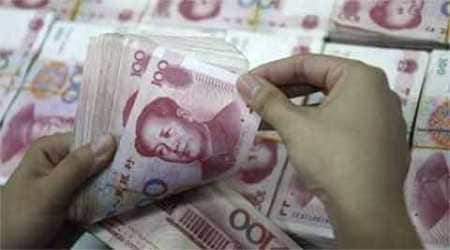
The dollar index slumped 0.5 per cent against a basket of major global currencies on Wednesday, pushing the yuan sharply stronger in the Chinese market's evening trade.

The Aussie slipped 0.5 percent in the session to NZ$1.0750, and off a peak of NZ$1.0920 touched this week.

The yen gained half a percent and the euro around 0.2 percent, halting a steady march by the greenback since it hit respectively 19- and 9-month lows at the start of May.
The jawboning pushed the dollar up nearly 1 percent to around 108 yen on Tuesday, off the 18-month low of 105.55 yen hit last week.

Zurich-based Credit Suisse posted a 302 million Swiss franc ($311 million) loss for the first three months of 2016, as Chief Executive Tidjane Thiam pursued a painful restructuring.
The broader Topix gained 2.2 percent to 1,335.06 and the JPX-Nikkei Index 400 added 2.2 percent to 12,072.01.

Shares of TSMC, the world's top contract chipmaker, dipped 0.3 percent while those of smartphone and PC maker Asustek Computer fell 2 percent.

The euro was a touch softer against the greenback at $1.1385 . The dollar index drifted to its highest in nearly two weeks, extending its rise from a 15-month trough set on May 3.

Singapore shares rose on Monday, snapping a 10-session losing streak, helped by a rally in US stocks late last week, while most other Southeast Asian markets suffered losses. US stocks bounced back on Friday from early losses to close higher as investors viewed the day’s jobs data as less disappointing than first thought. Singapore’s Straight […]