Journalism of Courage

Maruti Suzuki India's MAIL initiative supports startups by co-creating innovative business solutions. It was launched with an aim to nurture innovation in the automobile and mobility sector in partnership with GHV Accelerator in January 2019.

The House panel, which tabled its report on “Financing the Startup Ecosystem” in Parliament on Tuesday, also recommended the Centre to abolish the long-term capital gains tax for all investments in startups made through angel funds, alternate investment funds and investment LLPs.

The cost of access to broadband is still high for most Indians, largely due to the third-party hardware, software and networking infrastructure.
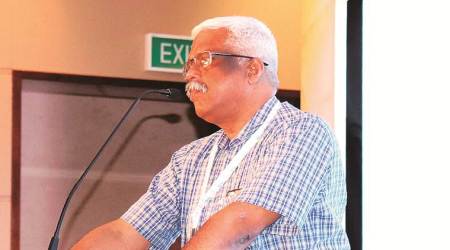
Kerala’s Secretary to Chief Minister and Secretary to the Department of Electronics & IT, M Sivasankaran said that the state government set up a fund of funds to provide better financing options to home-grown startups.

Zomato has also announced changes to Gold rules on dining out by limiting Gold use by a single user to one per day and allowing a maximum of two Gold unlocks per table.

The Centre’s direct tax mobilisation showed just 4.7 per cent growth till September 17, compared to a target of 17.5 per cent budgeted for the full year.

According to the ‘Turbocharging Delhi NCR startup Ecosystem’ report, Delhi NCR accounted for a 23 per cent share of startups in the country.

Swiggy Go is an instant pick up and drop service to send packages anywhere in the city. Like Swiggy Stores, Swiggy Go will be part of the app, the company said in a statement.
As specified in Section 80-IAC of the Income Tax Act, 1961, these startups will receive deduction for “100 per cent of income” for three out of seven years from the year of its incorporation, the Board said in a statement.

In a clarification, CBDT has laid out procedures that prevent assessing officers (AOs) from scrutinising angel capital raised by startups recognised by the DPIIT.

Nirmala Sitharaman had said that startups and their investors filing requisite declarations and providing information in their returns will not be subjected to any kind of income tax scrutiny over the valuations of their share premiums.
According to the latest available data, as of mid-January 2019, 4,648 complete applications were received for exemption under Section 80IAC of the Income Tax Act.
The Commerce and Industry Ministry issued a notification to simplify the process for startups to receive tax exemptions under an anti-evasion provision of the Act.

The move, which is to ensure availability of funds for startups, follows concerns regarding the taxation of angel investments in this sector. The Central Board of Direct Taxes will notify the changes separately.

The first-of-its-kind platform in North India aims to develop Chandigarh as a knowledge hub, and will provide a fertile ground for research and its implementation.

Notably, entities requesting tax exemptions still need to provide a justification for valuation of shares “along with supporting documents”.
In the ranking process, states have been identified as leaders across categories — startup policy, incubation hubs, seeding innovation, scaling innovation, regulatory change champions, procurement leaders, and communication champions.

CBDT has asked its field officials to refrain from coercive steps to recover the demands of completed assessment under I-T from startups.

A top income tax department official said the “notices issued on angel tax to startups may be for those that are not recognised by the department of industrial policy and promotion (DIPP)”.

Push from a marquee investor like SoftBank to grab opportunity across the borders comes at a time when growth in India is said to be slowing down in particular categories as the firms go deeper into the geography.

The government can notify certain categories of personal data as critical personal data that would have to be stored in a data centre located within India.
Experts have pointed out that startups that are leading the ranks in their respective segments within India will begin to explore foreign markets that have consumers with more room for spending.

As many as 18 start-ups have received notices for the “angel tax” under Section 56(2)(viib) of the Income Tax Act, 1961. This section seeks to tax any capital raised by a closely-held company which is above its fair market value as income from other sources.

Angel investments are the earliest equity investments made in startup companies.

‘Huge gap’ in entities recognised and those receiving incentives