4 min read
Stay updated with the latest - Click here to follow us on Instagram

Journalism of Courage



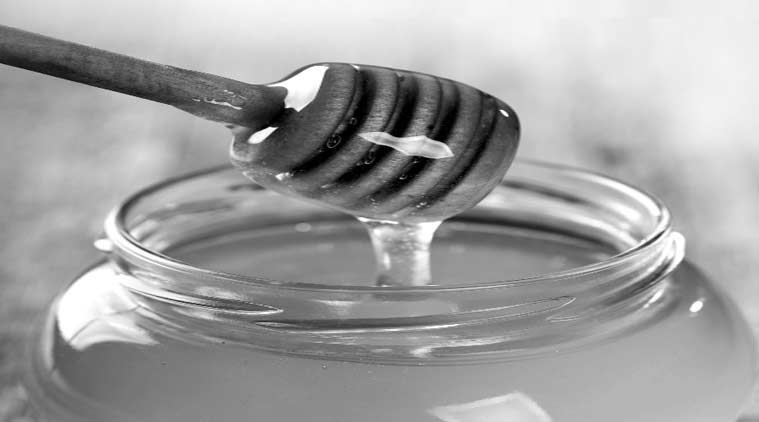 If the lab finds the honey to have originated from China, the importer is required to pay additional taxes.
Behind the grey walls of the Customs and Border Protection’s laboratory in Savannah, Georgia, stands a cabinet containing three plastic vials filled with a sticky, yellowish substance. Honey, or so an importer has claimed.
The lab’s task: Determine whether the samples are adulterated with sweeteners/syrups, and, if they really are mostly honey, figure out where it originated. If the honey comes from China, often the case, the entire shipment from which the samples came may be subject to additional taxes.
The chemists here test a wide range of imported goods, but they specialise in analysing agricultural imports. With remarkable precision, these scientists can tell you where the peanuts in your peanut butter came from and where the mangoes in your jam were grown.
But honey, No. 0409 on the 2015 Harmonized Tariff Schedule, has been a focal point for the lab and the source of a long-running international food scam that has challenged even the existing forensic technology. Americans consume 3.5 6-ounce bottles of honey a year, 70 per cent of which is imported. In 2001, the Commerce Department enacted a stiff tariff on Chinese honey, nearly tripling the import duty, after American producers complained that Chinese competitors were dumping their products on the market.
Then, honey imports from other countries spiked, including from nations not known for large bee populations. As it turned out, Chinese honey was being shipped through ports such as Shanghai, or Busan, South Korea, and slapped with labels from other nations to skirt American duties. Some of it was not even real honey, but a mix of corn and rice sweeteners.
In 2008, the lab demonstrated with 90 per cent accuracy that honey imported from Thailand, the Philippines and Russia had originated in China. The evidence helped federal prosecutors build a case against two US importers who were suspected of buying illegal Chinese honey to avoid more than $180 million in duties.
At the CBP lab, the analytic work takes place inside what’s known as the “country of origin” room. Inside are standing metal shelves filled with bags and plastic totes of imported honey, along with peanuts, shrimp, garlic, mangoes and other foods.
Recently, Robert Redmond and Christopher Kana, two of the lab’s analytic chemists, took a small honey sample and added an acid to digest it. The result looked like muddy water.
In recent years, scientists have demonstrated that subtle chemical variations in many foods, including honey — undetectable to the tongue or the naked eye — can give a strong indication of where it originated. The analytic work depends, in part, on these naturally occurring geographic “tracers.”
Once a sample is diluted, the liquid is pumped into a device called a mass spectrometer that is about the size of an office copier. Inside, a nebuliser turns the sample into a fine mist over heated argon, a process that yields a distinct signature of trace elements.
The spectrometer can measure chromium, iron, copper and other elements to several parts per quadrillion. Each combination of trace metals reflects the composition of certain soils: The elements were taken up by flowering plants and then foraged by bees.
Soils vary from region to region, and by statistically comparing the presence of some 40 different elements to a reference database collected by CBP attachés and employees, the scientists can ascertain the probable origins of many samples.
In 2011, the government accused three firms of importing millions of dollars worth of rice fructose blend that in fact was mostly taxable honey. The scientists at the Savannah lab swung into action, producing evidence that pollen abundance in the blends showed the substance to be mostly honey. But defence lawyers challenged the research on scientific grounds. The judge dismissed the case, and the government dropped the charges.
Chemical analysis may have its limits. But the food detectives are undeterred. “If it’s honey from Malaysia, then we’re testing for China,” Redmond said.
Stay updated with the latest - Click here to follow us on Instagram