4 min read
Stay updated with the latest - Click here to follow us on Instagram
© IE Online Media Services Pvt Ltd



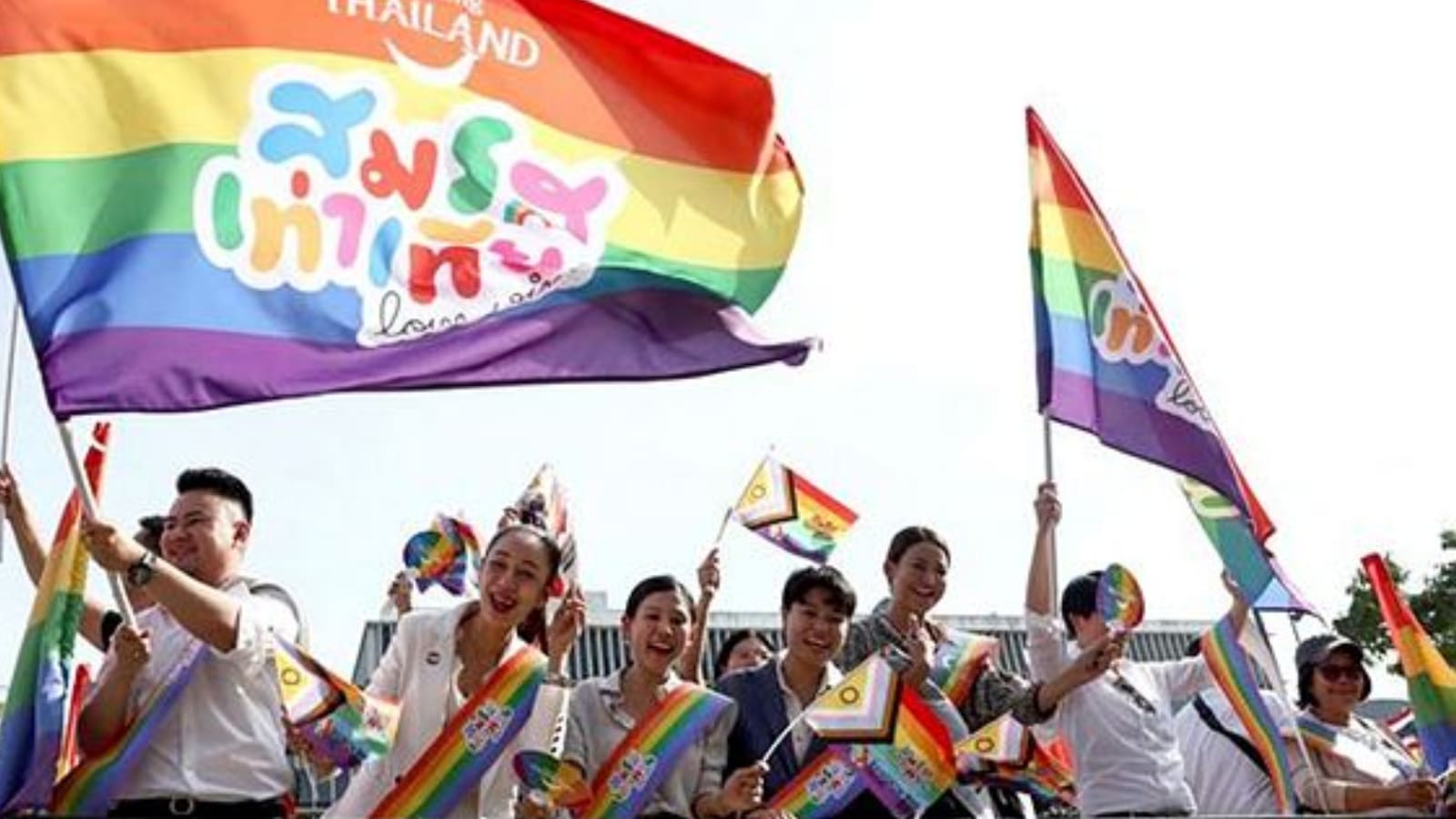 Members of the LGBTQ+ community hold flags that read "Marriage equality, love wins", as they celebrate the passing of the marriage equality bill in its second and third readings by the Senate, which will effectively make Thailand Asia's third territory to legalise same-sex unions. (Reuters photo)
Thailand, a holiday destination known for its deceiving ‘ladyboys’, is now going to be a part of a historic LGBTQ+ movement.
The lawmakers in Thailand passed a historic marriage equality bill on Tuesday, legalising same-sex marriages, making it the first southeast-Asian nation to do so. The bill was approved by the House of Representatives on March 27 and will come into effect after royal endorsement by King Maha Vajiralongkorn in about 120 days and soon after it is published in the royal gazette.
The Thai bill managed to gain the support of nearly all upper-house lawmakers in the country. However, they are not the only ones in the continent to support freedom to marry under law. Taiwan and Nepal legalised same-sex unions not quite long ago. While Nepal specifically passed a same-sex marriage bill, and not a marriage equality bill, in 2023, Taiwan has a more conducive marriage bill that came into force in 2019.
On the contrary, there are other Asian countries like India, where same-sex marriages were almost becoming possible; Indonesia, which still criminalises gay marriage and also added extramarital sex under the category in 2022; Brunei, which went bizarre and said they would make gay sex punishable with death by stoning.
In 2015, Thailand passed the Gender Equality Act, aimed at providing legal protections against discrimination based on sexual orientation, gender identity and/or expression and sex characteristics (SOGIESC). But the UN Committee on the Elimination of Discrimination against Women (CEDAW) flagged the Thai government regarding provisions in the law that granted exemptions to the prohibition of gender-based discrimination, based on religious principles or national security. A report by Amnesty International also found gay rights activists in Thailand facing “targeted digital surveillance and online harassment”. This makes one wonder if passing an act is the ultimate step to be a pride supporter or does one also need societal acceptance?
Nepal saw its first queer marriage in November 2023 when a transgender woman and a cisgender man legalised their marriage with the help of an interim order by its Supreme Court. “The fight for rights is not easy. We have done it. And it will be easier for future generations,” said Maya Gurung, in an interview to the BBC. The couple didn’t want much, but the sublime benefits that any other couple would enjoy. A joint bank account , shared ownership of property and most importantly the chance to be parents through adoption.
For Taiwan, the road to marriage equality was mostly bumpy as LGBT rights leader Chi Chia-wei helmed the movement in the country. “In 1986, when I held the first international press conference to come out of the closet, I had two swords with me. One was to be used to fight AIDS, the other to improve the human rights of gays,” said Chi during an interview to CommonWealth Magazine.
It was in the 1990’s that Taiwan’s first nationwide gender rights organisation took birth and its first lesbian organisation called ‘Between Us’ took its inception. Cut to 2019, Taiwan, under President Tsai Ing-wen, passed the legislation for the equal marriage law. “The values we want to protect still exist and at the same time, we have let more people embrace happiness together,” Tsai wrote on her official social media page one year after the law passed.
While Thailand awaits a promising future for its gay people, other Asian countries are still on the road to fighting societal and generational taboos towards same-sex marriages and people of the queer community.
Stay updated with the latest - Click here to follow us on Instagram