3 min read
Stay updated with the latest - Click here to follow us on Instagram
© IE Online Media Services Pvt Ltd



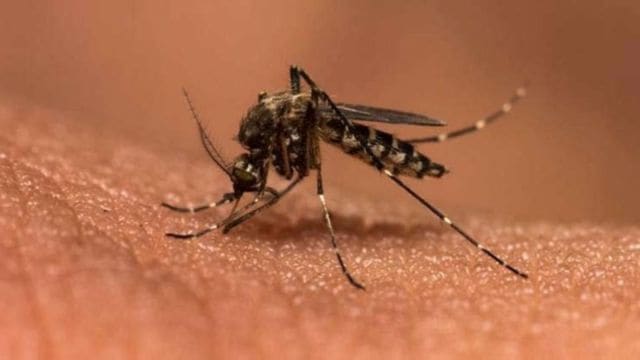 The findings are similar to a situation that began over a decade ago in Southeast Asia, where resistance to artemisinin first emerged and spread. (File photo)
A new study has found signs that malaria parasites in Africa are becoming resistant to artemisinin, a critical drug used to treat severe malaria in children. This is the first time such resistance has been detected in young patients with severe cases of malaria in Africa, raising serious concerns about how the disease can be effectively treated in the future.
The study, conducted in Uganda, involved 100 children hospitalised with severe malaria. Results showed that 11 of these children had partial resistance to artemisinin. All the children with resistant malaria carried genetic mutations linked to drug resistance.
Additionally, 10 children who seemed cured after treatment with artemisinin and a second drug, lumefantrine, had a relapse with the same strain of malaria within a month. This suggests that the usual treatment might not be as effective as it once was.
Dr. Chandy John of Indiana University, one of the study’s lead researchers, expressed concern about these findings, noting that signs of drug resistance appeared even before researchers specifically began looking for it. “The fact that we started seeing evidence of drug resistance before we even started specifically looking for it is a troubling sign,” Dr. John said, calling this study a potential warning sign for malaria treatment in African children.
The findings are similar to a situation that began over a decade ago in Southeast Asia, where resistance to artemisinin first emerged and spread.
Dr. Richard Pearson of the Wellcome Sanger Institute noted that East Africa could be following a similar pattern, where resistance spreads quickly, making it harder to treat malaria.
For children with severe malaria, artemisinin is given first as an intravenous infusion of artesunate, followed by an oral drug that combines artemisinin with another malaria-fighting medication. Artesunate replaced an older drug, quinine, over ten years ago because it was more effective at saving lives. Dr. John cautioned that returning to quinine would be a step backward.
Experts are worried that resistance to artemisinin could spread quickly within Africa, which has some of the highest malaria transmission rates globally.
Dr. Alena Pance of the University of Hertfordshire called this trend “extremely worrying,” emphasising that Africa’s high malaria rates increase the risk of resistance spreading across the continent.
Malaria remains a leading cause of death for children under five in sub-Saharan Africa, with around 450,000 young children dying each year. If resistance to artemisinin grows, it could become even harder to treat and control this deadly disease, putting more children at risk.
(With inputs from The Guardian)
Stay updated with the latest - Click here to follow us on Instagram