9 min read
Stay updated with the latest - Click here to follow us on Instagram

Journalism of Courage



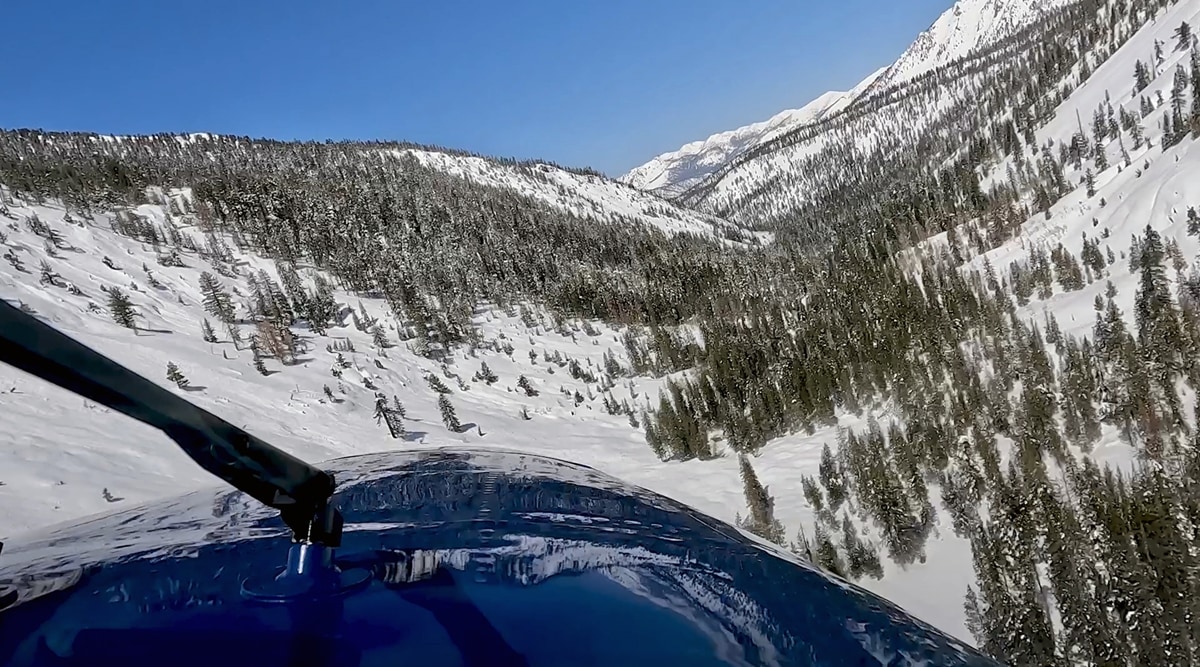 A still frame from video from a five-hour flight by the National Oceanic and Atmospheric Administration through the Sierra Nevada on March 31, 2023, to collect data about the amount of water in the snow below. (Erin Schaff/The New York Times)
 Written by Raymond Zhong
Up and down the high slopes of the Sierra Nevada, the barrage of heavy storms that deluged California this winter also left behind a giant frozen reservoir, one whose thawing will shape the next phase of what has already been a remarkably wet year for the drought-weary state.
Snow, huge imposing walls of it, has blanketed the Sierra’s majestic peaks and mountainsides, in quantities that parts of the area have never previously recorded.
It has fallen in totals that defy easy imagining: 654 inches at Mount Rose near Lake Tahoe, 702 inches at Mammoth Mountain. When converted into an equivalent depth of water, it is nearly double the historical average for this point in the year across the Sierra’s northern reaches, where the runoff feeds several major reservoirs. In the southern Sierra, it is around triple the average.
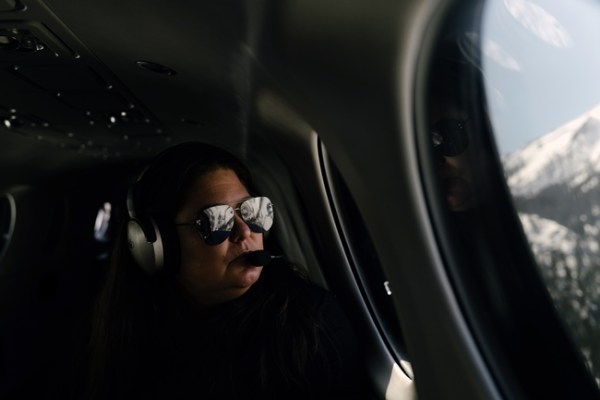 Carrie Olheiser, a snow hydrologist, on a five-hour flight by the National Oceanic and Atmospheric Administration through the Sierra Nevada on March 31, 2023, to collect data about the amount of water in the snow below. (Erin Schaff/The New York Times)
Statewide, this season’s snowpack is on course to be either the largest or the second largest since modern records began in 1950, Sean de Guzman, the manager of the California Department of Water Resources’ Snow Surveys and Water Supply Forecasting Unit, said Monday.
The sheer immensity of the snowpack has sparked delight among skiers and a more complex brew of emotions among farmers and water managers, who are ready to embrace the watery bounty but are also girding for the possibility of more catastrophic flooding this spring.
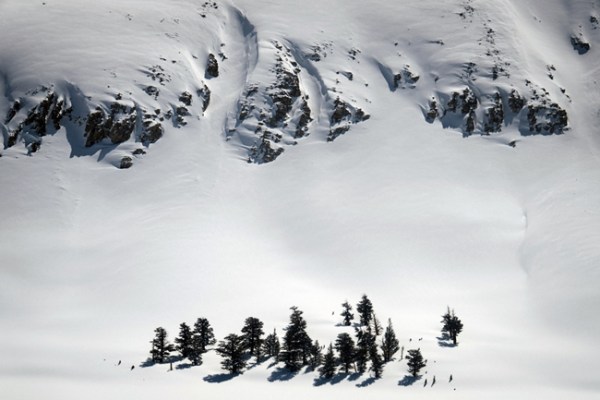 The view during a five-hour flight by the National Oceanic and Atmospheric Administration through the Sierra Nevada on March 31, 2023, to collect data about the amount of water in the snow below. (Erin Schaff/The New York Times)
The recent storms have led Gov. Gavin Newsom to lift some drought restrictions, but parts of California are still struggling to meet their water needs, particularly rural communities in the Central Valley that rely on groundwater wells. As the snow melts in the coming months, the valley might have to deal simultaneously with “very, very significant flooding” and with drought-related water supply challenges, said Karla Nemeth, director of the Department of Water Resources.
Figuring out how much snow piles up in the Sierra each winter is critical.
For a long time, officials and forecasters did this primarily by sticking long metal tubes into the snow and weighing the icy core caught inside. Today, these low-tech measurements still serve as an important baseline, but sensors mounted on low-flying airplanes provide a much more comprehensive picture.
 Carrie Olheiser, a snow hydrologist, logs her observations in a notebook during a five-hour flight by the National Oceanic and Atmospheric Administration through the Sierra Nevada on March 31, 2023, to collect data about the amount of water in the snow below. (Erin Schaff/The New York Times)
On Friday, a twin turboprop from the National Oceanic and Atmospheric Administration flew a five-hour course over the Sierra, using specialized instruments to gauge the amount of water in the deep white carpets below. Within minutes of being collected, the data was sent out for use in forecasts of river levels and flood hazards.
“There hasn’t been a lot of snow to talk about in the Sierra for the last few years,” said Carrie Olheiser, a snow hydrologist with the research organization RTI International who supports NOAA’s snow-survey missions. The comparison with this year’s levels, she said, is “night and day.”
 A still frame from video from a five-hour flight by the National Oceanic and Atmospheric Administration through the Sierra Nevada on March 31, 2023, to collect data about the amount of water in the snow below. (Erin Schaff/The New York Times)
For NOAA’s pilots, who must traverse craggy backcountry terrain while hugging the ground at 500 feet, a snow survey like Friday’s involves a good amount of adventurous flying. As they wound through the narrow valleys, the plane’s navigation system emitted a noisy flow of alerts offering to help them land — or avoid crashing into the mountain ahead.
The big question for California now is how quickly all this snow will melt and rush into, and possibly overwhelm, the state’s rivers and reservoirs — something that is becoming trickier to predict as the planet warms.
In general, the more slowly the snow melts, the less water ends up in rivers, said Noah P. Molotch, a hydrologist at the University of Colorado Boulder. This is because the meltwater is more likely to be sucked up through the ground by trees and other vegetation before it can flow into creeks and streams.
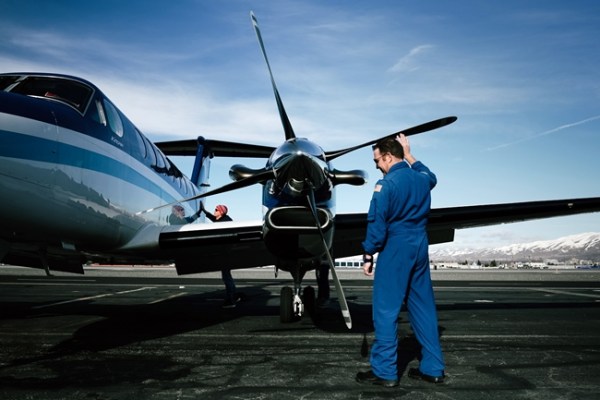 A National Oceanic and Atmospheric Administration twin turboprop before a five-hour flight through the Sierra Nevada on March 31, 2023, to collect data about the amount of water in the snow below. (Erin Schaff/The New York Times)
Molotch compares it with watering a houseplant. Do it gradually, and the plant and the soil will happily drink it up, leaving little water to spill out into the dish the pot is sitting in. Dump the same amount of water in all at once, however, and the plant and the soil are overwhelmed. Water floods out.
How is global warming changing the picture? In the West, snow appears to be melting earlier in the spring, which could cause the thaw to happen more slowly, allowing less melted snow to fill the rivers. But an earlier melt might also mean more thawing happens when the air isn’t as warm and vegetation is less active. That would have the opposite effect: Less melted snow would be taken up by plants, and more water than usual would wind up in rivers.
Molotch said he and other researchers were still “teasing out the relative importance of these two mechanisms.”
 A warning on one of the pilots’ displays during a five-hour flight by the National Oceanic and Atmospheric Administration through the Sierra Nevada on March 31, 2023, to collect data about the amount of water in the snow below. (Erin Schaff/The New York Times)
The California Department of Water Resources’ latest forecasts suggest that river flows in the Central Valley through July will be at or above average in the Sacramento River Basin, but twice the average or more farther south, in the San Joaquin and Tulare Lake basins.
Another factor that will decide where melted snow ends up is how dry the ground is. If the soil and bedrock beneath the Sierra’s slopes are parched after years of drought, then they will absorb more of the meltwater, leaving less for streams, said Dana A. Lapides, a postdoctoral researcher in hydrology with the U.S. Forest Service.
This appears to be what happened in 2021, when the Department of Water Resources greatly overestimated how much of that winter’s snow would wind up in rivers. In a recent study, Lapides and her co-authors found that, by taking the soil’s dryness into account, the department’s predictions that year could have been much more accurate.
 The view during a five-hour flight by the National Oceanic and Atmospheric Administration through the Sierra Nevada on March 31, 2023, to collect data about the amount of water in the snow below. (Erin Schaff/The New York Times)
There isn’t enough data yet to say definitively how much of this year’s melted snow might be swallowed up by the soil, Lapides said. It has snowed so much in the Sierra lately that Forest Service workers haven’t been able to travel to some areas to measure soil moisture, she said.
But Lapides’ preliminary estimates suggest that, in parts of the region, this year’s storms have already filled up much of the ground beneath the slopes. Which could mean a good deal of runoff will find its way into reservoirs and irrigation systems.
Water managers are eyeing that prospect warily. In the Central Sierra above the Tuolumne River, this season’s snow amounts to about 2.7 million acre-feet of water, which is 800,000 acre-feet more than what typically flows down the river over the course of a whole year. (One acre-foot of water would cover an acre of land, one foot deep.)
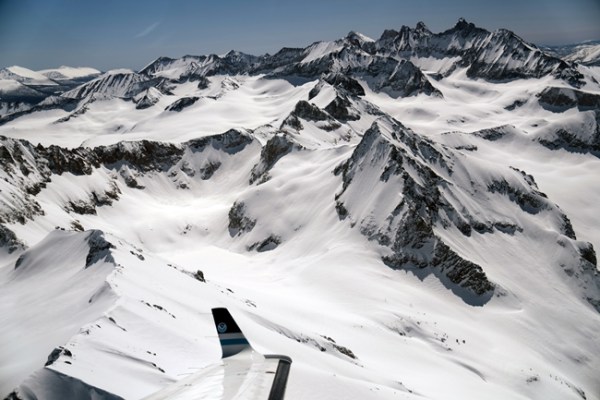 A still frame from video from a five-hour flight by the National Oceanic and Atmospheric Administration through the Sierra Nevada on March 31, 2023, to collect data about the amount of water in the snow below. (Erin Schaff/The New York Times)
It is Wes Monier’s job to guide all that water safely down the mountains over the next few months.
Monier, the chief hydrologist for the Turlock Irrigation District, which operates the New Don Pedro Dam on the Tuolumne, said improved weather forecasts and snow data were helping him manage river flows with ever-greater confidence.
But with the area’s climate now regularly experiencing record-breaking swings, he is still planning for every contingency this spring. “We’re looking and checking everything and running through the ‘what if?’ statements, because the environment, the meteorological conditions, are changing,” he said.
This article originally appeared in The New York Times.
Stay updated with the latest - Click here to follow us on Instagram